


Samosa's Ancient Roots
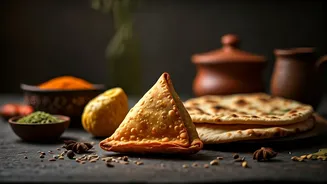
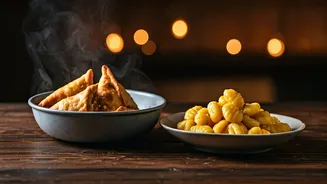
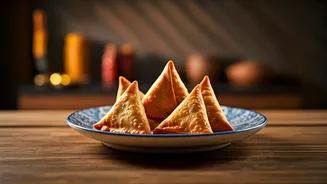
The ubiquitous samosa, a crispy pastry often bursting with spiced potato filling, is a cherished snack across India. However, its lineage doesn't begin
on Indian soil. This delightful creation traces its origins to the Middle East and Central Asia, where it was known by names like 'sambusak.' It journeyed to India through the paths of traders and travelers, who introduced its basic concept. Over centuries, Indian cooks embraced this precursor, infusing it with local spices and adapting its filling to create the flavorful, often triangular, potato-stuffed delicacy that has become synonymous with Indian street food and hospitality today.
Chicken Tikka Masala's UK Birth
While redolent with the vibrant spices and rich tomato base characteristic of Indian cuisine, Chicken Tikka Masala's true birthplace is widely believed to be the United Kingdom. Developed by South Asian chefs, this dish was meticulously crafted to cater to the evolving palates of British diners. It represents a remarkable fusion, taking the essence of Indian flavors and presenting them in a way that resonated with a Western audience. It's a testament to culinary adaptability, becoming a beloved 'British Indian' dish that is now celebrated globally, often far more than in its adopted homeland.
Chilli Chicken's Indo-Chinese Blend
A cornerstone of the popular Indo-Chinese culinary genre, Chilli Chicken boasts a unique heritage. It was not a direct import but rather an innovation born within India itself, specifically by the Chinese diaspora, particularly in Kolkata. This dish masterfully marries the foundational techniques of Chinese stir-frying with the bold and pungent spices favored in Indian cooking. The result is a fiery, savory, and slightly sweet delight that perfectly encapsulates the spirit of fusion cuisine, showcasing how different cultures can creatively interact within a single nation's borders.
Naan's Persian Passage
The fluffy, oven-baked flatbread known as naan, a beloved accompaniment to countless Indian meals, has its ancestral home in Persia, which is modern-day Iran. This bread made its way to the Indian subcontinent during the influential Mughal era. Its preparation, often involving the searing heat of a tandoor oven, quickly captivated local tastes. Naan became deeply ingrained in North Indian culinary traditions, evolving into a staple that is now indispensable, especially when paired with rich curries and gravies, signifying its enduring appeal.
Rajma's American Journey
The humble yet hearty rajma, or kidney beans, a staple in many North Indian households and the star of the popular 'Rajma Chawal' dish, has a surprisingly distant origin. These protein-rich legumes originally hail from Central and South America. European traders introduced them to India, where they were gradually adopted into the local diet. Over time, the preparation of rajma with Indian spices and gravies transformed it into a comforting and nutritious dish that feels intrinsically Indian, showcasing the long-term impact of early global trade routes.
Biryani's Uncertain Origins
The exquisite and aromatic biryani, a celebrated rice dish layered with spices, meat, or vegetables, holds a complex and debated origin story. While it is a universally recognized symbol of Indian celebratory cuisine, its exact genesis is not definitively Indian. Historical accounts suggest influences from Persian pilaf traditions, potentially introduced to the subcontinent by Mughal invaders. This foundational concept was then enriched and adapted with diverse regional Indian spices and cooking methods, leading to the myriad of distinct and delicious biryani varieties savored across India today.