





The Legal Battle Begins
The Union Health Ministry has launched a legal challenge in the Delhi High Court, aiming to overturn a 2024 ruling. This previous judgment had authorized
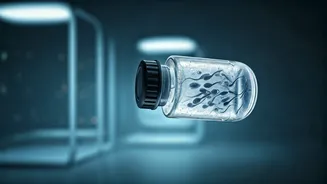
the release of frozen sperm belonging to a deceased, unmarried man. The primary goal of the appeal is to reverse this decision, reigniting a debate on the permissibility of parents utilizing their deceased son's stored sperm for surrogacy. The Ministry's action followed a ruling that permitted Sir Ganga Ram Hospital to hand over the preserved semen of a young man who had stored it before passing away due to a terminal illness. The court determined there was no legal impediment to posthumous reproduction, particularly when consent could be established.
Central Government's Concerns
The central government's main argument centers on the complexities introduced by the original order. The government expressed concerns, notably regarding the expansion of legal definitions. It pointed out that the initial ruling potentially created a novel category of beneficiaries, namely "intending grandparents," contradicting established legal frameworks like the Assisted Reproductive Technology (ART) Act and the Surrogacy Regulation Act. These laws generally restrict eligibility for surrogacy to specific categories, often limited to married couples or those intending to marry. Moreover, the government contests the implication that the sperm sample can be treated as property, automatically transferring to legal heirs. This, according to the government, could lead to considerable legal ambiguity.
Key Legal Questions Raised
The Delhi High Court case poses pivotal questions concerning reproductive rights and inheritance. The central legal query revolves around the classification of frozen sperm: can it be categorized as inheritable property? If so, does this entitlement extend to grandparents, or do current laws preclude them from such a claim? This legal argument probes the legal status of frozen sperm within the context of Indian legislation. The Centre is specifically arguing whether the judge has overstepped the boundaries of current statutes by, in effect, creating a new class of beneficiaries (grandparents intending to use the sperm) and treating the sample as property that can automatically be passed on to the legal heirs.
The Hospital's Role
The legal action involves Sir Ganga Ram Hospital, which had initially been ordered to release the deceased man's sperm. The initial ruling in October 2024 had instructed the hospital to comply with the request. The hospital is now caught in the middle of a legal dispute, bound by the court's prior directive until a final ruling is reached. The ongoing legal debate puts the hospital in a delicate situation, as it must adhere to any definitive decisions regarding the management and release of the preserved sperm sample.
Delay and Further Proceedings
A panel comprising Chief Justice DK Upadhyaya and Justice Tejas Karia has posed questions regarding the delay in the central government's appeal. They are presently assessing whether to hear the case. Pending a final court decision, the existing order mandating the release of the frozen sperm remains in effect, continuing to be subject to legal scrutiny. The court's decisions will set a significant precedent in matters of inheritance, reproductive law, and rights in India.