




Sidewinder's Slithering Style
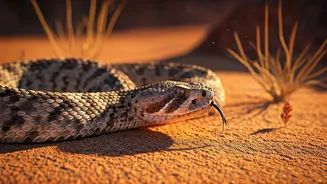
The Sidewinder snake employs a distinctive locomotion known as sidewinding, a movement that appears to be a sideways shuffle rather than a conventional
slither. This technique involves lifting sections of its body and propelling itself in a diagonal, looping motion. This isn't just for show; it serves a dual purpose. By minimizing contact with the scorching desert surface, the snake effectively prevents its body from overheating. Furthermore, this specialized movement allows for greater efficiency when traversing loose sand dunes, preventing the snake from sinking and enabling more agile navigation across the treacherous terrain. It's a brilliant adaptation that addresses both thermal regulation and mobility challenges in its harsh habitat.
Thorny Devil's Water Trap
The Thorny Devil exhibits a truly remarkable biological engineering feat for water acquisition. Its entire body is intricately patterned with minute grooves and ridges. These channels are expertly designed to capture any available moisture, whether it's from infrequent rainfall, morning dew, or even damp sand. Once collected, this water is artfully directed towards the creature's mouth, allowing it to stay hydrated without the need for open water sources. Beyond its hydrological advantage, the Thorny Devil's spiky exterior serves as a formidable deterrent to potential predators and also provides excellent camouflage, helping it blend seamlessly with the sparse desert vegetation.
Tortoise's Water Reserve
The Desert Tortoise is a paragon of water conservation, possessing an extraordinary capacity to store fluid. Its bladder can hold an impressive volume, sometimes accounting for as much as 40% of its total body weight. This internal reservoir is crucial for its survival during prolonged dry spells, providing the necessary hydration when external water is scarce. To further mitigate water loss and escape the oppressive daytime heat, the tortoise spends a significant portion of its life sheltered within underground burrows. It typically emerges to forage and engage in other activities during the cooler twilight hours, a behavior that significantly reduces its exposure to extreme temperatures and conserves vital moisture.
Horned Lizard's Blood Defense
The Horned Lizard employs a defense mechanism that is both startling and exceptionally effective: it can project a stream of blood from its eyes. This bizarre display is intended to startle and deter predators, giving the lizard a crucial opportunity to escape. In addition to this unique tactic, its flattened body shape provides exceptional camouflage, allowing it to vanish against the desert floor. This combination of a shocking defensive maneuver and superb concealment makes the Horned Lizard a highly resilient inhabitant of its arid environment, effectively navigating the threats it faces.
Spiny-Tailed Burrow Master
Thriving in some of the most extreme desert climates, the Spiny-Tailed Lizard has mastered the art of subterranean living. It excavates deep burrows that offer a sanctuary from the intense surface heat, maintaining a considerably cooler internal environment. These underground dwellings are vital for its survival, providing refuge during the hottest parts of the day. Moreover, its prominent, spiny tail serves as a formidable defensive weapon. It can be strategically used to block the entrance of its burrow, preventing unwelcome intruders, or to fend off direct attacks from predators.
Gila Monster's Slowdown Strategy
The Gila Monster survives the harsh desert by adopting a remarkably slow-paced lifestyle. It boasts an exceptionally low metabolic rate, which significantly reduces its need for both food and water compared to many other desert animals. This reptilian conserves energy by storing fat reserves in its tail, enabling it to endure extended periods without sustenance. By remaining largely inactive during the peak heat of the day and venturing out only during the cooler dawn and dusk hours, it effectively minimizes energy expenditure and avoids the risk of dehydration, showcasing a masterful approach to resource management.
Sandfish Skink's Sandy Swim
The Sandfish Skink possesses an extraordinary adaptation that allows it to 'swim' through the desert sand. Its body is covered in exceptionally smooth and glossy scales, which dramatically reduce friction. This unique feature enables it to effortlessly dive beneath the sand's surface, seeking refuge from both the oppressive heat and potential predators. Once submerged, the sand provides a cooler environment, and the skink can move with remarkable speed and security, completely concealed from the dangers of the exposed desert landscape.
Desert Iguana's Heat Tolerance
Among the most heat-resistant reptiles found anywhere, the Desert Iguana demonstrates an incredible ability to remain active even when ambient temperatures exceed 40°C. Its physiology is uniquely adapted to withstand such extreme heat, allowing it to thrive where others would perish. This resilient lizard sustains itself on a diet of desert plants, which not only provide essential nutrients but also contribute significantly to its water intake, thereby lessening its reliance on scarce water sources. This dietary strategy further enhances its ability to survive and flourish in its challenging environment.