
Historical Foundations
Jaipur's story began in 1727, when Maharaja Sawai Jai Singh II, a Kachwaha Rajput ruler, decided to move his capital from Amber to Jaipur. The city was
meticulously planned, guided by principles of Vastu Shastra, an ancient Indian system of architecture. Jai Singh II, a man of great intellect, was not only a ruler but also an astronomer and mathematician. He consulted with various architects and scholars to create a city that was both aesthetically pleasing and scientifically sound. This careful planning led to Jaipur's iconic grid system, with wide, straight streets and well-defined blocks. The city's design was forward-thinking for its time, incorporating features like a systematic drainage system and consistent building styles, setting it apart from other Indian cities of that era. This thoughtful approach laid the foundation for Jaipur's unique character and enduring appeal.
Architectural Marvels
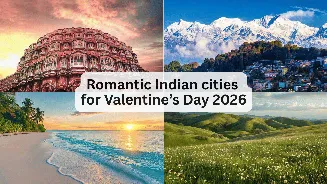
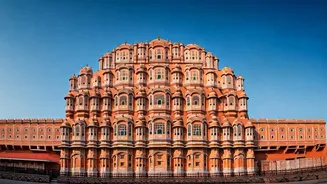
Jaipur's architecture is a testament to the city's rich history, most notably demonstrated by its many striking structures. The Hawa Mahal, or the 'Palace of Winds,' is arguably the most famous. Constructed in 1799 by Maharaja Sawai Pratap Singh, this five-story structure features an intricate facade with 953 small windows called jharokhas, designed to allow royal women to observe street life without being seen. The Amber Fort, situated a few kilometers outside the city, is another prominent example. It showcases a blend of Hindu and Mughal architectural styles, with elaborate carvings, mirror work, and stunning views. City Palace, the residence of the former royal family, presents a blend of courtyards, gardens, and buildings, with the Chandra Mahal being the most prominent. Additionally, Jantar Mantar, an astronomical observatory built by Jai Singh II, contains a collection of remarkable instruments used for measuring time, predicting eclipses, and tracking celestial bodies. These architectural gems are not just monuments; they represent a significant part of Jaipur's cultural and historical fabric.
Cultural Experiences
Immersing yourself in Jaipur's culture provides a rich and sensory experience. The city's vibrant festivals are a true reflection of Rajasthan's traditions. Teej and Gangaur are particularly notable, celebrated with parades, music, and colorful processions. Jaipur is also a major center for arts and crafts. Local artisans create exquisite jewelry, textiles, and handicrafts. The city's markets, such as Johari Bazaar for jewelry and Bapu Bazaar for textiles, offer a glimpse into the local craftsmanship. Jaipur is also celebrated for its cuisine, with dishes like dal baati churma, gatte ki sabzi, and laal maas. These traditional foods are infused with local spices and flavors, providing a culinary journey that reflects Rajasthan's heritage. Traditional dance and music performances, especially the Ghoomar and Kalbeliya dance forms, bring the city's artistic spirit to life. Interacting with the local community, attending cultural events, and experiencing these traditions provide a deeper understanding of Jaipur's cultural legacy.
Modern Jaipur Today
While Jaipur embraces its historical roots, it has also evolved into a modern metropolis. The city has seen significant advancements in infrastructure, including improved transportation networks, modern shopping malls, and contemporary hotels. Tourism continues to drive Jaipur's economy, supporting a diverse range of industries, from hospitality to retail. The city has invested in developing its tourism infrastructure to cater to the growing number of visitors. Educational institutions and technological advancements have contributed to Jaipur's growth and development. The city has a rising middle class, with an increasing demand for modern amenities and lifestyle choices. Nevertheless, Jaipur carefully balances its traditional elements with modern progress, preserving its cultural heritage while embracing the future. This juxtaposition is apparent in its architecture, the lifestyle of its residents, and the economic landscape.
Visiting Jaipur Essentials
Planning a visit to Jaipur involves considering several practical aspects to ensure a smooth and enjoyable experience. The best time to visit is during the winter months, from October to March, when the weather is pleasant. Transportation within the city is diverse, including taxis, auto-rickshaws, and ride-sharing services. Accommodation options are plentiful, ranging from budget hotels to luxury resorts and heritage properties. It is important to bargain respectfully when shopping in local markets, as prices are often negotiable. Visitors should be aware of local customs and dress modestly when visiting religious sites. Staying hydrated and protecting oneself from the sun, especially during warmer months, is also essential. By taking these factors into account, travelers can get the most from their experience in Jaipur, exploring its history, culture, and beauty with comfort and convenience.