



A Himalayan Culinary Landmark
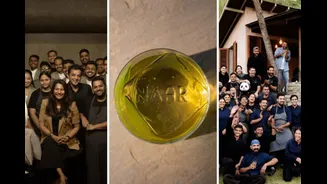
In a significant moment for Indian gastronomy, Chef Prateek Sadhu's restaurant, Naar, has secured the 30th spot on the prestigious Asia's 50 Best Restaurants
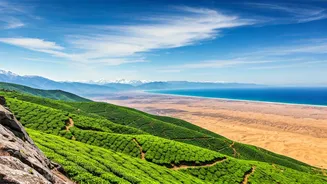
list. This achievement is particularly noteworthy as Naar is nestled in Kasauli, a location far removed from the typical urban culinary hubs. Its inclusion signifies the emergence of a true 'destination restaurant' in India, one that draws diners from across the country and inspires travel solely for the gastronomic experience. Chef Sadhu expresses profound gratitude, highlighting this as a moment that validates bold culinary ventures, especially those established in seemingly unconventional locations. The recognition of Kasauli on an international platform underscores a significant shift in India's diverse and evolving food landscape, demonstrating that innovation and excellence can flourish even in remote settings. This success is presented not just as a win for Naar, but as a victory for the entire Indian culinary ecosystem, encouraging others to pursue ambitious projects against prevailing skepticism.
From Masque to Mountain
After departing from the highly acclaimed Mumbai restaurant Masque, which he co-founded, Chef Prateek Sadhu embarked on a new culinary journey to establish Naar. The restaurant, whose name translates to 'fire' in Kashmiri, opened its doors in November 2023. It is situated within Amaya, a sustainable retreat in Darwa, a village near Kasauli in Himachal Pradesh. The concept of Naar was a bold undertaking from its inception, with its secluded location requiring a flight to Chandigarh followed by a significant drive. Initially, the site was a humble shed, and Sadhu, alongside Amaya's founder Deepak Gupta, faced skepticism about attracting diners. Despite the inherent risks and the possibility of failure, they proceeded with deep conviction in their product and a commitment to authenticity. The gamble paid off, as Naar has since become a destination drawing guests from major Indian cities, with bookings extending months in advance and visitors planning extensive stays to fully immerse themselves in the dining experience.
Culinary Roots and Zero Waste
Chef Prateek Sadhu's culinary philosophy at Naar is deeply intertwined with his personal history and heritage. As a Kashmiri Pandit who experienced displacement, food became a crucial element in preserving memories and identity, with his mother's insistence on speaking Kashmiri and cooking traditional dishes playing a formative role. This upbringing instilled an intrinsic understanding of resourcefulness, particularly in the context of harsh Kashmiri winters where drying vegetables and utilizing every part of an animal were necessities for survival. This ancestral wisdom directly informs Naar's celebrated zero-waste approach, which is not a trendy concept but a deeply rooted practice. The restaurant honors this legacy by transforming potential waste into innovative culinary elements, reflecting a profound connection to sustenance and the environment that has been passed down through generations, a stark contrast to modern culinary trends often adopting such practices superficially.
A Journey of Discovery
While Sadhu's culinary path has led him to global acclaim, his initial aspirations were far from the kitchen; he dreamed of becoming a pilot. A fortuitous detour into hotel management led him to the Culinary Institute of America, where he excelled, graduating with top honors thanks to his father's significant sacrifice. His professional journey included influential stints at renowned establishments like The French Laundry, Per Se, Alinea, and the groundbreaking Noma. It was during his time at Noma, under René Redzepi, that Sadhu began to envision a similar transformative impact for Indian cuisine on a global scale. Upon returning to India in 2013, he undertook extensive travel, moving beyond his own Kashmiri culinary background to explore the vast and diverse food traditions of regions like Uttarakhand, Himachal Pradesh, Assam, and Shillong, engaging with home cooks and elders to uncover forgotten ingredients and methods.
The Naar Experience Unveiled
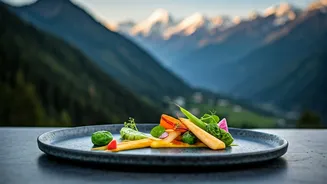
Naar's architectural design mirrors the traditional Kashmiri household, comprising distinct structures like a salon, an outhouse, and a main house, reflecting a harmonious integration with the mountainous landscape. The culinary journey commences in the salon, where head bartender Dixit Kaundal crafts inventive beverages using repurposed kitchen discards, such as the 'Scrap Splash' cocktail, which ingeniously incorporates fruit peels and oxidized wine. Small, flavorful bites accompany these drinks, including a comforting Tichoni broth and skewers inspired by Kashmiri Maki point. The dining room, deliberately the largest space, evokes the communal heart of a mountain home. Even the dishwashing station offers a prime view of the mountains, symbolizing the restaurant's philosophy of valuing every role. The tasting menu, priced at Rs 7,000 plus taxes, elegantly navigates the diverse geography of the Himalayan belt, drawing from the six mountain seasons and utilizing nearly 80% of produce from Naar's adjacent farms. The experience is designed to be immersive, with each course narrating a story derived from Sadhu's extensive research and conversations with local communities, reinterpreting traditional flavors with a modern culinary sensibility.
Tradition Meets Innovation
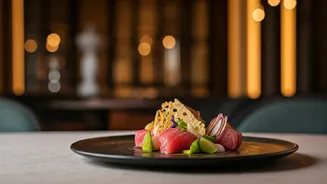
The multi-course tasting menu at Naar is a testament to Chef Prateek Sadhu's commitment to marrying tradition with contemporary culinary techniques. The meal unfolds across the Himalayan regions, celebrating the distinct seasons and diverse ingredients found from Jammu and Kashmir to the Northeast. A signature dish, the 'dirty toast' crafted from Bansi wheat sourdough, can be savored with grilled trout or glazed beetroot, exemplifying the refined approach to humble ingredients. Another highlight is a noodle dish that traces its historical migration from Tibet into Uttarakhand, showcasing the narrative depth of the menu. Sadhu emphasizes that while the inspiration and ingredients are rooted in heritage and extensive dialogues with elders, the final presentations are entirely original. Dishes like a winter salad referencing 'Nimbu Saan' and a main course featuring local Sobu rice with Himalayan cheese-stuffed Guchi mushrooms (for vegetarians) or a pork dish (for non-vegetarians) are modern interpretations. Sadhu firmly believes in adapting these traditions for the present day, stating, 'We are cooking in 2026,' thereby acknowledging the evolution of cuisine while honoring its past.