







Launch Details Unveiled
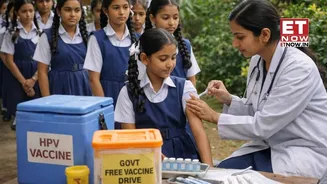
A nationwide initiative to vaccinate 14-year-old girls against the Human Papillomavirus (HPV) is set to commence on February 28th. Prime Minister Narendra
Modi will inaugurate this significant public health campaign from Ajmer, Rajasthan. This launch signifies India's determined step towards eradicating cervical cancer, a disease primarily caused by HPV and preventable through vaccination. An official communication from the Union Health Ministry, dated February 25th, tentatively scheduled the launch for 11:30 AM on February 28th, 2026, confirming the Prime Minister's gracious consent to preside over the event in Ajmer. This campaign underscores a critical public health objective, highlighting that cervical cancer remains a substantial health challenge both within India and globally, and crucially, it is the sole cancer that can be entirely prevented by a vaccine.
Targeted Age Group
The initial phase of this vital immunization program will focus specifically on girls who have reached the age of 14 but have not yet turned 15. This age cohort has been strategically chosen to maximize the vaccine's effectiveness. The campaign is designed as an intensive, three-month drive, during which these girls will receive the HPV vaccine. Following this concentrated period, the vaccination will be seamlessly incorporated into the country's regular immunization services, ensuring ongoing access for eligible individuals. The operational guidelines clearly define the target population as 'Girls aged 14 years (those who have celebrated their 14th birthday but have not yet celebrated their 15th birthday)'. Furthermore, a crucial clarification states that girls who will turn 15 within 90 days of the launch will also be eligible for vaccination during the intensive three-month period, broadening the reach of this preventative measure.
Safety and Consent Protocols
Ensuring the well-being and comfort of the adolescent recipients is a paramount concern for this vaccination drive. To mitigate any potential stress-related reactions, health officials have been advised to ensure that girls are not vaccinated on an empty stomach. Following the inoculation, a mandatory observation period of 30 minutes is stipulated to monitor for any immediate adverse effects. Additionally, measures will be in place to avoid overcrowding at vaccination sites. The HPV vaccination is explicitly marked as voluntary, and obtaining informed consent from parents or legal guardians is a non-negotiable requirement before any vaccination can take place. This emphasis on consent underscores the ethical framework guiding the campaign. The vaccine itself is generally recognized as safe, though mild side effects, typically resolving within a couple of days, may occur as the immune system responds. All vaccination sites will be equipped with essential AEFI (Adverse Events Following Immunization) kits for managing anaphylaxis and will be connected to the nearest 24x7 healthcare facilities.
Vaccination Delivery Network
The administration of the HPV vaccine will be conducted at a robust network of public health facilities across the nation. These designated sites include Ayushman Arogya Mandir-Primary Health Centers, Community Health Centers, Sub District/District Hospitals, and Government Medical Colleges and Hospitals. Each of these locations will be equipped with a Cold Chain Point (CCP) to ensure vaccine potency and will have a dedicated medical officer to manage any AEFI cases. This comprehensive approach to infrastructure ensures that the vaccine is accessible and administered under appropriate medical supervision. Furthermore, a dedicated helpline will be operational in all states and Union Territories to address queries and provide support related to the vaccination campaign. Digital tracking has been mandated, with the U-WIN platform slated for registration, recording, and reporting, while e-VIN will manage and monitor vaccine stocks and logistics, ensuring efficient and transparent operations.
Campaign Rollout Strategy
The nationwide HPV vaccination campaign is structured with a strategic phased approach. Initially, it will operate as an intensive three-month focused drive, covering a 90-day period immediately following the Prime Minister's launch. During this concentrated period, efforts will be concentrated on reaching the target age group of 14-year-old girls. Following the successful completion of this intensive phase, the HPV vaccine will transition to being available on regular immunization session days. This ensures sustained access and integration into the routine healthcare system. To facilitate a smooth and effective rollout, states have been instructed to undertake thorough microplanning and ensure that all health facilities are adequately prepared. This preparation includes ensuring the availability of necessary supplies and trained personnel, following standard formats previously shared as part of training materials for states and UTs. The government is committed to a digitally monitored campaign, leveraging technology for efficient tracking and reporting, thereby building momentum for cervical cancer prevention nationwide.