





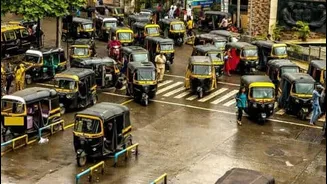
New Rule Sparks Debate
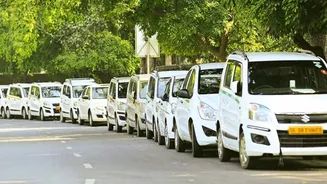
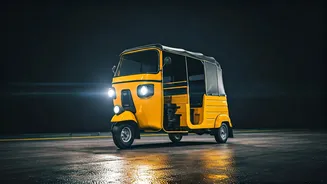
Maharashtra's government has introduced a significant change, making knowledge of the Marathi language a prerequisite for obtaining and renewing auto-rickshaw
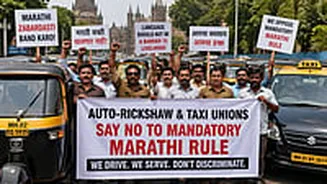
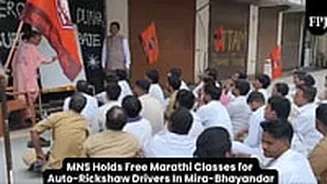
permits, effective March 1st. The intention behind this policy is to foster the use of Marathi across the state. However, this initiative has ignited considerable discussion, with legal experts pointing out that the rule might encounter obstacles in court. Critics argue that such a mandate could potentially lead to discriminatory practices and may not withstand legal scrutiny. The Maharashtra Motor Vehicles Department has defended the rule, asserting its alignment with the state's language policy and its aim to facilitate effective communication between drivers and passengers. Despite this, the legal community remains divided on the matter, with some foreseeing challenges based on the violation of fundamental rights and discriminatory aspects of the decree. The All India Motor Transport Congress has also voiced concerns, anticipating that this new regulation could create significant difficulties for drivers and subsequently affect the broader transportation sector. The government has yet to provide a comprehensive explanation regarding the precise implementation details and the legal foundation supporting this recent directive.
Past Legal Precedent
The current push by Transport Minister Pratap Sarnaik to enforce a Marathi language rule for licensed autorickshaw and taxi drivers from May 1st, even suggesting permit cancellations for non-compliance, runs into a significant legal hurdle. A pivotal Bombay High Court ruling from 2017, which specifically addressed and invalidated a comparable condition due to a lack of statutory authority, could once again impede the government's efforts. In that instance, the High Court had determined that the state lacked the legal power to impose such a stringent requirement for autorickshaw permits. The court's reasoning was that autorickshaws are classified as 'motor cabs,' a category that was explicitly exempted from the Marathi language proficiency requirements applicable to 'public service vehicles.' This previous judicial decision provides a strong basis for legal challenges against the current government's mandate, suggesting that the state may be attempting to circumvent established legal interpretations. The details of this 2017 order are crucial in understanding the potential legal ramifications of the Maharashtra government's latest directive.
High Court's 2017 Verdict
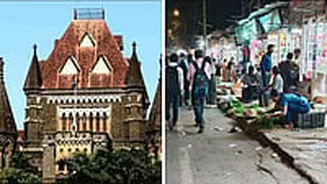
In March 2017, a division bench of the Bombay High Court, comprising Justices Abhay S Oka and Anuja Prabhudessai, delivered a verdict concerning a petition filed by the Bhiwandi City Rickshaw-Taxi Chalak Malak Sanghatana and other driver unions. These unions were challenging a directive from the Transport Department that mandated Marathi language proficiency for autorickshaw permits. The court's examination revealed that as far back as October 2015, the Transport Department had corresponded with the Transport Commissioner regarding lapsed 'Contract Carriage' Permits under the Motor Vehicles (MV) Act, 1988, for autorickshaws. Subsequently, in December 2015, a public notice was issued inviting applications, which included a condition requiring applicants to possess "knowledge of Marathi language and geographical knowledge of the local area as per Rule 24 of Maharashtra Motor Vehicles Rules, 1989." This condition was further reinforced in February 2016 when the Transport Commissioner directed RTOs to test Marathi language proficiency. The unions contested this, arguing that the state government lacked the statutory authority to impose such a requirement. The bench, led by Justice Oka, also took into account a prior November 2016 High Court order that had expanded the scope to include a mechanism for addressing commuter grievances, noting public complaints about autorickshaw driver conduct.
Government's Justification
The Maharashtra government, through its Transport department, defended the imposition of Marathi language knowledge as an eligibility criterion for auto-rickshaw permits. Their primary argument rested on Rule 24 of the Maharashtra Motor Vehicles Rules, which they contended outlines the procedure for issuing badges to motor cab drivers and includes proficiency in the local Marathi language as a requisite. The state maintained that requiring motor cab drivers to be able to converse with citizens in Marathi and comprehend Marathi road signs was a reasonable and necessary condition. Rule 24, as interpreted by the government, stipulates the process for issuing badges to drivers authorized for 'public service vehicles,' with the exception of motor cabs. The conditions outlined therein include having adequate topographical knowledge of their operational area and a working knowledge of Marathi, in addition to any other language commonly spoken in that region. The government further asserted that drivers lacking Marathi proficiency could potentially misunderstand passenger instructions, leading to inconvenience. They also referenced a November 17, 2016, High Court order that had, at that time, prima facie considered the eligibility condition "not unreasonable," given the expectation that drivers of public service vehicles should be familiar with the regional language.
Auto-rickshaws as Motor Cabs
The Bombay High Court, in its 2017 ruling, clarified the definitions under the Motor Vehicles Act, establishing that a 'Contract Carriage' encompasses a motor vehicle transporting passengers for hire or reward under a contract, and crucially, this definition includes a 'motor cab.' A 'motor cab' itself is defined as any motor vehicle designed or adapted to carry no more than six passengers (excluding the driver) for hire or reward. The bench, presided over by Justice Oka, drew upon a significant 1966 Bombay High Court verdict in the 'Sunmitra Auto Rickshaw Sahkari Sangh' case, which had definitively classified auto-rickshaws as falling within the definition of a motor cab. Consequently, the court concluded in 2017 that since auto-rickshaws are indeed motor cabs, and Rule 24 explicitly excludes such vehicles, the rule had "no application whatsoever to autorickshaws." This meant that the eligibility condition based on Rule 24 could not lawfully be incorporated as a qualification for individuals applying for Contract Carriage Permits for autorickshaws, directly challenging the government's stance.
State Exceeds Authority
The High Court unequivocally stated that the State Government could not impose such qualifications for autorickshaw permit applicants unless a specific provision within the Motor Vehicles Act or its associated Rules explicitly empowered them to do so. The court emphasized that the government must operate strictly 'within the four corners' of the Act and its Rules. It further clarified that the government cannot circumvent these legal provisions by invoking 'public interest' as an excuse, nor can it arbitrarily apply Rule 24, given that it is not applicable to motor cabs. Therefore, the High Court upheld the challenge brought by the petitioners, ruling that the State Government had acted beyond its legal authority, lacking the power under the Act or the Maharashtra Rules to impose the contested condition. In addition to striking down the condition, the High Court also issued directives aimed at establishing and improving mechanisms for the effective redressal of commuter grievances against motor cab permit holders and drivers.
Enforcement vs. New Rule
Transport department officials have indicated that the current mandate is not introducing a novel regime but rather enforcing an existing rule, specifically Rule 24 of the Maharashtra Motor Vehicles Rules. They argue that badges, which require knowledge of Marathi as per Rule 24, are mandatory after obtaining a permit. They also differentiate between taxis and autos, categorizing them as public service vehicles, while tourist taxis fall under the 'motor cabs' category. A senior official clarified that Rule 24 is pertinent for badges, not permits, and reiterated that the court had not invalidated decisions concerning badges. However, drivers' unions perceive this move as a violation of fundamental rights, including the freedom to practice a profession or business, and have indicated that the current directive is likely to face legal challenges in due course, suggesting that the distinction between permit and badge requirements might be a point of contention.