






Hidden Crew Quarters
On ultra-long flights, the cabin crew requires rest to maintain their alertness and provide excellent service throughout the journey. To facilitate this,
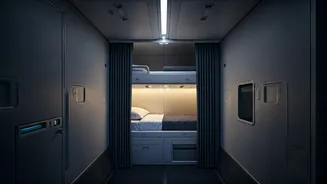
many long-haul aircraft incorporate dedicated crew rest areas, frequently located in inconspicuous zones. These areas are designed to provide a comfortable and quiet environment for crew members to rest during their shifts. They usually consist of several bunk beds, sometimes stacked or arranged in a small compartment, often positioned above the main cabin or in the cargo area. The design considers factors like soundproofing, temperature control, and privacy, ensuring a conducive atmosphere for sleep. These spaces play a vital role in flight safety, enabling the crew to perform their duties effectively and responsibly on these extended journeys. This hidden area of the flight is essential to the safe and efficient operation of long-duration air travel.
Strategic Placement, Design
The location of crew rest areas is not arbitrary; it is carefully planned to minimize disruption to both passengers and the crew. These areas are positioned away from high-traffic zones, aiming to ensure peace and quiet. Design considerations include soundproofing to reduce noise from the cabin or aircraft systems and ensuring adequate ventilation and climate control to provide a comfortable sleeping environment. The layout of these areas is also optimized to maximize space, with bunk beds often compactly arranged. The presence of amenities like reading lights, individual storage, and sometimes even entertainment systems further enhances the comfort of the space. All these design considerations contribute to the creation of a functional and restful environment, critical for crew members to stay refreshed and alert during long flights. This focus on design underlines the importance of crew well-being in maintaining safety standards during air travel.
Operational Importance and Safety
The existence of crew rest areas directly correlates with the safety and operational efficiency of ultra-long flights. By providing a place for crew members to rest, airlines ensure that the crew remains alert and capable of handling any situation that may arise. Well-rested crew members are better at monitoring flight systems, making crucial decisions, and effectively responding to emergencies. Regulations mandating crew rest on long-haul flights are in place, acknowledging that fatigued crew members can pose a significant safety risk. The rest periods are managed to allow enough time for sufficient sleep, and they are integrated into flight operations planning to guarantee sufficient crew availability. The design and implementation of these spaces reflect a commitment to passenger safety and the recognition of the need for rested personnel. This proactive approach underlines the importance of prioritizing crew well-being to achieve safe and efficient flight operations, especially in extended travel scenarios.
Evolving Technology and Comfort
The design of crew rest areas has evolved significantly over time. Early designs prioritized functionality and space-saving, but recent innovations focus more on enhancing comfort and the overall experience for crew members. The introduction of better soundproofing materials and more sophisticated climate control systems contributes to a more restful environment. There has also been an increase in the provision of individual entertainment systems, power outlets, and other amenities to meet the requirements of crew members on extended flights. In certain aircraft, designers are experimenting with more adaptable layouts, and there is more emphasis on privacy and the psychological well-being of the crew. As aircraft technology advances, so too will the standard of crew rest areas, ensuring that these vital spaces continue to meet the changing needs of crew members and contribute to the safety of ultra-long flights.