





The Soothing Esraj
Imagine a sound that marries the graceful resonance of the sitar with the soulful expressiveness of the sarangi; that's the magic of the Esraj. This bowed
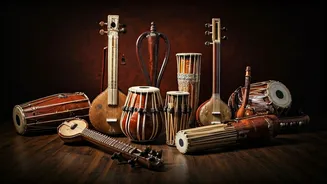
string instrument, originating from the Indian subcontinent, offers a wonderfully soft, melodic, and deeply soothing sonic tapestry. Its ability to produce long, sustained notes with a delicate vibrato makes it a favored choice for compositions that aim to evoke tranquility and introspection. While not as widely recognized as some of its counterparts, the Esraj holds a special place in regional folk traditions and Indian classical ensembles seeking to add a layer of gentle, lyrical beauty to their performances.
Lively Kanjira Rhythms
For a burst of energetic rhythm, turn your attention to the Kanjira. This compact percussion instrument, traditionally crafted with lizard skin stretched over a wooden frame, is a powerhouse of sharp and lively beats. Its portability and distinctive percussive voice make it an exciting addition to various musical settings, from folk performances to fusion ensembles. The Kanjira's bright, almost biting sound cuts through the sonic landscape, providing a vibrant pulse that is both captivating and infectious. Mastering its intricate patterns requires significant skill, but the reward is a dynamic rhythmic foundation that elevates any musical piece.
Mouth-Played Morsing
The Morsing, a fascinating metallic instrument, offers a unique rhythmic contribution to Indian music, particularly within the Carnatic tradition. Played using the mouth, this delicate jaw harp produces a distinctive ringing sound that complements vocalists and instrumentalists alike. Its subtle yet crucial role involves providing rhythmic support, adding intricate embellishments and accents to the musical progression. The player's breath and mouth cavity shape the sound, allowing for a nuanced and responsive percussive element that is both intricate and engaging, showcasing a different dimension of Indian rhythmic artistry.
Resonant Pakhawaj Drum
Stepping back in time, the Pakhawaj stands as a venerable ancestor to the modern tabla. This barrel-shaped, two-headed drum is an indispensable fixture in Dhrupad music, a genre celebrated for its profound depth and spiritual intensity. The Pakhawaj produces a rich, resonant, and powerful sound, characterized by its deep bass tones and crisp upper register. Its complex rhythmic cycles, known as 'tala,' form the backbone of Dhrupad performances, demanding immense precision and stamina from the percussionist. The instrument's historical significance and its commanding sonic presence underscore its vital role in preserving and propagating one of India's oldest musical traditions.
Meditative Rudra Veena
Among the most ancient string instruments in the Indian classical repertoire is the Rudra Veena. Its sound is profoundly deep, offering a meditative quality that transports listeners to a state of contemplative calm. Today, this instrument is a rare sight, making its performances exceptionally treasured. The Rudra Veena's construction, often featuring large gourds, contributes to its expansive and resonant tone. Playing it requires years of dedicated practice, as it is an instrument that rewards patience and deep immersion, embodying a contemplative spirit that is central to its enduring allure and mystique.
Expressive Sarangi's Voice
The Sarangi is revered for its remarkable ability to emulate the nuances of the human voice, producing an intensely emotional and expressive sound. This bowed string instrument, with its multitude of sympathetic strings, is notoriously challenging to master, demanding exceptional skill and sensitivity from its player. However, this complexity unlocks a profound depth of feeling, allowing it to convey a vast spectrum of human emotion, from poignant sorrow to joyful exultation. Its rich, often melancholic timbre has made it a beloved voice in Hindustani classical music, capable of stirring the soul with its raw, heartfelt melodies.
Deep Surbahar Tones
Often referred to as the "bass sitar," the Surbahar is a magnificent plucked string instrument designed to produce slow, deep, and resonant notes. It plays a crucial role in elaborate classical performances where a more grounded and expansive sonic foundation is desired. The Surbahar's larger size and heavier strings contribute to its distinctive, sonorous output, creating a majestic presence in ensemble settings. Its ability to sustain notes and explore intricate melodic phrases at a slower tempo allows for a profound exploration of raga, offering a majestic and deliberate approach to classical Indian music.
Gliding Vichitra Veena
The Vichitra Veena presents a unique approach to stringed instrument performance, as it is played fretless. Instead of pressing strings against frets, musicians use a slide or a glass ball to glide smoothly between notes, creating a fluid, vocal-like quality. This distinctive technique allows for seamless portamento, mimicking the bends and inflections characteristic of Indian vocal music. The resulting sound is often described as enchanting and ethereal, offering a captivating departure from more conventional string instrument playing styles and showcasing a different facet of Indian melodic expression.