






Cosmic Arrival
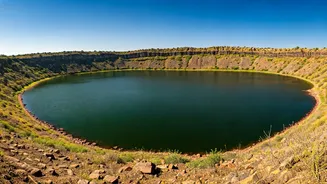
Approximately 50,000 years ago, a colossal meteorite, estimated at two million tons and traveling at immense speeds, dramatically impacted the Deccan Plateau.
This celestial event, occurring in the ancient basaltic rock formations, carved out what is now known as Lonar Lake. This geological marvel, situated in Maharashtra, is not just a lake but a profound imprint of an extraterrestrial visitor on Earth's surface. Its formation in such hard rock, akin to the composition of Mars, has led to its designation as an 'earthly twin of Mars.' This makes Lonar a crucial site for NASA scientists, providing a terrestrial environment to study conditions that may have once existed on the Red Planet, particularly concerning the presence of water.
Dual Waters
Descending into the Lonar crater is like entering another realm, where the atmosphere shifts and the modern world recedes. The steep, jungle-clad walls create a sense of primeval isolation. Within this unique environment, the lake itself presents a fascinating paradox: two distinct bodies of water, one saline and the other alkaline, that remarkably refuse to mix. This unusual chemical stratification has puzzled researchers for many years, creating a landscape of dual natures – a blend of salty and fresh, ancient yet vibrantly alive, a testament to the crater's extraordinary geological conditions.
Microbial Spectacle
Lonar Lake is a dynamic entity, capable of dramatic transformations. In 2020, it surprised observers by turning a vibrant, almost otherworldly pink overnight. This astonishing change wasn't a sign of distress but a manifestation of biological activity. Specifically, a proliferation of rare microorganisms known as Haloarchaea, triggered by an increase in water salinity, released pigments that suffused the lake with a rosy hue. This event highlighted that Lonar is not a static historical artifact but a living, evolving ecosystem with the capacity for breathtaking displays.
Ancient Ruins
Along the lake's edge, remnants of a bygone era emerge from the earth: the 'Ghost Temples.' These are ancient Hemadpanti architectural ruins, dating back to the 12th century, gradually being absorbed by the lake's silt and the encroaching vegetation. A deep sense of tranquility pervades these stone structures, which have witnessed nearly a millennium of history. In the vast timescale of the crater's existence, these temples represent a relatively recent chapter, serving as a poignant reminder that while human civilizations and their grand structures may fade, the enduring presence of the crater persists.
Geological Souvenirs
The very ground beneath one's feet at Lonar tells a story of cosmic impact and elemental transformation. Closer inspection of the soil can reveal fascinating geological artifacts. One might discover 'maskelynite,' a form of natural glass created by the intense heat and pressure of the meteorite strike, or magnetic fragments that cause compasses to behave erratically, appealing to enthusiasts of space phenomena. Each small stone or fragment serves as a tangible memento from the stars, offering a direct connection to the cataclysmic moment that permanently altered Earth's landscape.
Cosmic Perspective
As twilight descends and long shadows stretch across the water from the crater's rim, Lonar Lake reveals itself as more than just a tourist attraction or a scientific curiosity. It offers a profound contemplation of time and our place within it. For fifty thousand years, this crater has been a silent witness to the end of the Ice Age, the rise and fall of civilizations, and the slow, majestic movement of the stars. Standing here provides a unique intersection of Earthly and cosmic perspectives, underscoring the continuous influence of the universe on our planet.