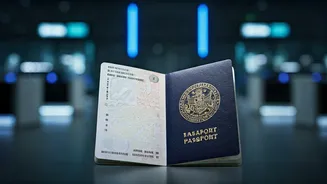







What is an e-Passport?
An e-passport, also known as a biometric passport, is a significant advancement in travel documentation. It incorporates a microchip that stores the holder's
biometric data, such as facial recognition and fingerprints, in addition to the standard information found on a traditional passport. This microchip enhances security features. The embedded chip ensures secure storage and transfer of the holder's information. The e-passport is designed to protect against fraud, and it simplifies the immigration process. The e-passport is a digital upgrade. Its features are tailored to increase security and make international travel a smoother experience for Indian citizens.
Key e-Passport Benefits
The e-passport offers several advantages for Indian citizens. One of the main benefits is enhanced security. The embedded chip makes it difficult for identity theft or fraud. Another key advantage is the faster processing times. Immigration counters equipped with e-passport readers can quickly verify the holder's details, reducing waiting times and streamlining the entry process at airports worldwide. Furthermore, e-passports are compatible with automated border control systems. This facilitates quicker entry and exit processes. The e-passport initiative aims to make international travel more secure and efficient for all Indian citizens, contributing towards a hassle-free experience.
Security Features Explained
The e-passport integrates multiple advanced security features. The primary security feature is the embedded microchip, which securely stores the holder's biometric data, including a digital photograph. These details are digitally signed. This makes it impossible for unauthorized alteration. Advanced encryption technologies are used to safeguard the information from cyber threats and data breaches. Tamper-proof materials and sophisticated printing techniques enhance physical security. This makes the e-passport highly resistant to counterfeiting. Moreover, e-passports are designed to meet international standards set by the International Civil Aviation Organization (ICAO). This ensures global compatibility and recognition, boosting security and allowing seamless passage at border controls globally.
How It Simplifies Travel
E-passports streamline the immigration process in several ways. The chip enables faster verification of the passport holder's identity. This reduces wait times at immigration counters. Automated border control systems, equipped with e-passport readers, provide an even more efficient process, often allowing travelers to bypass lengthy queues. These systems swiftly scan the e-passport and verify the holder's data, allowing for quick entry and exit. Overall, this technology aims to simplify international travel, making it smoother and more convenient. By cutting down on the time spent at airports, e-passports enhance the overall travel experience, letting travelers focus on their journey.
Details for Indian Citizens
Indian citizens should be aware of key details regarding the e-passport rollout. The initiative aims to provide secure and efficient travel documents to all Indian passport holders. The e-passports will incorporate advanced security features. Indian citizens are advised to check official government websites for updates on the rollout. This will keep them informed about application procedures and the availability of e-passports in their region. The government is expected to release a detailed schedule for the issuance of e-passports. Citizens are encouraged to carefully follow the guidelines and complete the application process correctly. This will ensure they receive their updated travel documents efficiently. They should be vigilant against fake information or fraudulent schemes.
Application and Issuance
The application process for e-passports will likely resemble the current process. Applicants may need to submit online applications via the Passport Seva Portal, the official government website. Supporting documents, such as proof of identity and address, will be necessary. After submission, applicants will typically undergo biometric data collection, which includes fingerprints and facial scans. The application may require a personal interview to verify the applicant's details. Upon approval, the e-passport will be printed and issued to the applicant. The issuance time may vary. Applicants are urged to keep track of their application status through the online portal and adhere to instructions for a smooth and effective application.
Impact on Travel
The introduction of e-passports is set to change travel experiences. One key impact will be the reduction in processing times at immigration checks. Enhanced security measures will reduce risks of fraud, and protect against identity theft. E-passports enable use of automated border control systems at many airports across the world. They will streamline entry and exit for travellers. Overall, e-passports will make international travel more efficient, safer, and user-friendly for Indian citizens. This initiative aligns with global efforts to modernize travel and border security. Indian travellers will benefit from advanced technology that enhances their journeys abroad.