






A New Vision
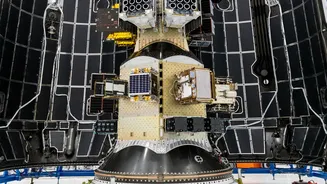
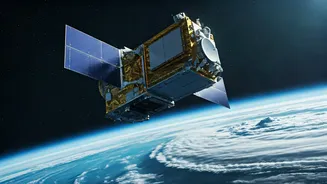
India's space capabilities have taken a significant leap forward with the successful deployment of Mission Drishti, the globe's inaugural operational OptoSAR
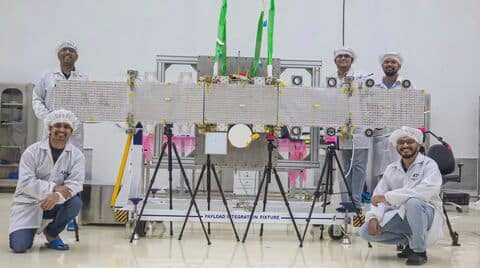
satellite. This groundbreaking initiative is a product of over five years of dedicated, in-house research and development, representing a major milestone for the nation's burgeoning private space industry. The satellite, weighing 190 kilograms, is also notable for being the largest privately constructed satellite in India to date. Its launch signifies a pivotal moment, underscoring the nation's commitment to innovation and self-reliance in critical technological domains, particularly in the realm of space-based surveillance and Earth observation. The successful mission highlights the growing prowess of India's young talent and their contribution to nation-building.
Dual-Sensor Powerhouse
The core innovation of Mission Drishti lies in its sophisticated OptoSAR (Optical and Synthetic Aperture Radar) technology. Unlike traditional satellites that rely on either optical sensors, which provide clear images but are hampered by cloud cover and darkness, or SAR, which can penetrate atmospheric conditions and operate around the clock but often yield more complex imagery, Drishti integrates both. This synergistic approach allows for a continuous, unimpeded view of Earth's surface, regardless of prevailing weather patterns or the time of day. This persistent, all-weather surveillance capability provides an unparalleled advantage in monitoring terrestrial activities, crucial for strategic assessments, disaster response, and a myriad of other applications where real-time, comprehensive data is paramount.
Strategic Edge
The strategic implications of Mission Drishti are profound, offering India an advanced 'eye in the sky' with remarkable observational depth. This enhanced surveillance capacity is designed to provide a critical advantage in monitoring activities across borders, particularly in sensitive geopolitical regions. It addresses past limitations where, during operations like 'Operation Sindoor,' India had to depend on external commercial imagery to assess situations. With Drishti, India can now independently gather detailed intelligence, ensuring it has a clearer understanding of its strategic environment. The ability to observe without interruption, even through dense cloud cover or at night, provides a significant enhancement to national security decision-making processes.
Private Sector Ascendance
Mission Drishti represents a landmark achievement not only for India's space program but also for its rapidly evolving private space sector. Developed by Bengaluru-based startup GalaxEye, this mission serves as a powerful testament to the efficacy of India's space reforms, which actively encourage and support private enterprise. Institutions like IN-SPACe have played a crucial role in fostering this ecosystem, building confidence and capacity among private players. The successful deployment of Drishti validates the government's vision, demonstrating that Indian private companies are capable of developing and launching complex, high-value technologies with global relevance. This success is expected to further boost confidence in India's space capabilities, both domestically and internationally, paving the way for more ambitious private ventures.
Future Constellation Plans
Looking beyond its immediate deployment, Mission Drishti is the initial step in a larger strategic vision. GalaxEye has outlined ambitious plans to expand its OptoSAR satellite constellation over the next five years. This expansion aims to provide even more comprehensive and persistent Earth observation coverage, further strengthening India's sovereign capabilities in this critical domain. The company is also forging important collaborations, such as its partnership with NewSpace India Limited (NSIL), ISRO's commercial arm, to facilitate the global distribution of its imagery. This move not only extends the reach of Indian private satellite data into international markets but also positions India as a significant player in the global space economy.