


Internal Color Clues
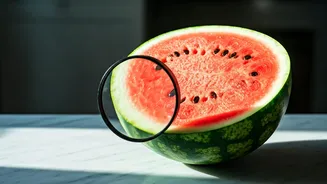
When you slice open a watermelon, pay close attention to the flesh's hue. A naturally ripe watermelon will exhibit a red or pink color that isn't uniformly
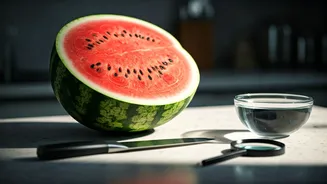
bright; you should observe slight variations in shade and perhaps some subtle white fibers interspersed throughout. If the inside appears an unnaturally vibrant, almost glowing red, and perfectly even, as if painted, this could indicate the presence of artificial red dyes. These synthetic colorants, such as Red No. 3 and Red No. 40, have been linked to various health concerns, including potential carcinogenicity in animal studies, behavioral issues like hyperactivity in children, and allergic reactions. Some of these dyes are even facing regulatory scrutiny and potential bans due to these risks. A natural watermelon's juice will have a less intense, more muted color profile.
The Tissue Paper Check
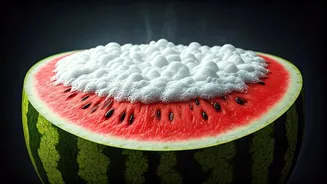
One of the most straightforward methods to detect artificial coloring is the tissue paper test. Take a small piece of the watermelon's red flesh and gently rub it against a clean white tissue or a cotton cloth. If the tissue immediately absorbs a strong, vivid red or pink stain, it strongly suggests that artificial coloring has been used. The natural juices from a genuine watermelon will transfer much less color, leaving only a faint, subtle mark on the tissue, thereby confirming its natural origin and absence of injected food colorants.
Surface Texture Assessment
As you select a watermelon, use your sense of touch to gauge its texture. A naturally grown watermelon typically feels firm to the touch, but with a slightly grainy surface, indicative of its natural development. Conversely, watermelons that have been tampered with, particularly injected ones, might feel overly soft, mushy, or excessively watery. Look out for any unusual cracks or inconsistencies within the flesh itself, as these could also be telltale signs of chemical intervention or artificial treatments.
Savoring the Taste
Before consuming a significant portion of a watermelon, it's wise to taste a small bite cautiously. A real, natural watermelon should offer a mildly sweet and refreshing flavor. In contrast, watermelons treated with chemicals might exhibit an overly intense sweetness, a surprisingly bland taste, or even a slightly bitter or chemical-like aftertaste. If the flavor seems unusual or off in any way, it's prudent to cease eating it to avoid potential adverse effects.
Seed Examination
The appearance of a watermelon's seeds can also provide clues about its authenticity. Properly ripened, natural watermelons usually contain well-formed seeds that are dark brown or black in color. If you notice seeds that are pale, unusually small, or irregular in shape, this could be an indication that the fruit has undergone artificial ripening processes or has been subjected to other chemical treatments to enhance its appearance or speed up its growth.
Exterior Inspection
Before making a purchase, take a moment to examine the watermelon's rind. A good, natural watermelon will typically have a dull green exterior with a creamy yellow patch on one side; this is the spot where it rested on the ground while growing. If the skin appears excessively shiny, waxy, or has a polished look, it might have been treated with chemicals to give it an artificial sheen or to preserve it for longer periods.
Quick Water Purity Test
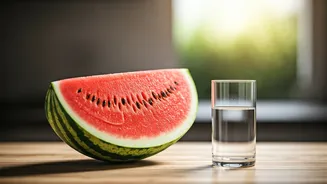
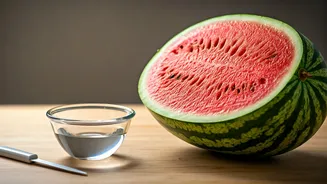
A simple yet effective test for a watermelon's purity involves water. Take a small chunk of the fruit and place it into a glass of clear water. Observe the water closely. If the water rapidly transforms into a deep red color, it's a strong indicator that artificial coloring is leaching out, suggesting the watermelon has been adulterated. Natural watermelon juice does not typically cause such a dramatic and immediate color change in water.
Pre-Cut Caution
It is advisable to steer clear of pre-cut watermelon pieces, especially those sold by roadside vendors. These segments are more susceptible to contamination and tampering. Opt to buy whole watermelons whenever possible. Once home, wash the entire fruit thoroughly under running water before cutting it yourself. Store any leftovers properly in an airtight container in the refrigerator and consume them within a couple of days to maintain freshness and safety.