




Vertical Assembly Begins
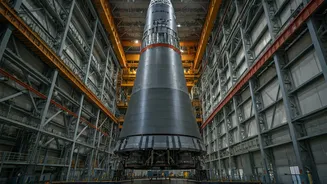
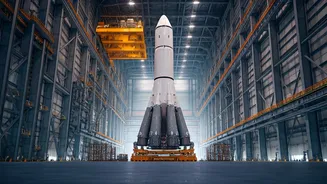
Inside the sprawling Vehicle Assembly Building at Nasa's Kennedy Space Centre in Florida, a significant step for the Artemis 3 mission has been achieved:
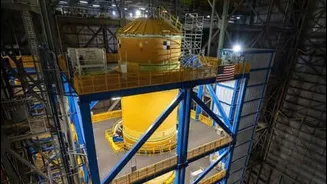
the core stage of the colossal Space Launch System (SLS) rocket is now standing vertically. This critical maneuver places the primary component of the lunar-bound rocket in position for further integration. Engineers will meticulously prepare this massive section, which stands at an impressive 212 feet tall and houses the rocket's four powerful RS-25 engines. The next phase involves attaching the engine section and other vital components, all in preparation for the ambitious 2027 mission. This development marks a tangible progression in Nasa's endeavor to return humans to the lunar surface later this decade, bringing the agency closer to its long-term goals for lunar exploration.
Mission Objectives Clarified
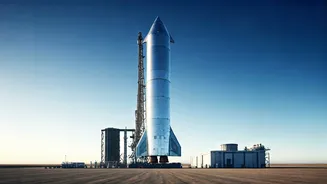
The Artemis 3 mission, currently slated for a late 2027 launch, is not solely about reaching the Moon; its primary objective is to rigorously test Nasa's advanced lunar landing systems. While astronauts will not attempt a surface landing on this particular mission, they will remain in Earth orbit. There, they will conduct intricate docking and rendezvous maneuvers with one or potentially both of the human landing systems being developed by commercial partners like SpaceX and Blue Origin. This crucial in-orbit testing is designed to verify the safety and operational readiness of these next-generation landers before they are entrusted with carrying astronauts down to the lunar surface. The insights gained from Artemis 3 will directly inform and secure the success of future lunar landing attempts, such as the Artemis 4 mission planned for 2028, which is anticipated to be the program's inaugural crewed lunar touchdown.
Rocket Scale and Program Vision
The sheer magnitude of the Artemis 3 launch vehicle is staggering. When fully assembled, including the Orion spacecraft, upper stage, and two immense solid rocket boosters, the complete SLS rocket will tower approximately 322 feet into the sky. When fueled, this behemoth will weigh an incredible 5.75 million pounds. This massive undertaking is part of Nasa's broader Artemis program, which is dedicated to establishing a sustained human presence on the Moon. Beyond the immediate missions, the program aims to lay the groundwork for a permanent lunar base near the Moon's south pole by the early 2030s. This ambitious vision is further bolstered by the recent success of the Artemis 2 mission, which successfully sent astronauts on a journey around the Moon and back, validating key systems for crewed lunar operations and demonstrating the program's forward momentum.