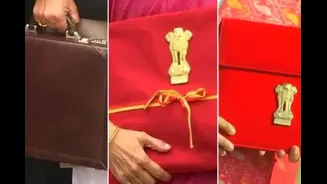
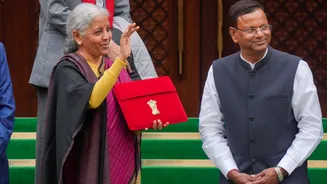
As India prepares for the Union Budget 2026, the focus extends beyond policies to the iconic red pouch. This familiar sight signifies more than just financial plans; it represents a blend of tradition, change, and the nation's evolving identity. From British-era briefcases to digital tablets, the journey of India's Budget presentation tells a compelling story of cultural adaptation and modern innovation.
Early Budget Days
India's financial tradition began with a nod to British practices. The early finance ministers, like R.K. Shanmukham Chetty, carried leather briefcases, mirroring the 'Gladstone Box' used in the UK. This tradition, reminiscent of the British parliamentary style, persisted for several decades. The use of a briefcase was a direct adoption, symbolizing the authority and significance of the financial documents within. The word "Budget" itself has roots in the French term "bougette," a leather bag. This historical background provides context for the later shifts in India’s approach to budget presentation, setting the stage for the transformations that would follow as the country evolved.
The Red Connection
The association of the Budget with the color red is deeply rooted in tradition and symbolism. The practice of using red covers for financial documents can be traced back to the British parliamentary system, where red cases were used to denote the importance and authority of financial papers. In India, the color red holds significant cultural meaning, symbolizing strength, prosperity, and auspicious beginnings. This significance made the transition to the red pouch a natural fit for India's budget presentation. By embracing the color red, the country not only maintained a symbolic link to its financial processes but also infused it with a sense of cultural identity and heritage.
Briefcase to Bahi Khata
A significant change occurred in 2019 when Finance Minister Nirmala Sitharaman replaced the traditional briefcase with a 'bahi khata,' a red cloth ledger commonly used by traders. This marked a deliberate move away from the colonial legacy, embracing a symbol of Indian commerce and cultural identity. Sitharaman's choice reflected a broader desire to move beyond British influences and establish a more distinctly Indian approach to presenting the budget. The 'bahi khata' was more than just a different container; it was a statement of cultural pride and a recognition of the country’s roots in its own traditions. This change was a symbolic step toward indigenization, aligning the financial presentation with the nation's evolving identity.
Going Paperless
The next significant evolution in India's budget presentation came in 2021 with the shift to a paperless format. Finance Minister Nirmala Sitharaman began carrying a made-in-India tablet encased in a red pouch. This change represented a major technological leap and a modernization of the budget process. This move was a blend of technology and tradition, as the red pouch maintained the symbolic link to the color's significance while embracing digital tools. The tablet allowed for easier access to documents and enhanced the presentation's efficiency and accessibility. This shift marked a critical moment in India's budget presentation, combining tradition with technological advancement.
Sitharaman's Perspective
Nirmala Sitharaman's decision to move away from the briefcase reflects a conscious effort to break free from colonial influences. Explaining her choice, she emphasized the importance of embracing Indian traditions and creating an identity rooted in the country's own heritage. Sitharaman's actions showcased a commitment to modernizing the budget presentation while still honoring its traditional symbolic values. This was not merely a cosmetic change but a reflection of a deeper shift towards cultural self-awareness and a move towards something that was 'easier' for her to carry as well. Her choices provided a meaningful narrative about the evolution of the budget presentation.
Looking Ahead
As the Union Budget 2026 approaches, the spotlight shines not only on policies and economic numbers but also on the familiar red pouch, which has come to symbolize change and cultural identity. Finance Minister Nirmala Sitharaman will present her ninth consecutive budget on February 1, for the fiscal year from April 2026 to March 2027. This presentation on a Sunday, a first in independent India’s history, highlights the importance of the event. The budget is expected to focus on sustainable growth, fiscal discipline, and reforms to protect the economy from global trade tensions. The evolution of the budget presentation, from briefcases to tablets, reflects the nation's journey towards modernity while preserving its heritage.