





A Floral Dream Blooms
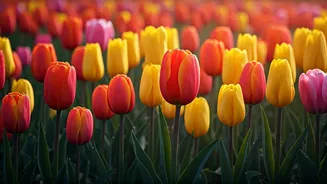
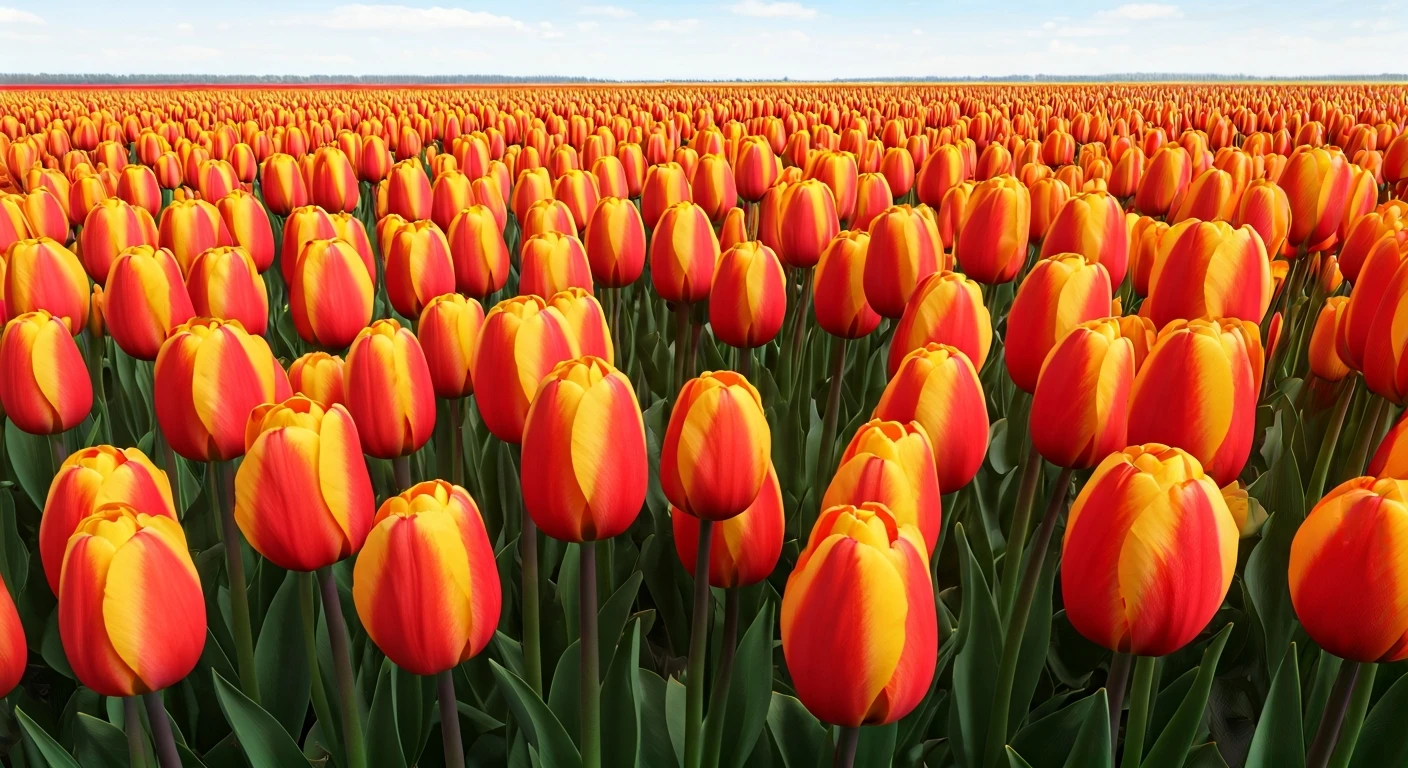
The heart of Delhi's Connaught Place is now a riot of color with the city's inaugural tulip show, a magnificent spectacle featuring over 1.5 lakh tulips
spanning 40 distinct varieties. This enchanting event is the result of a collaborative effort between the New Delhi Municipal Corporation (NDMC) and the Embassy of the Netherlands, championed by Ambassador Marisa Gerards, who described its realization as a 'dream come true.' More than just a visual feast, the month-long exhibition is designed to foster deeper cultural understanding and boost tourism between the two nations. The specially cultivated tulips, all the way from the Netherlands, have been meticulously prepared to adapt and flourish within Delhi's unique climate. Complementing the floral display are vibrant cultural performances and an array of food stalls, offering visitors an authentic taste of Dutch heritage, further solidifying the event's role in strengthening the burgeoning Indo-Dutch relationship.
The Tulip's Indian Connection
Beyond the visual splendor, the tulip holds a special place in the narrative of Indo-Dutch relations, even inspiring artistic tributes. The Netherlands has previously honored Indian icon Aishwarya Rai Bachchan by naming a vibrant yellow and orange tulip variety after her in 2005, a bloom that continues to enchant visitors at the Keukenhof Gardens. Ambassador Marisa Gerards harbors a hopeful aspiration to develop a new tulip variant specifically suited to Indian growing conditions, with the potential to be named after another esteemed Indian personality. This ambition underscores a deeper desire to weave the tulip more intimately into the Indian landscape. The ambassador also fondly recalled the nostalgic impact of the iconic Bollywood song 'Dekha Ek Khwaab' from the film Silsila, which was filmed amidst the stunning Keukenhof Gardens, highlighting how this cinematic connection introduced the tulip's allure to a vast Indian audience and subsequently drew many tourists to witness its beauty firsthand.
Cultivating Resilience and Tradition
The challenge of cultivating these delicate flowers in India's diverse climate is being met with innovative approaches. While the majority of tulip bulbs are currently imported from the Netherlands, there's a significant push, in partnership with the Institute of Himalayan Bioresource Technology in Palampur, to cultivate and reuse tulip bulbs locally. This initiative aims to build self-sufficiency and adapt the growing process to Indian conditions. Ambassador Gerards explained that while tulips can remain in the soil during colder weather, they require well-drained soil to prevent rotting in the summer heat, or alternatively, bulbs need to be carefully stored in temperature-controlled environments before replanting. Her husband, biologist Peter Knoope, elaborated on the intricate horticultural techniques involved, such as trimming 'offshoot' bulbs from the mother bulb to encourage faster propagation. He noted that while bulb multiplication yields genetically identical clones for quick growth, cross-pollination through the tulip's male and female parts produces seeds that offer greater genetic diversity but take longer to bloom.
Symbolism and Survival
The tulip transcends its role as a mere flower, embodying profound symbolism for both the Netherlands and India. Ambassador Gerards drew a poignant parallel between the tulip's significance to Dutch identity and the Indian lotus's deep cultural roots, characterizing the tulip as a symbol of optimism and the renewal that spring brings. For both the Ambassador and her husband, the tulip also carries a powerful historical weight, representing resilience and survival, particularly during World War II. Gerards shared a deeply personal account of how Dutch civilians, including her own mother, subsisted on tulip bulbs during severe German blockades in 1944-1945 when food supplies were critically low, with daily rations dwindling to as little as 400-800 calories. These bulbs were a last resort, prepared by peeling, removing the bitter core, and boiling them for soup or drying them into flour to sustain life. This historical context imbues the tulip with a profound narrative of hardship, endurance, and eventual triumph over adversity.
A Global Flower's Journey
The tulip's captivating story spans continents and centuries, originating from the heart of Central Asia and journeying through the Ottoman Empire before gracing Europe in the 16th century. Today, there are over 3,000 officially recognized tulip varieties, showcasing an incredible diversity from classic single hues to strikingly dramatic forms. Historically, these coveted blooms were bestowed with grand titles, such as 'Admiral' and 'General,' and even named after prominent historical figures. The 17th century witnessed a speculative frenzy known as 'Tulip Mania' in the Netherlands, where the demand for rare bulbs soared to extraordinary heights, with some fetching prices equivalent to entire houses and being traded on the Amsterdam Stock Exchange. Although this speculative bubble eventually burst, the tulip's enduring popularity continued to spread worldwide, leading to its celebration in spring festivals across the globe. The Netherlands currently dominates approximately 80 percent of the global tulip market, and there's a renewed interest in cultivating the original, smaller variants that were native to Central Asia, Turkey, and Iran.