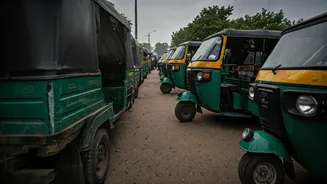







LPG Scarcity Hits Autos
The availability of Liquefied Petroleum Gas (LPG) has become critically scarce in Bengaluru, significantly impacting the city's autorickshaw sector. This
disruption has forced a substantial portion of the LPG-dependent autorickshaw fleet to be withdrawn from service, as drivers grapple with the inability to refuel their vehicles. Consequently, commuters have found their transportation options narrowed, pushing them towards an increasing reliance on autorickshaws that run on Compressed Natural Gas (CNG). The core of the issue lies in the dwindling supply of LPG, making it nearly impossible for many drivers to continue their daily operations and sustain their livelihoods. This situation has created a widespread sense of uncertainty and difficulty for those who depend on LPG as their primary fuel source, directly affecting the city's public transport network.
The CNG Shift Dilemma
As LPG stations faced widespread stockouts, many autorickshaw drivers, facing no viable alternative, began transitioning to Compressed Natural Gas (CNG). This mass migration to CNG, however, has inadvertently created a new bottleneck. While CNG-operated autorickshaws have continued to function relatively unimpeded, the surge in demand has led to extended queues at the limited CNG filling stations. This shift, driven by necessity, has highlighted the interconnectedness of fuel supplies and the potential for one crisis to create another. Drivers are now contending with long wait times at CNG pumps, further impacting their earning potential and adding to the overall inconvenience for passengers seeking reliable transport within the city.
Driver Frustrations Mount
Autorickshaw drivers caught in the LPG crisis are expressing deep frustration and uncertainty regarding their future. Information about fuel availability often circulates informally, proving to be unreliable and leading to wasted trips. Drivers like Ravi Kumar are hesitant to travel across the city chasing unconfirmed fuel leads, deeming it impractical due to the high chance of arriving only to find the fuel already depleted or facing endless waiting times. Salim Ahmed points to the confusion surrounding supply, which exacerbates the problem by causing overcrowding at specific locations. This lack of clear communication and consistent supply creates a stressful environment, making it difficult for drivers to plan their workdays and earn a stable income.
Structural Factors at Play
Beyond immediate supply disruptions, structural issues are also contributing to the LPG shortage. According to M Manjunath, President of the Adarsha Auto and Taxi Drivers’ Union, Bengaluru has approximately 80,000 LPG autorickshaws compared to 100,000 CNG autorickshaws. A key factor is the gradual conversion of existing LPG outlets into CNG stations, reducing the overall availability of LPG infrastructure. Additionally, some drivers reportedly engage in hoarding fuel in anticipation of shortages, further tightening the supply for others. These underlying economic and infrastructural shifts mean that the current crisis is not merely a temporary glitch but indicative of deeper challenges within the city's fuel distribution network for transport.
Signs of Stabilization
In recent days, there have been indications of improvement in the LPG supply situation. Public sector fuel stations that had temporarily ceased operations have resumed services, leading to a slight decrease in prices from around ₹95 per litre to approximately ₹89.5 at certain outlets. Despite these positive steps, queues at refuelling stations remain notably long, with autorickshaws lining up for hundreds of metres. Even with increased inflows, the process of refuelling can take several hours, prompting some drivers to store extra fuel as a precautionary measure due to ongoing uncertainty about the stability of the supply chain. Private LPG outlets, however, continue to experience significant disruptions, with some remaining shut due to a persistent lack of stock and unclear timelines for replenishment.
Broader Implications for Mobility
The ongoing LPG crisis in Bengaluru extends beyond the immediate concerns of autorickshaw drivers, raising broader questions about urban mobility and fuel access. Drivers' unions are advocating for more consistent fuel supply and improved distribution mechanisms to prevent future disruptions. On a larger scale, officials are highlighting efforts to stabilize supply, including increased fuel inflows through the New Mangalore Port. This port has been instrumental in handling multiple shipments of crude oil and LPG, destined for both strategic reserves and commercial distribution. Vessels carrying LPG are actively being processed for regional distribution, involving major oil companies. The consistent handling of these shipments is considered vital for restoring stable fuel supplies across southern India and mitigating the daily impacts of such shortages.