







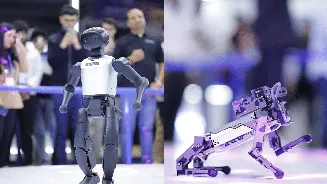
Robotics Platform Debut
Qualcomm recently brought its extensive robotics capabilities to India, specifically showcasing its AI-driven humanoid robot technology at the India AI Impact
Summit 2026 in New Delhi. This event marked the initial public demonstration of their comprehensive robotics solution in the Indian market, having previously introduced the platform at the Consumer Electronics Show earlier in the year. The company presented a complete, integrated system encompassing hardware, software, and artificial intelligence, designed to expedite the integration of 'physical AI' systems. This includes a wide range of robotic applications, from domestic assistants and sophisticated industrial autonomous mobile robots (AMRs) to full-scale humanoid robots capable of complex interactions and tasks in various environments.
Dragonwing IQ-10 Chip
A central element of Qualcomm's showcase was the introduction of the Dragonwing IQ-10, a processor engineered exclusively for robotics applications. This cutting-edge chip is intended to drive the next generation of full-sized humanoid robots and advanced AMRs designed for operational efficiency within manufacturing plants and distribution centers. Qualcomm highlights that the Dragonwing IQ-10 is built to manage demanding robotics functions while maintaining a high level of energy efficiency. It serves as the foundational component of Qualcomm's broader robotics architecture, providing developers with the flexibility to scale performance and adapt the technology to a diverse array of robot designs and specific use cases across different sectors of the economy.
Modular Design Philosophy
During a live demonstration featuring a humanoid robot in action, Qualcomm elaborated on its philosophy of a general-purpose robotics architecture. This system integrates edge computing capabilities, sophisticated machine learning tools, robust software frameworks, and an innovative 'AI data flywheel' mechanism. The core concept is to empower robots with continuous learning and improvement capabilities. By combining vision, audio, and motion processing, robots can adapt more effectively to novel environments and execute tasks with greater precision and efficiency in real-world scenarios. Qualcomm emphasized that this modular design approach simplifies the deployment of robots in industrial settings, ensuring both reliability and adherence to stringent industry standards.
Industry Focus Areas
Qualcomm is strategically concentrating its efforts on 10 high-priority tasks within key industries such as logistics, manufacturing, and retail, rather than attempting to address all potential applications simultaneously. These targeted tasks include critical operations like item picking, case stacking, streamlining production line sequencing, and comprehensive inventory scanning. The company's rationale behind this focused approach is to accelerate the commercial adoption of robotic solutions, particularly in sectors experiencing a rapid increase in demand for automation. By prioritizing these specific, high-impact tasks, Qualcomm aims to deliver tangible benefits and drive widespread implementation of their advanced robotics technology.