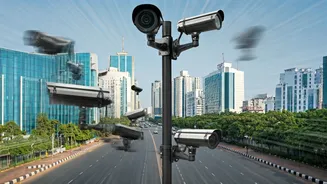




AI Cameras Deployed
Bengaluru's police have integrated AI-powered cameras into their operations. This initiative reflects a broader trend of incorporating advanced technology
to enhance law enforcement capabilities. These cameras are not simply for surveillance; they are designed to analyze real-time data and provide actionable insights. The integration of AI aims to improve the efficiency and effectiveness of policing strategies.
Tackling Law and Order
The primary objective of deploying AI cameras is to directly address existing law and order issues. These cameras assist in identifying and responding to incidents as they occur. By analyzing video feeds, the AI systems can detect unusual activities, such as suspicious movements or gatherings. This allows for quicker response times and more targeted interventions, aiming to create a safer environment for residents.
Preventing Crime Too
Beyond addressing current issues, the AI cameras are designed to proactively prevent crime. The technology can identify patterns and anomalies that might indicate potential criminal activity. The predictive capabilities enable the police to take preemptive measures, thus deterring crime before it can occur. This proactive approach is a key component of the city’s strategy for long-term safety improvements.
Data and Analysis
The effectiveness of AI in policing heavily relies on the analysis of collected data. These cameras gather vast amounts of visual information. Advanced algorithms process this data to identify key indicators related to criminal behavior, enabling a data-driven approach. Such analytical capabilities provide law enforcement with deeper insights into crime trends, facilitating informed decision-making and resource allocation.
Implications and Concerns
The deployment of AI cameras raises important questions about privacy and civil liberties. Balancing the benefits of increased public safety with the need to protect individual rights is crucial. Discussions about data security and transparency will be necessary to ensure responsible and ethical use. Clear guidelines and oversight mechanisms are essential to maintain public trust and prevent misuse of the technology.
Future Developments
The integration of AI in policing is an ongoing process with continued advancements. The technology is likely to evolve, with improvements in accuracy and capabilities. Further development could lead to even more sophisticated crime prevention and detection strategies. This evolution requires continuous investment in both technology and training to ensure law enforcement remains at the forefront of security innovations.