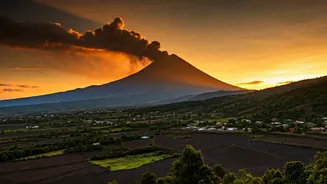








A Risky Choice?
Living in the shadow of an active volcano presents a unique set of challenges. One might question why anyone would choose such a potentially hazardous
location. However, for many, the advantages, such as rich, fertile soil that's excellent for agriculture, outweigh the risks. This has led to the establishment of communities near these volatile geological features. Tourism also plays a role, with some regions benefiting economically from the attraction of adventurous travelers keen to witness the raw power of nature. However, the biggest factor of them all is the cultural tie they have with the place and the inability to leave because of the limitation of spaces.
Fertile Soil's Allure
Volcanic soil, known for its fertility, is a major draw for farmers. The ash and minerals released during eruptions enrich the land, resulting in highly productive agricultural areas. This advantage allows communities to thrive economically through crop production, sustaining livelihoods and supporting local economies. It’s a compelling trade-off, where the threat of eruptions is balanced against the promise of abundant harvests. In regions with limited arable land, this becomes even more significant, making volcanic zones attractive for cultivation and settlement. This has, in turn, allowed communities to flourish.
Tourism's Economic Boost
The dramatic landscapes and geological phenomena associated with volcanoes also attract tourism. People from all over the world come to witness these natural wonders, bringing revenue to local businesses, including hotels, restaurants, and tour operators. Tourism provides employment opportunities for residents, further integrating the community with the volcano, both physically and economically. As the area benefits from tourism, it creates an environment where people find themselves bound to the volcano’s presence; a paradox where danger also brings prosperity.
Cultural Connection & Safety
For some communities, the association with volcanoes runs deep. Cultural significance, historical ties, and even religious beliefs may root people to their ancestral lands, despite the hazards. The volcano may be seen as a part of their identity. However, modern technology is playing a crucial role in mitigating the risks associated with living near active volcanoes. Advanced monitoring and early warning systems can now provide real-time data about seismic activity, gas emissions, and other indicators of potential eruptions. This technology allows scientists and authorities to assess risk levels and provide timely warnings, enabling communities to prepare and potentially evacuate when necessary. This proactive approach helps to keep communities safe, allowing them to continue to thrive despite the inherent dangers.