


The Leap Forward
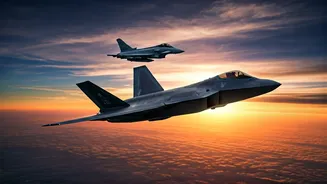
The evolution from 4.5 generation to 5th generation fighter aircraft represents a significant leap in aerospace technology, driven by the relentless pursuit
of air dominance. While 4.5 gen jets brought substantial improvements over their predecessors with enhanced avionics, radar capabilities, and reduced radar cross-sections, the 5th generation takes these concepts to an entirely new level. Key distinguishing factors emerge, primarily centered around stealth technology, sensor fusion, advanced networking, and super-cruise capabilities. These aren't just incremental upgrades; they are fundamental shifts in how aircraft are designed and how they operate in a modern combat environment. The transition signifies a move from simply being a flying weapon platform to becoming an integrated node within a larger, interconnected battlespace, capable of processing vast amounts of information and acting with unprecedented speed and discretion. Understanding this generational divide is crucial to grasping the current and future landscape of air power.
Stealth: The Invisible Edge
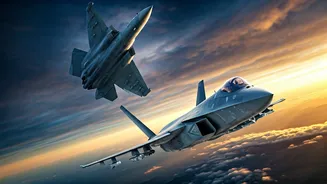
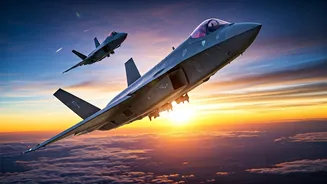
One of the most defining characteristics of 5th generation fighter jets is their advanced stealth capabilities, a feature that vastly distinguishes them from 4.5 gen aircraft. While some 4.5 gen jets incorporate reduced radar cross-section (RCS) design elements and radar-absorbent materials to minimize their detectability, 5th gen fighters are engineered from the ground up with stealth as a primary design pillar. This involves a holistic approach, encompassing not only the shaping of the airframe to deflect radar waves but also the integration of internal weapons bays, specialized coatings, and even reduced infrared signatures. The objective is to make these aircraft extremely difficult, if not impossible, for enemy radar and infrared sensors to track and target. This 'invisible' presence allows 5th gen jets to penetrate heavily defended airspace with a significantly higher degree of survivability, gaining crucial first-look and first-shot advantages over adversaries relying on older detection technologies. The operational implications of this enhanced stealth are profound, enabling strategic reconnaissance, precision strikes, and air-to-air engagements without prior detection.
Sensor Fusion and Networking
Another pivotal advancement separating 5th generation fighters from their 4.5 generation counterparts lies in their sophisticated sensor fusion and networking capabilities. 4.5 gen jets boast advanced radar systems and electronic warfare suites, providing pilots with a wealth of information. However, 5th gen aircraft take this to an unparalleled level through sensor fusion, where data from multiple onboard sensors – such as radar, infrared search and track (IRST), electronic support measures (ESM), and even data from external sources – are seamlessly integrated and processed by powerful computers. This fused picture is presented to the pilot on a single, intuitive display, significantly reducing pilot workload and enhancing situational awareness to an extraordinary degree. Furthermore, 5th gen fighters are designed as highly networked platforms, capable of sharing this fused data in real-time with other aircraft, ground stations, and command centers. This creates a cohesive battlespace awareness, allowing for coordinated operations and the rapid dissemination of critical intelligence, effectively turning each aircraft into a node within a dynamic, connected network that can outmaneuver and outthink the opponent.
Performance Enhancements
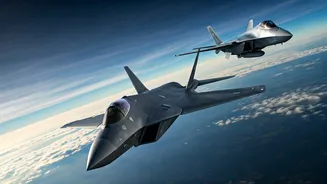
Beyond stealth and advanced electronics, 5th generation fighter jets often incorporate enhanced performance characteristics, including super-cruise capabilities, which set them apart from many 4.5 gen designs. Super-cruise refers to the ability of an aircraft to sustain supersonic flight without the use of fuel-guzzling afterburners. This allows 5th gen fighters to reach their operational areas faster, engage targets more quickly, and retreat with greater speed and efficiency, all while conserving fuel for extended missions. While 4.5 gen aircraft can achieve supersonic speeds, they typically rely on afterburners for sustained supersonic flight, which drastically increases fuel consumption and limits range. Additionally, 5th gen designs often focus on superior agility, thrust vectoring, and advanced aerodynamic features that contribute to enhanced maneuverability at both subsonic and supersonic speeds. These combined performance enhancements ensure that 5th gen fighters can not only survive in hostile airspace but also dictate the terms of engagement through superior speed, range, and agility, complementing their stealth and information-gathering advantages.