





A Woven Narrative Unveiled
At the prestigious TIME100 Summit held in New York City, Nita Ambani captivated attendees by showcasing a remarkable "tribal lore" Jamdani sari, a testament
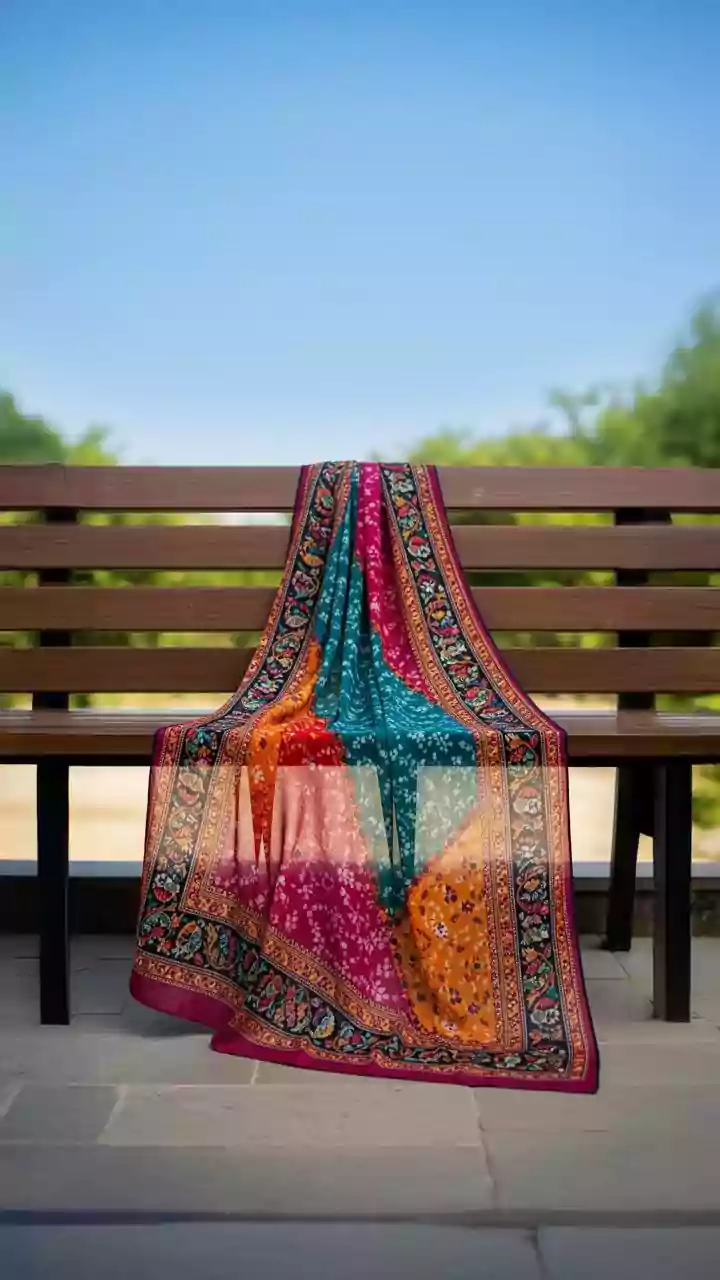
to India's vibrant textile traditions. This exquisite five-yard creation, hailing from West Bengal, was not just an attire choice but a powerful statement championing the nation's rich artisan heritage. Sourced from Swadesh, an initiative dedicated to uplifting and promoting Indian craftspeople and their legacy, the sari embodied a profound connection to cultural storytelling. The intricate weaving process spanned an impressive 24 months, meticulously executed by the renowned Padma Shri awardee, Biren Kumar Basak, in the artisan hub of Phulia, West Bengal. Basak's masterful hands brought to life a tapestry of tribal motifs and traditional imagery, including detailed meenakari work, figurative narratives, and auspicious borders featuring fish, all rendered with exceptional precision and depth. This heirloom piece truly represents a confluence of exceptional craftsmanship, rich storytelling, and enduring tradition, woven into an iconic textile.
Artistry in Every Thread
The "tribal lore" Jamdani sari worn by Nita Ambani is a masterpiece that unfolds with narrative detail. Its pallu is designed as a living tapestry, vividly depicting ceremonial scenes, human figures, diverse animals, and lush foliage, each element meticulously outlined with a jewel-like intricacy. This visual storytelling extends across the entire garment. The body of the sari features a graceful rhythm of soft pastel stripes, punctuated by richly detailed compositions that create a harmonious balance between color and form. Anchoring the drape in profound cultural significance, the borders are elegantly adorned with fish motifs, universally recognized symbols of prosperity and good fortune. The initiative highlighted this ensemble as a "rare heirloom, where craftsmanship, storytelling and tradition come together in an iconic weave," underscoring its value beyond mere fabric. It’s a powerful demonstration of how traditional Indian textiles can be celebrated on a global stage, carrying centuries of cultural meaning and artistic skill.
India's Soft Power Message
During her address at the TIME100 Summit, Nita Ambani eloquently articulated her vision for global engagement, emphasizing the power of "soft power" over "hard power." She asserted that the world thrives on a compassionate approach that seeks to unite rather than divide, a quality she identified as intrinsic to India's identity. Ambani highlighted India's 5,000-year-old civilizational legacy, rich with spirituality and practices like yoga, alongside its contributions to technology, as foundational elements of its soft power. She conveyed a strong sense of optimism and national pride, stating, "So, what better time than today to say, India’s time has come." This message, delivered while draped in an emblem of India's artistic heritage, resonated deeply, presenting a holistic picture of India's growing influence and its potential to positively shape the global landscape through its cultural richness and values.