



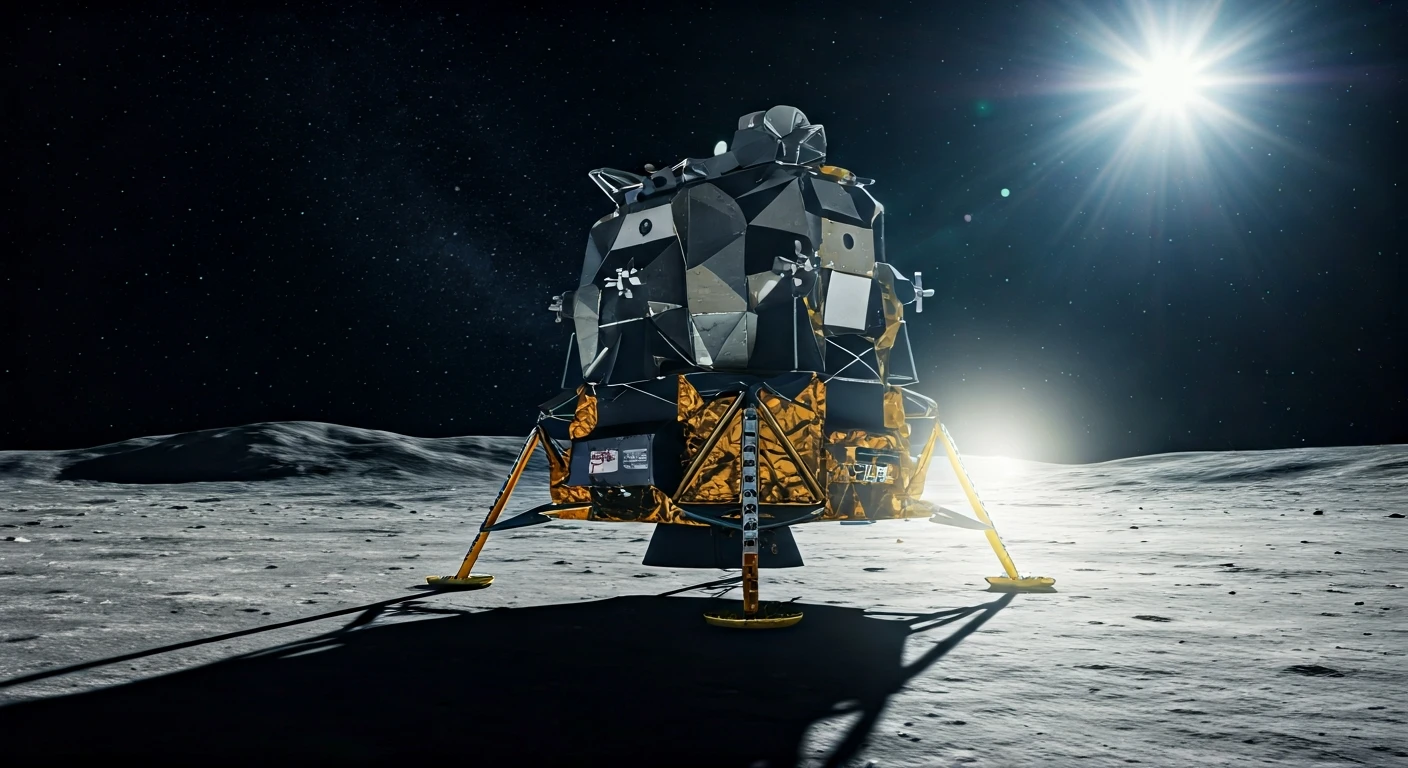
Endurance Passes Space Gauntlet
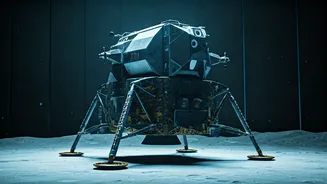
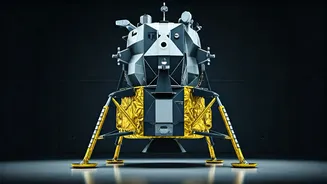
A pivotal stage in lunar exploration has been reached with the successful completion of extensive environmental testing for Blue Origin's uncrewed lunar lander,
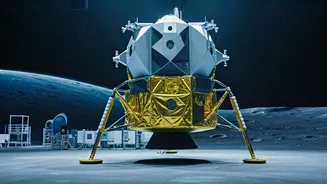
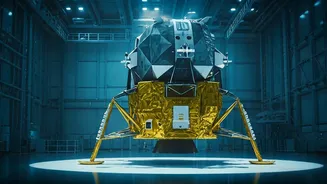
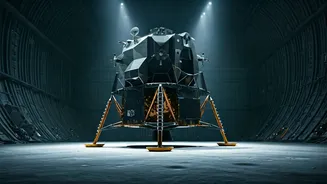
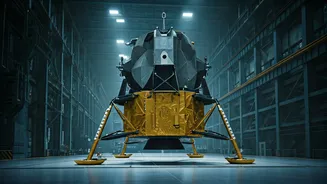
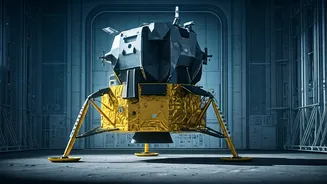
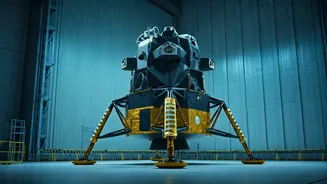
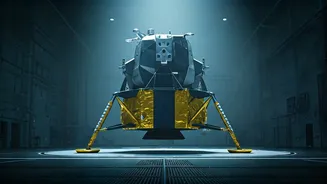
codenamed Blue Moon Mark 1 (MK1) or 'Endurance'. This crucial phase took place within the specialized, expansive vacuum chambers at NASA's Johnson Space Center. Engineers meticulously replicated the extreme conditions of outer space, including frigid temperatures and near-vacuum environments, to validate the lander's resilience and operational integrity. The primary objective was to confirm that Endurance could not only survive the harsh journey to the Moon but also function flawlessly upon arrival. This rigorous evaluation of the lander's structural soundness, thermal regulation systems, and overall performance is a cornerstone in preparing for future lunar endeavors. This collaborative effort between NASA and Blue Origin, formalized through a Space Act Agreement, underscores the synergistic approach to advancing space exploration capabilities.
MK1's Cargo Mission Goals
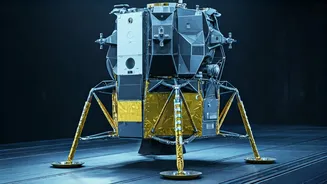
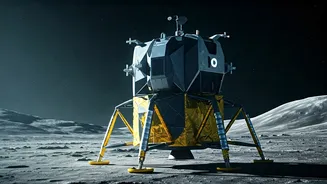
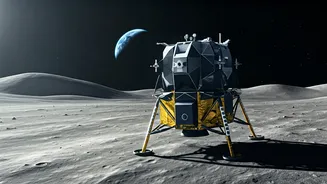
The Blue Moon Mark 1 (MK1) lander, also referred to as 'Endurance', is engineered not for human passengers, but for the critical task of delivering essential cargo and supplies to the lunar surface. This uncrewed vehicle plays an instrumental role in fulfilling the ambitious objectives of the Artemis program, which aims to establish a long-term human presence on the Moon. MK1's primary role involves demonstrating several key technologies vital for successful lunar landings. These include sophisticated autonomous guidance, navigation, and control (GNC) systems, precise landing techniques, and the utilization of cryogenic propellant systems. The chosen landing site for MK1 is the lunar south pole, an area of significant interest due to its potential for supporting future exploration bases and the presence of water ice, a valuable resource for upcoming missions. Beyond its own experimental payloads, MK1 will also carry scientific instruments designed to gather crucial data during its mission.
Eyes on Human Landings
While the Blue Moon Mark 1 (MK1) is dedicated to cargo delivery, its development and testing are intrinsically linked to the larger ambition of enabling human exploration. The technologies and insights gained from MK1's design, rigorous testing, and subsequent operations will directly inform the development of Blue Origin's Mark 2 (MK2), a more advanced lander designed to safely transport astronauts between lunar orbit and the surface. The lessons learned in areas such as system reliability, thermal management, and operational procedures for an uncrewed mission will significantly enhance the safety, dependability, and overall planning for future crewed landings. This methodical progression from cargo delivery to human transport is a critical strategy employed by NASA, leveraging its resources to accelerate private sector advancements without compromising the paramount importance of safety in space missions. The successful testing of MK1 marks a substantial stride towards realizing the vision of a sustained human presence on the Moon.
Scientific Instruments Aboard
The Blue Moon Mark 1 (MK1) lander is not merely a transport vehicle; it is also equipped to conduct valuable scientific investigations, contributing to our understanding of the lunar environment. One notable instrument is the Stereo Cameras for Lunar Plume-Surface Studies (SC LPS), a sophisticated camera system designed to capture high-resolution imagery of the interaction between the lander's engine plume and the lunar regolith during the descent and landing phase. Analyzing these interactions is crucial for understanding how landing operations might affect the lunar surface and for optimizing future landing sequences. Additionally, MK1 will carry a Laser Retroreflector Array, a passive optical instrument that allows for precise ranging measurements from Earth using lasers. This technology is vital for tracking the lander's position and for contributing to lunar geodetic studies. These scientific payloads underscore the mission's dual purpose: facilitating future human missions and advancing scientific knowledge of the Moon.