
Bhogi's Cultural Importance
Bhogi holds a prominent position within Andhra Pradesh's cultural landscape, serving as a prelude to the harvest festival of Sankranti. It is the initial
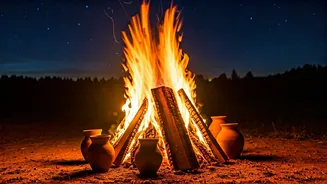
day of the three-day Pongal festivities, which are celebrated to welcome the harvest season and new beginnings. This festival is a time when the people of Andhra Pradesh discard old belongings, symbolizing the shedding of the past and embracing the future. Bonfires are a key element of Bhogi celebrations. People light bonfires by collecting unwanted items and burning them to signify the elimination of negativity and the welcoming of prosperity and positivity. This cleansing ritual prepares the way for a fresh start, fostering optimism and happiness as the state steps into the new harvest season.
Celebrations and Rituals
The celebrations of Bhogi are deeply rooted in traditions that bring together families and communities. The focal point of the celebrations is the Bhogi bonfire, lit at dawn, where people throw away old possessions. This action symbolizes the discarding of old habits, mistakes, and worries, embracing a fresh start. Alongside the bonfires, people decorate their homes with vibrant rangoli designs, and use mango leaves and flowers. These decorations represent the vibrant colours of life, prosperity, and the welcoming of positive energy into homes. Women play a crucial role, actively participating in the rituals and the preparation of festive foods. Families come together, engaging in prayers, and offering thanks for the blessings of the past year. The shared experience reinforces communal bonds and instills a sense of unity and shared heritage.
Symbolism in Practice
Bhogi's symbolic practices are rich with meaning and are carefully followed by the residents of Andhra Pradesh. The burning of old items within the Bhogi bonfire symbolizes the destruction of negative forces and the start of a clean slate. The smoke from the fire is thought to purify the environment and ward off evil influences. The vibrant rangoli patterns and floral decorations placed around homes are not just aesthetically pleasing but also carry deep symbolic value. The rangoli patterns, created with colored powders, are seen as auspicious, inviting divine blessings and prosperity into the home. The flowers and mango leaves are used to adorn the doorways, creating a welcoming and sacred ambiance, thus encouraging positive vibrations. Each element reinforces the underlying theme of renewal, inviting positivity, and starting anew, thus reflecting the community’s commitment to ushering in a good harvest and a year filled with prosperity and well-being.
Regional Variations Noted
While Bhogi's primary customs are consistent throughout Andhra Pradesh, there are subtle differences in how it is celebrated across various regions. For example, some communities have specific rituals or traditional food preparations unique to their area. Specific dishes prepared for Bhogi often differ depending on the region. In some areas, special sweets or savoury items are cooked and shared among family and friends, while in other regions, traditional recipes passed down through generations are followed. These regional differences highlight the richness of Andhra Pradesh’s cultural diversity, demonstrating how local influences and customs contribute to the festival’s unique character. These regional differences strengthen the feeling of local identity, and the ways in which communities within Andhra Pradesh embrace and celebrate Bhogi.
Bhogi's Modern Relevance
Even in modern times, Bhogi has managed to maintain its relevance, serving as a reminder of the significance of heritage and community. Despite changes in lifestyle and advancements in technology, the spirit of Bhogi continues to thrive, with its practices and core messages resonating with current generations. Younger people take part in the celebrations, thus connecting to their cultural heritage and passing it on. This sustained participation secures the tradition, guaranteeing its survival. The festival provides an opportunity to reflect on the past year, express gratitude, and look forward to new beginnings, thus reinforcing a sense of community. The core values of Bhogi, like discarding the old and welcoming the new, remain as relevant as ever, encouraging people to adopt a positive and hopeful outlook.