
Delhi's Toxic Air
Delhi's air quality has become a major concern, often reaching hazardous levels. The city is frequently choked by smog, leading to significant health issues
for its residents. The inspection of GRAP-4 violations by the Delhi government highlights the gravity of the situation and the urgent need for effective measures. The combination of industrial emissions, vehicular pollution, and seasonal factors like stubble burning from neighboring states contributes to the crisis. This persistent air pollution poses risks to public health and necessitates the exploration of various strategies for remediation. The article highlights that urban forests may contribute to solving the problem, and explores the feasibility of their integration.
Urban Forests: The Promise
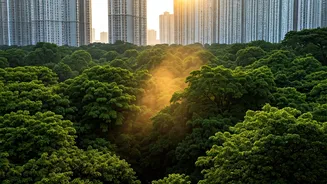
Environmentalists are exploring urban forests as a potential solution to mitigate Delhi's toxic air. Urban forests, comprising strategically planted trees and vegetation, can act as natural air purifiers. These green spaces absorb pollutants, release oxygen, and create microclimates that help reduce overall pollution levels. The presence of trees can also help trap particulate matter, thereby improving air quality. Additionally, urban forests enhance biodiversity and provide recreational spaces for citizens. The idea emphasizes the importance of green infrastructure in urban planning to tackle air pollution. As more green spaces are added, the negative effects of the air pollution in Delhi can be reduced, and the city’s environment can be improved.
Environmentalists' Perspectives
Environmentalists provide crucial insights into how urban forests might improve Delhi's air quality. They would stress the importance of selecting tree species that are most effective at absorbing pollutants and adapting to the local climate. They advocate for well-planned urban forests, integrating them within the existing urban fabric to maximize their impact. These experts would also emphasize the need for community involvement, ensuring that residents are aware of and participate in the maintenance and protection of these green spaces. They may highlight successful global examples and share lessons learned to improve the implementation of the solutions. Environmentalists also emphasize that urban forests are not the sole solution and must be combined with other measures, such as reducing emissions and promoting sustainable transportation.
Challenges and Opportunities
Implementing urban forests in Delhi comes with challenges and opportunities. One significant challenge is finding suitable land within the densely populated city, with the need to balance the allocation of space for green areas against other urban development needs. The establishment of urban forests also demands resources for planning, planting, and upkeep. Despite these hurdles, there are many opportunities. These include collaborating with local communities, businesses, and government agencies to support the initiative. Utilizing innovative technologies to monitor air quality and the impact of the forests can enhance effectiveness. Integrating urban forests into the city's overall environmental strategy has the potential to transform Delhi into a cleaner, healthier, and more livable urban environment. This highlights the importance of an integrated approach for tackling the multifaceted problem of air pollution.