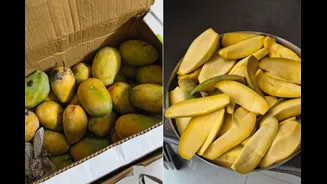








A Costly Mango Purchase
A distressing experience unfolded for a consumer who invested Rs 1,800 for 10 kilograms of mangoes, specifically seeking out produce advertised as 'chemical-free'
and directly sourced from farms. The seller assured her of the premium quality, and externally, the mangoes presented a vibrant, appealing appearance, suggesting they were perfectly ripe and ready for consumption. This initial visual promise, however, masked a disappointing reality. After approximately five days, when the fruits were finally cut open, the internal flesh was found to be white, lacking both flavor and the expected succulence. This stark contrast between the exterior allure and the interior emptiness led to considerable frustration, transforming what should have been a delightful seasonal treat into a symbol of consumer deception.
Confrontation and Refund
Following the discovery of the disappointing mangoes, the consumer decided to revisit the seller, opting for a calm approach rather than immediate confrontation. She re-inquired about the price of the same type of mangoes, and the vendor reiterated the Rs 1,800 per 10 kg charge, once again emphasizing their 'chemical-free' and farm-fresh origin. Crucially, he assured her that any unsatisfactory fruit could be returned. Armed with this assurance, she presented the previously purchased mangoes, explaining they had turned out to be of poor quality. To her surprise, the seller processed a full refund instantaneously, without any inspection or questioning. This immediate reimbursement, the consumer noted, strongly suggested the seller was aware of the fruits' condition and the likelihood of their artificial ripening, reinforcing her belief that the 'chemical-free' label was a mere marketing ploy.
Online Outrage and Insights
The consumer's account of her mango ordeal quickly resonated with a vast online community, igniting a widespread discussion about agricultural practices and consumer trust in India. Many users expressed shared frustrations, lamenting the prevalence of such deceptive tactics. Comments highlighted the common scam of fruits appearing perfectly ripe externally while being internally flawed, often due to artificial ripening agents. The phrase 'nothing is pure these days' echoed the sentiments of many who felt misled by misleading labels like 'organic' and 'chemical-free,' which are often used to justify inflated prices. Users also shared personal anecdotes and offered practical advice, such as testing individual fruits before committing to large purchases or seeking out reputable sources that provide fruits in a raw state for home ripening, emphasizing that investing in genuine, unadulterated produce is a worthwhile endeavor.
Beyond the Refund
While the immediate refund provided some resolution, the incident prompted further calls for action and accountability. Some commenters urged the consumer to take more formal steps, suggesting reporting the vendor to consumer protection agencies like the national consumer helpline or the Food Safety and Standards Authority of India (FSSAI). The ease with which the refund was granted, they argued, indicated the vendor's awareness of his fraudulent practices. Beyond individual complaints, the discussion touched upon the systemic issues that allow such practices to persist. It underscored the importance of consumer vigilance and the need for stricter regulations and enforcement to ensure fair trade and protect consumers from misleading marketing and potentially harmful artificial ripening methods that compromise both quality and health.