




Strategic Defence Landscape
India's defence strategy, in a continuously evolving global context, necessitates decisions focused on national security and technological advancement.
Amidst a complex geopolitical environment, the Indian government carefully considers its defense needs, evaluating various options to modernize its military capabilities. The choice of fighter jets is critical, influencing India's ability to maintain air superiority, respond to potential threats, and support its strategic interests in the region. The decision-making process involves detailed analysis of various factors, including technological prowess, operational capabilities, cost-effectiveness, and geopolitical alliances. Given the critical importance of these considerations, the selection of the French Rafale over alternative options has generated significant interest and scrutiny, which prompts a deeper inquiry into the rationale behind this choice and its potential implications.
Rafale's Superior Technology
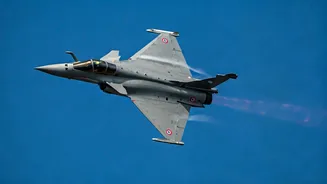
The French Rafale jet presents advanced technological features that contributed to India's decision. The Rafale is equipped with cutting-edge radar systems, electronic warfare capabilities, and a range of precision-guided munitions, which collectively elevate its operational effectiveness. Its ability to perform multiple roles, including air-to-air combat, ground attack, and reconnaissance, makes it a versatile asset in diverse operational scenarios. Furthermore, the Rafale's integrated weapon systems and data-linking capabilities offer improved situational awareness and tactical advantages. In contrast, while the US F-35 and the Russian Su-57 possess their own strengths, the Rafale's technological package aligned better with India's specific requirements, considering factors such as operational needs, interoperability, and cost-benefit analysis. This emphasis on technical superiority highlights India's strategic vision for modernizing its air force and securing its aerial dominance within the region.
Geopolitical Considerations at Play
Geopolitical factors significantly influenced India's selection of the Rafale jet. India's existing strategic partnerships with France and its alignment with Western powers played a vital role. The Rafale deal strengthened these alliances and facilitated defense cooperation, providing India with access to technology and support from a trusted partner. Conversely, choosing the F-35 could have caused sensitivities due to the US's geopolitical stance and potential implications on India's relationships with other nations. The geopolitical landscape is a complex web of alliances, rivalries, and strategic interests. India's decision to procure the Rafale underscored its commitment to maintaining a diversified defense portfolio. This strategy also ensured it wasn't overly dependent on any single country for its military needs, contributing to its independent foreign policy goals. Therefore, the Rafale's selection mirrors India's efforts to balance its geopolitical interests while simultaneously augmenting its defense capabilities.
Operational Requirements Met
Meeting operational requirements was key in the Rafale's selection. Indian Air Force (IAF) officials rigorously assessed various aircraft to determine the best fit for their operational needs. The Rafale offered a blend of performance and multi-role capabilities, perfectly matching the IAF's vision. The fighter jet's ability to operate in diverse terrains and weather conditions, crucial for India's varied geographical landscape, proved advantageous. Moreover, the Rafale's ease of maintenance and support infrastructure played a significant role in India's decision-making process, ensuring operational readiness and minimizing downtime. Compared to its competitors, the Rafale demonstrated superiority in terms of adaptability, fulfilling specific operational requirements, and offering comprehensive support, which solidified its position as the top choice for India's air force.
Cost-Effectiveness Examined
The cost-effectiveness of the Rafale played a vital role in its selection process. The deal's financial terms, including acquisition costs, maintenance expenses, and technology transfer arrangements, were crucial. While the F-35 and Su-57 had competitive offerings, the Rafale emerged as a more cost-effective choice without compromising operational capabilities. India sought a balance between acquiring advanced technology and ensuring budgetary considerations were met. The Rafale offered a compelling combination of performance, reliability, and lifecycle costs, which aligned with India's financial goals for defense modernization. Ultimately, the Rafale provided India with a favorable financial outcome, contributing to its efforts to enhance its military capabilities.
Future Implications Explored
The acquisition of the Rafale jet has broad implications for India's military strategy. It significantly enhances the IAF's operational capabilities, enabling it to respond more effectively to potential threats. Furthermore, the partnership with France strengthens bilateral relations and reinforces strategic alliances, aiding India's long-term defense goals. It also signals India's commitment to self-reliance in defense technology, as it seeks to promote indigenous manufacturing and reduce dependence on foreign suppliers. The Rafale acquisition is part of a broader trend of India modernizing its military, aiming for regional dominance and safeguarding its national interests. This decision has a considerable impact on India's geopolitical standing and its efforts to maintain security in the region and beyond, emphasizing its role as a key player in the global security environment.