





Origins and Significance
Pongal, a four-day harvest festival, holds significant cultural importance in Tamil Nadu, India, symbolizing prosperity and gratitude for a successful
harvest. Its origins are deeply rooted in ancient Tamil traditions. The festival is a thanksgiving celebration to the sun god, nature, and the farm animals. Pongal marks the end of the winter and the start of the sun's northward journey, known as Uttarayan. The celebrations revolve around the preparation of 'Pongal', a sweet dish made from newly harvested rice, symbolizing abundance. The festival's rituals and customs vary from region to region, but the core essence remains the same: celebrating nature's bounty and expressing gratitude for the harvest. This period is also when communities come together, reinforcing bonds through shared meals, cultural performances, and traditional practices that reflect the spirit of unity and harmony.
Pongal Date and Rituals
Pongal is celebrated annually in mid-January, typically from January 14th to 17th. The festival comprises four main days: Bhogi Pongal, Thai Pongal, Mattu Pongal, and Kaanum Pongal, each with its own rituals and significance. Bhogi Pongal marks the end of old possessions and the beginning of a new life, celebrated by discarding old items and lighting bonfires. The main day, Thai Pongal, is dedicated to the sun god, with special prayers and the preparation of the sweet dish 'Pongal.' Mattu Pongal is a day dedicated to honoring cows and bulls, considered sacred animals; they are adorned and fed. Kaanum Pongal, the final day, emphasizes community bonding and includes traditional games and festivities. The Pongal rituals are a blend of religious devotion, agricultural practices, and community gatherings, reflecting the Tamil culture’s deep connection with nature and the harvest cycle. These rituals are followed in Tamil households and villages with great enthusiasm and respect.
How It's Celebrated
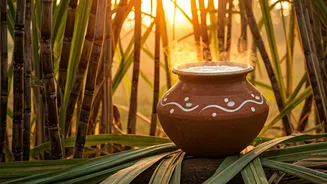
The Pongal celebrations in Tamil Nadu are a colorful spectacle, characterized by vibrant decorations, traditional music, and dance. Homes are adorned with Kolams, intricate patterns drawn on the ground using rice flour, considered auspicious. The preparation of the 'Pongal' dish is a central ritual, cooked in new earthen pots, symbolizing prosperity. Communities gather to share meals and exchange greetings, reinforcing social bonds. Traditional sports like Jallikattu, a bull-taming sport, are organized in some regions, though with significant regulations to ensure animal welfare. Cultural performances, including folk dances and music, add to the festive atmosphere, showcasing Tamil Nadu's rich heritage. The celebrations extend beyond the home, with temples hosting special prayers and events. The spirit of Pongal is one of joy, gratitude, and communal harmony, reflecting the values that define Tamil culture.