







Intense Heat Grips Region
The mercury has climbed significantly across Delhi and the National Capital Region, with temperatures now surpassing the 40 degrees Celsius mark. The India
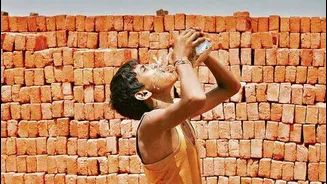
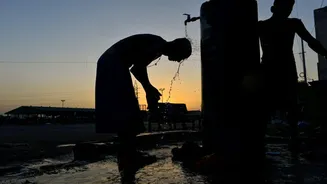
Meteorological Department (IMD) anticipates even hotter days ahead, prompting them to issue a yellow alert for a heatwave that is set to impact the region over the next two days. Residents are strongly advised to exercise caution and take necessary precautions against the escalating heat. The IMD's forecast indicates that maximum temperatures in the NCR are expected to hover around a scorching 41 degrees Celsius, while overnight lows will remain close to 21 degrees Celsius on April 20th and 21st. Clear skies are predicted for this period, with no immediate weather disturbances on the horizon. However, the situation is projected to become considerably more severe starting April 22nd, as temperatures are anticipated to rise further. This prolonged period of high temperatures demands vigilance and preparedness from all residents as the heatwave intensifies.
Heatwave Intensifies Further
The heatwave conditions are predicted to worsen considerably from April 22nd onwards, with maximum temperatures expected to reach up to 42 degrees Celsius. The minimum temperatures will also see a slight increase, settling around 22 degrees Celsius on the 22nd, and further climbing to approximately 23 degrees Celsius on April 23rd and 24th. The IMD has explicitly warned that these severe heatwave conditions will likely persist throughout the entire day, affecting residents from early morning through the afternoon and into the evening hours. There is no expectation of significant relief in temperature on April 23rd and 24th, as the mercury is forecasted to continue hovering around the 42-degree Celsius mark for the maximum temperature. This sustained period of extreme heat poses significant health risks and requires proactive measures to mitigate its impact on the population across the NCR. The extended duration of the heatwave necessitates a focus on hydration and avoiding prolonged exposure to the sun.
Air Quality Declines Sharply
Concurrently with the intense heat, the air quality across the Delhi-NCR has become a pressing concern, deteriorating significantly. Data from official monitoring agencies reveals that the Air Quality Index (AQI) in numerous areas of Delhi has moved from the 'moderate' category into the 'poor' classification. For instance, Anand Vihar recorded an AQI of 282, Ashok Vihar at 226, and Bawana at 218, all falling within the 'poor' range. Aya Nagar registered an AQI of 169, which still classifies as 'moderate'. The situation in Noida is also worrying, with Sector 1 reporting an AQI of 233, Sector 116 at 209, Sector 125 at 185, and Sector 62 at 182, indicating 'poor' air quality in these zones. Ghaziabad is facing particularly severe conditions, with AQI levels reaching the 'very poor' category. Loni recorded an alarming 321, and Ved Vihar-Loni reported 317. Other areas in Ghaziabad like Govindpuram and Vasundhara recorded AQI levels of 257 and 234, respectively. This widespread decline in air quality poses serious health implications for residents, especially those with respiratory vulnerabilities.
Causes and Precautions
Experts attribute the simultaneous rise in temperatures and the decline in air quality to a combination of factors. The increasing heat itself contributes to the problem, while slow wind speeds play a crucial role in trapping pollutants in the atmosphere, leading to their accumulation. This creates a dual challenge for residents, as they contend with both extreme heat and compromised air quality. Vulnerable populations, including children, the elderly, and individuals suffering from pre-existing respiratory conditions, are particularly at risk and have been strongly advised to take extra precautions. Authorities and health officials are urging the public to adhere strictly to safety guidelines and remain vigilant regarding weather advisories. The combination of these environmental factors highlights the need for public awareness and protective measures to safeguard health during this challenging period.