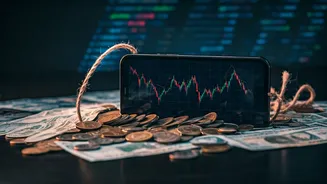








The Addiction Epidemic
India's digital trading arenas are increasingly becoming breeding grounds for severe financial distress and mental health issues, particularly affecting
its younger demographic. A notable surge in stock market addiction has been reported by the NIMHANS Service for Healthy Use of Technology (SHUT) clinic. Medical professionals in Bengaluru are witnessing a disturbing pattern where young Indian professionals, predominantly from the IT sector, are losing substantial sums of money, with reported losses ranging from Rs 80 lakh to upwards of Rs 1 crore. The initial lure of 'easy money' often pulls individuals into the market, but they quickly find themselves trapped in a cycle of pathological gambling. This spiraling behaviour is exacerbated by the inherent volatility of intraday trading and futures and options (F&O) strategies.
The Allure of Quick Gains
The rapid feedback loop inherent in trading, where small profits can be seen within hours, is a powerful psychological trigger. Dr. Rajesh from the SHUT clinic explains that this swift reward system activates the brain's pleasure centers, fostering a belief that wealth accumulation is effortless. This was starkly illustrated in the case of a 29-year-old software engineer whose daily market monitoring escalated into a full-blown behavioral dependency. Driven by social media narratives of success and peer influence, his engagement with F&O trading led to a debt of Rs 80 lakh, compounded by resorting to digital loan apps to cover his losses. This scenario highlights how the quick wins, however small, can create a compelling illusion of control and profitability.
Grim Statistics and Symptoms
The reality of stock market participation for most retail investors is starkly at odds with the perceived ease of earning. SEBI reports indicate that a staggering 93% to 97% of retail traders suffer losses in the F&O segment. Despite these unfavorable odds, the market's psychological draw remains potent, evidenced by the SHUT clinic's intake of 20 new cases in just two months. Sufferers often describe the compulsion overriding essential life functions, leading to severe insomnia and heightened irritability. Dr. Rajesh notes that patients experience distress when attempting to disengage, feeling preoccupied, restless, and unhappy, with a sense of well-being only returning when actively immersed in market fluctuations.
Wider Reach of Ruin
The impact of this crisis extends far beyond its initial geographical scope. Distress calls from families in major cities like Delhi and Mumbai reveal losses exceeding Rs 1 crore. In one distressing instance, a Delhi-based student was forced to abandon his education, burdened by nearly one crore in debt accrued through various digital lending platforms used to fund his trading activities. This trend signifies a disturbing shift in priorities, where the high-stakes thrill and potential for rapid gains from trading apps eclipse the steadier, albeit slower, income from professional salaries. Many become fixated on the aspirational status of the elusive 3% of traders who achieve consistent profitability.
Pathways to Recovery
In response to this escalating 'hidden pandemic', the SHUT clinic is deploying specialized behavioral interventions and comprehensive multimodal therapy. These therapeutic approaches are designed to equip patients with psychoeducation, helping them unravel the complex interplay between their thought processes and maladaptive behaviors that culminate in addiction. With the ubiquity of smartphones providing 24/7 access to trading platforms, experts caution that without immediate intervention and a critical reevaluation of how digital trading is marketed to retail investors, the number of young lives irrevocably damaged by financial addiction is set to escalate.