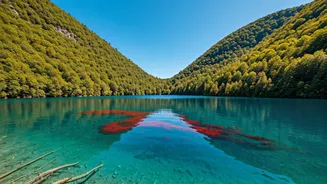








Lake Natron's Crimson Peril
Located in Tanzania, Lake Natron presents a striking crimson hue, a visual testament to the heat-loving bacteria thriving within its waters, which can
reach scorching temperatures of 60°C. This extreme heat, combined with the water's high alkalinity, similar to bleach, creates an environment where fallen animals are preserved as stone-like effigies due to the mineral content. Despite this harshness, the lake supports a vast population of flamingos, who breed in abundance amidst these hostile conditions. For humans, contact with the water promises severe burns to the skin and eyes, rendering it utterly inhospitable for any form of recreation or sustenance.
Kawah Ijen's Acidic Jewel
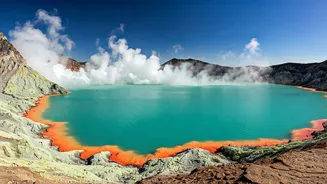
Indonesia's Kawah Ijen Crater Lake boasts a vibrant turquoise color, a stunning visual produced by the dissolved iron and copper elements within its water. Adding to its dramatic appearance, volcanic gases erupt at night, igniting into brilliant blue flames. However, this captivating sight masks a perilous reality: the lake's water is extraordinarily acidic, exceeding the potency of battery acid and possessing the power to corrode metal and inflict instant burns on skin. The human cost is stark, with workers who extract sulfur from the area suffering from poisoning and premature death due to the toxic environment.
Laguna Verde's Poisoned Depths
High in Bolivia's Andes mountains, Laguna Verde mesmerizes with its vivid emerald green color, a spectacle against the backdrop of imposing peaks. This intense coloration is attributed to copper deposits in the water. Situated at an altitude exceeding 4,300 meters, the lake's beauty is deceptive, as it harbors dangerously high concentrations of arsenic, lead, and other heavy metals. These toxins are released by volcanic activity beneath the lake. While the panoramic views are safe from a distance, any direct interaction with the water is strictly advised against due to its extreme toxicity.
Kelimutu's Shifting Hues
Indonesia's Flores Island is home to the Kelimutu Crater Lakes, a trio of adjacent bodies of water renowned for their dramatically different and intermittently changing colors—ranging from turquoise and black to deep red and brown. These vibrant shifts are driven by high sulfur content, which renders the water intensely acidic, capable of causing immediate and severe skin burns. Tragically, several individuals have lost their lives after accidentally falling into these lakes. The environment is further jeopardized by the potential for sudden releases of toxic gases, posing a significant inhalation risk.
Laguna Caliente's Volatile Nature
Nestled within Costa Rica's Poás Volcano, Laguna Caliente is a lake characterized by its frequently shifting colors—from green and blue to yellow and gray. It ranks among the planet's most acidic lakes, with water far stronger than battery acid, and is laden with hazardous toxic metals. This volatile lake is responsible for producing acid rain and fog, and its volcanic activity can lead to explosive eruptions that eject water and debris. Even proximity to its shores presents significant danger due to the pervasive acidic conditions.
Quilotoa's Emerald Trap
Ecuador's Quilotoa Crater Lake, nestled within a collapsed volcano, presents a breathtakingly deep emerald green. Its calm, mirror-like surface often belies the inherent dangers. Volcanic gases permeate the water, making it acidic and toxic, and the high concentration of carbon dioxide can dangerously deplete oxygen levels. Consequently, swimming and boating are prohibited. Visitors who have attempted to interact with the water have reported severe illness. The safest way to appreciate its beauty is from the rim of the crater, maintaining a respectful distance.