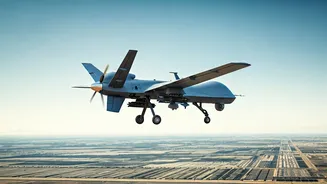









Drone Force Expansion
The Indian Army's strategic vision for the future of warfare centers around a significant expansion of its combat drone fleet. The plan involves the acquisition
and deployment of tens of thousands of these unmanned aerial systems (UAS). This ambitious undertaking goes beyond merely adding to existing military assets; it represents a fundamental re-evaluation of operational strategies and a move towards integrating cutting-edge technology into the core of military capabilities. The aim of this program is to transform the battlefield. This shift is not solely a response to evolving global military trends but also a proactive measure to maintain a competitive edge. This will allow the Indian Army to be prepared for the challenges that are likely to emerge in the coming years.
Why Drones Matter
The increasing prominence of drones in modern warfare stems from their unique capabilities. These systems can provide real-time intelligence, surveillance, and reconnaissance (ISR) data, greatly improving situational awareness for ground forces. Drones can also be equipped with various armaments, allowing them to engage enemy targets with precision and speed. The advantages of using UAS include their ability to perform high-risk missions without endangering human lives. They can operate in challenging environments, accessing areas that might be difficult or impossible for manned aircraft or ground troops. Furthermore, drones offer a cost-effective solution for military operations, which is something that cannot be ignored. Their versatility and adaptability make them invaluable tools in a wide array of military operations, ranging from border patrol to counter-insurgency. Consequently, the Indian Army's investment in drones is a logical progression of this trend.
Key Drone Applications
The integration of drones into the Indian Army's operations will manifest across multiple key areas. In ISR, drones will offer unparalleled capabilities, providing real-time video feeds and critical data to support tactical decision-making. Their ability to remain airborne for extended durations, coupled with advanced sensors, enables thorough surveillance of strategic locations and potential threats. Another important application is in offensive operations, where armed drones can be deployed to neutralize enemy assets and provide close air support to ground troops. The use of drones can significantly diminish the risks faced by soldiers. Furthermore, drones will be used to support logistics, transporting supplies to remote outposts or delivering critical resources in emergency situations. The diverse applications of drones highlight their versatility and the critical role they are set to play in the Indian Army's future operations.
Technology and Integration
To realize the potential of its expanded drone fleet, the Indian Army will need a robust technological infrastructure and advanced integration strategies. This involves investing in state-of-the-art drone platforms, incorporating sophisticated communication systems, and enhancing data analytics capabilities. The Army is also focused on developing robust cybersecurity measures. These measures are critical to protect the drones from hacking or electronic warfare. Integrating these systems with existing military networks is crucial to ensuring seamless communication and coordination between drones and other assets. This integration will create a cohesive operational environment. Another part of the process is training soldiers to effectively operate and maintain these systems. This combination of advanced technologies and skilled personnel will empower the Indian Army to harness the full capabilities of its combat drone fleet.
Strategic Implications
The induction of tens of thousands of combat drones will have far-reaching strategic consequences for the Indian Army. This will bolster India's defense capabilities, improving its ability to respond to a variety of threats. The ability to deploy UAS for ISR, offensive operations, and logistics support will enhance the Army's operational flexibility and effectiveness. Domestically, this move will stimulate the growth of the local defense industry, promoting innovation and job creation. Regionally, India's enhanced drone capabilities are likely to influence the balance of power, contributing to stability. However, the use of drones also presents several complex challenges. It is necessary to develop new doctrines and tactics to maximize their effectiveness. The Indian Army's strategic use of drones signifies a significant step in shaping the future of warfare in the region.