

A Sweet and Savory Spark
The internet buzzed when a casual social media exchange escalated into a spirited discussion about Indian culinary icons. It began with a user questioning
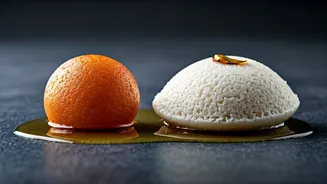
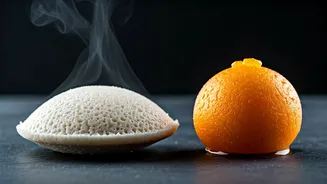
how to describe the unique taste of Bengali sweets like Mishti Doi and Nolen Gurer Rosogolla to newcomers. This innocent inquiry soon took an unexpected turn when another user provocatively dismissed rasgulla as merely an 'idli dipped in sugar syrup,' deeming it the 'most overrated dessert.' This bold statement quickly captured widespread attention, setting the stage for a prominent figure to weigh in and transform a simple dessert debate into a profound exploration of food, identity, and regional pride across India.
Tharoor's Eloquent Defence
Congress MP Shashi Tharoor, known for his articulate pronouncements, entered the fray with a characteristically detailed rebuttal that championed the idli. He eloquently argued that comparing a rasgulla to an idli was not just a culinary misstep but a fundamental misunderstanding of their very essence. Tharoor elucidated the stark differences in their composition, contrasting the delicate, pristine curd of milk (chhena) used in rasgulla with the meticulously fermented batter of parboiled rice and black gram (urad dal) essential for idli. He emphasized that these ingredients originate from entirely distinct culinary universes, making any direct comparison logically flawed and scientifically unsound.
Culinary Philosophies Unveiled
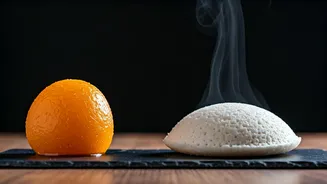
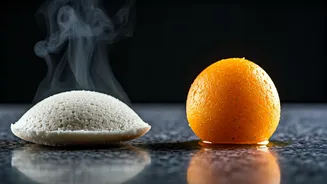
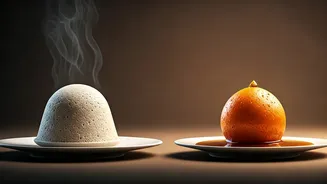
Tharoor further distinguished rasgulla and idli by highlighting their divergent culinary philosophies and structural compositions. He described rasgulla as an 'airy, spongy lattice' expertly designed to absorb light sugar syrup, embodying a dessert-focused preparation. In contrast, he characterized the idli as a 'dense, wholesome, steamed matrix' of complex carbohydrates and proteins, reflecting a more substantial and nutritious culinary objective. Their taste, texture, structural integrity, and ultimate purpose, he argued, possess no common ground, underscoring the superficiality of the initial comparison and elevating the idli to a 'savoury monolith of South Indian culinary genius'.
The Science of the Idli
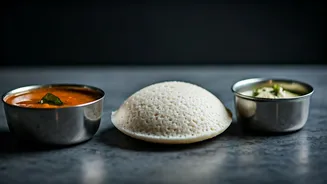
Beyond mere taste and texture, Tharoor passionately defended the idli's cultural and nutritional significance, referring to it as a 'masterclass in biotechnology.' He lauded the intricate science behind its fermentation process, describing the achievement of a perfect idli as a delicate balance of wild microflora cultivated overnight. This process, he explained, results in a 'steamed cloud' that is a triumph of gut health, lightness, and nutritional balance. The idli, in his view, is engineered to perfectly complement the sharp tang of sambar or the robust spice of molaga-podi, showcasing its versatility and deep integration into South Indian culinary traditions.
Identity and Cultural Labor
Food experts and cultural commentators weighed in, affirming that such comparisons, while seemingly harmless, can inadvertently diminish the distinct cultural and technical efforts invested in regional dishes. Alok Singh, founder of Diga Organics, noted that these comparisons often overlook the 'terroir' and centuries of perfected techniques. He explained that the idli symbolizes the patience and tradition of the South, while the rasgulla represents a significant innovation in Bengali confectionery. When these dishes are trivialized, it can feel like an affront to a community's collective memory and heritage, as food often serves as a crucial link to one's roots.
Mastering Fermentation
The key to a truly exceptional idli, according to food author Sadaf Hussain, lies predominantly in the fermentation process. He highlighted that the rice-to-lentil ratio, the quality of fermentation, the grind's texture, batter aeration, and steaming time must all align perfectly for optimal results. Chef Ananya Banerjee further elaborated that even slight variations in climate or fermentation can dramatically alter the idli's final texture. A flawed fermentation can lead to dense idlis, explaining why homemade versions might differ from restaurant standards, underscoring the nuanced skill required for this seemingly simple dish.
Ancient Biotechnology Revealed
Experts confirm Shashi Tharoor's assessment of the idli as a 'masterclass in biotechnology,' rooted in ancient Indian practices. Long before modern scientific understanding, Indian ancestors mastered 'controlled spoilage' for preservation and nutrition enhancement in tropical climates. The fermentation process, involving specific bacteria like Leuconostoc mesenteroides and Lactobacillus bulgaricus, not only preserves food but also breaks down complex starches and neutralizes anti-nutrients, thereby improving mineral absorption. This ancient ritual, encompassing everything from stone grinding to kitchen temperature, enabled the creation of soft, leavened textures without artificial aids.