




A City's Enduring Soul
The essence of Delhi, a city that has repeatedly transformed yet retained its core identity, is the inspiration behind Kahaani: Dilli Ki. Curators Sara
Abdullah Pilot and Aishwarya Jha of Indophile describe Delhi as a 'palimpsest,' a surface where numerous histories overlap and coexist, each layer adding to its rich heritage. The festival aims to celebrate this spirit, acknowledging that even as parts of the city change, its past continuously shapes its present. Held at the historic Travancore Palace, the event, supported by the Ministry of Culture, is envisioned as more than just a festival; it's an immersive experience designed to offer a comprehensive appreciation of the diverse elements that form the grand narrative of India's capital.
Artistic Expressions of Delhi
Kahaani: Dilli Ki unfolds as a sensory exploration of Delhi, with the Travancore Palace serving as a fitting backdrop. The festival showcases a curated blend of performances, exhibitions, and interactive installations. Musical highlights include a street play by Priyanka Sharma's troupe, adapting the culturally significant 'Phoolwalon Ki Sair,' which celebrates Delhi's 'Ganga-Jamuni tehzeeb' of harmony and inclusiveness. Vocal performances by Deveshi Sahgal and Sonam Kalra offer devotional and Sufi melodies, while the iconic band Indian Ocean closes the event. The 'Dilli gharana' is honored through sitarist Saeed Zafar Khan, and Gauri Diwakar presents 'Ishq-e-Dilli: Poetry Through Kathak,' weaving dance and verse.
Conversations on History
Delving into the city's past, a compelling panel discussion titled 'Many Cities, Many Histories' features renowned historians William Dalrymple and Swapna Liddle, alongside journalist Barkha Dutt. Liddle, an expert on Delhi's urban development, emphasizes the city's unique connection to power and its visible historical strata. She challenges the notion of a singular 'Dilliwala,' highlighting Delhi as a 'city of migrants' whose diverse contributions have shaped its culture. The session is designed to encourage deeper engagement with history, offering a refreshing contrast to fleeting digital content and promoting thoughtful dialogue about the evolution of the city and its inhabitants.
Culinary and Visual Narratives
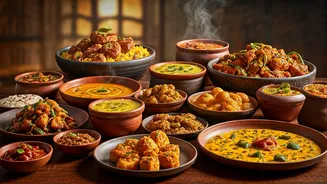
Food acts as a powerful narrative thread within the festival, with Chef Anumitra Ghosh Dastidar curating a spice installation inspired by the historic Khari Baoli spice market. This culinary dimension underscores the profound link between food, memory, culture, and family traditions, making it an integral part of how Delhi's story is told. Complementing these flavors is the visual history presented by Mahatta Studio's archival exhibition. Documenting Delhi for over a century, the studio's collection, featuring images from royal processions in the 1950s-60s, including Queen Elizabeth II's motorcade, provides a visual biography of the city's transformation from an imperial capital to a sprawling metropolis. These archives are crucial for anchoring shared memories and understanding the rapid urban changes experienced over generations.