






A Chembur Culinary Gem
Tucked away behind unassuming blue hoarding sheets in Chembur, Mumbai, lies Jeevan Boarding House, an eatery that has been a cherished South Indian culinary
destination for 64 years. Despite its humble facade, this establishment draws significant crowds daily, including office-goers, local workers, and residents, all eager to savor its signature vegetarian South Indian thali priced at an astonishing Rs 100. The journey of this iconic eatery began not in Mumbai, but in the southern Indian state of Karnataka, in a village called Nandalike, Udupi District. Its founder, the late N. Karunakar Shetty, embarked on his Mumbai adventure as a young boy around 12 or 13 years old. Following the common path of many migrants, he worked in various eateries, steadily honing his skills and building experience. By 1959, he arrived in Chembur and soon after, in 1962, he acquired a place known as Lucky Restaurant from its Irani owner. After a brief period of maintaining the original menu, he rebranded it as Jeevan Boarding House, embracing the prevalent tradition of 'boarding' houses that offered comprehensive meal services, much like contemporary establishments such as Mysore Boarding.
The Evolving Thali
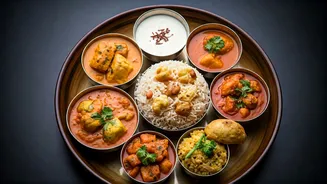
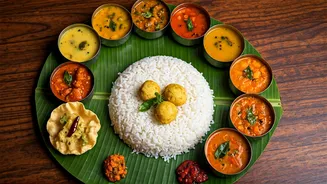
The South Indian thali at Jeevan Boarding House has undergone a significant evolution since its inception. Initially, the thali was a simpler affair, comprising a dry vegetable dish (bhaji), a gravy item, sambar, rasam, two chapatis, rice, curd, and pickle. The exact price back then is a matter of historical recollection, with mentions of it being as low as 50 paisa, possibly even less. Today, the thali, meticulously served on a fresh banana leaf, offers a much more expansive and diverse culinary experience. It now features three distinct vegetable preparations: two prepared in traditional South Indian coconut-based gravies and one in an onion-based gravy, catering to a broader palate. This is complemented by two chapatis, rice, sambar, rasam, dal, a freshly made coconut chutney with seasonal vegetables, pickle, a sweet delicacy (payasam), curd, and a refreshing glass of buttermilk. The sambar, rasam, dal, chutney, and pickle are served in unlimited quantities, ensuring a truly satisfying meal. Naresh Karunakar Shetty, the current proprietor and youngest of the founder's three sons, took over the reins in 1998. Under his stewardship, the restaurant, which previously seated 36 people within the old Patil Chawl structure, relocated to a new, expanded space in 2015, now accommodating 48 diners and allowing for the enrichment of the menu.
Regional Flavors & Quality
Jeevan Boarding House prides itself on showcasing a diverse range of culinary influences, drawing inspiration from coastal Karnataka, northern Karnataka, Tamil Nadu, and Kerala. While the menu celebrates these regional flavors, dishes from Andhra cuisine are generally omitted due to their typically higher spice levels, which might not align with the kitchen's focus on mildly spiced, nutritious food. Naresh Karunakar Shetty emphasizes that the food served is 'very mildly spiced and nutritious.' For instance, a typical thali might include French beans as the dry vegetable, raw mango prepared in a coconut gravy, and aloo matar in an onion gravy. The rotation of vegetable dishes is extensive and includes options like chole, dal makhani, cabbage, bhindi, ash gourd, moong, and tomato, ensuring variety and catering to seasonal availability. A key aspect of their commitment to health and quality is the exclusive use of cold-pressed coconut oil since 2016. This decision stems from an awareness of the potential health detriments associated with chemicals used in the refining process of conventional oils. Furthermore, the kitchen operates with minimal refrigeration, using a single small refrigerator solely for curd. All other preparations are made fresh twice daily, with morning preparations not being served in the evening. The evening's dishes are freshly prepared, and any leftovers from either service are disposed of, reinforcing a strict no-reheating, no-recycling policy to maintain the highest standards of freshness and quality.
Sustaining Value & Volume
The remarkable Rs 100 price point for such a comprehensive and high-quality South Indian thali is a testament to astute business management and a deep understanding of operational efficiency. Naresh Karunakar Shetty attributes this affordability primarily to the ownership of the premises, which significantly reduces the substantial overhead cost of rent. The remaining factor is a disciplined approach to daily operations. He himself dedicates 12 to 14 hours a day, seven days a week, to overseeing the establishment, focusing intently on minimizing wastage and preventing any leakage in the system. Despite the low price, there is an unwavering commitment to maintaining the quality of the food. The business model thrives on volume; as the number of customers increases, the cost per unit naturally decreases. Shetty's strategic focus is consistently on maximizing volume rather than increasing the price. This strategy is highly effective, with the boarding house serving an average of 450 to 500 thalis daily across both lunch and dinner services. During weekends and special occasions, this number escalates to between 550 and 600 thalis, underscoring the immense popularity and consistent demand for their authentic, value-for-money offering.