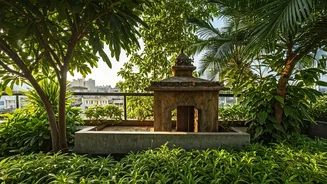

A Rooftop Transformation
Venkataraman, a mechanical engineer residing in Bengaluru, has impressively converted his rooftop into a lush, thriving mini-forest. This initiative, which
spans a three-level structure, has garnered significant attention from both residents and daily commuters. The space, encompassing approximately 600 square feet, houses over 100 different plant varieties, including coffee, chiku, and citron. This green sanctuary also features a mini-temple and a swing, creating a multifaceted environment. His amla tree alone has grown to an impressive height of nearly 20 feet. The project highlights his passion for nature and provides a refreshing contrast to the urban landscape.
The Garden's Design
The design of Venkataraman's rooftop garden is innovative and multi-layered. The lower level is home to plants like coffee, chiku, and citron. The second level, elevated about four feet, hosts a variety of plants, including banana, red banana, flat beans, curry leaves, and potter plants. This tiered approach maximizes space and creates diverse microclimates. The inclusion of a small temple for performing Abhisheka, with water used for irrigating the garden, showcases a sustainable and spiritual integration. Towards the end of the video, Venkataraman mentioned the swing as the most relaxing spot in his terrace forest, which further adds to the appeal of this urban oasis.
Public Reactions & Concerns
While Venkataraman's efforts were widely praised, some social media users raised valid concerns about the structural integrity of the building. Questions were posed about the weight of the plants and their potential impact on the roof. Others wondered how large trees, such as the 20-foot amla tree, could thrive in containers or on soil spread across the rooftop without affecting the building's foundation. Several users expressed their admiration, acknowledging the dedication required to cultivate such a vibrant green space. These contrasting perspectives highlight the balance between environmental initiatives and practical considerations in urban settings. The concerns reflect the practicalities of incorporating natural elements into the built environment.
Homegrown Food Benefits
A significant aspect of Venkataraman's garden is the focus on homegrown food. In the clip, the engineer emphasizes the benefits of cultivating his own produce, stating that it is fresher, more hygienic, and allows him to control the use of pesticides. The presence of plants like mulberry and sugarcane showcases the diversity of the garden and the commitment to producing various fruits. One user rightly pointed out that growing your own food offers a level of control over what is sprayed, ensuring the quality and safety of the food consumed. This commitment to fresh, healthy produce is a key highlight of his eco-friendly initiative and aligns with a growing trend towards sustainable living.