




Rigorous Space Simulation
Blue Origin has reached a pivotal point in its lunar exploration endeavors by successfully completing a comprehensive testing phase for its cargo lander,
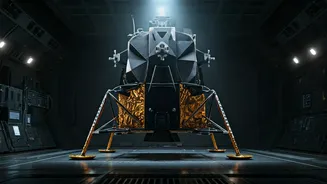
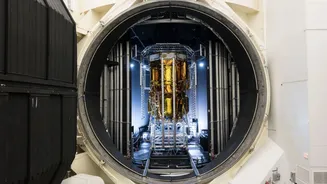
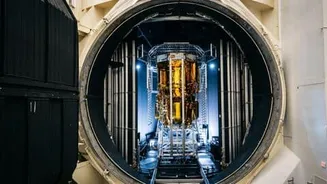
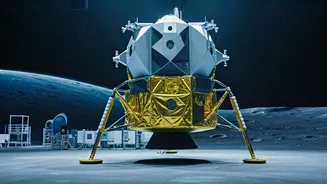
known as Blue Moon Mark 1 (MK1) or 'Endurance.' This critical stage took place within the specialized confines of NASA’s Johnson Space Center, specifically in Thermal Vacuum Chamber A, one of the largest facilities of its kind globally. The objective of this extensive trial was to meticulously replicate the extreme conditions encountered in deep space, including the frigid vacuum and minimal atmospheric pressure, ensuring the lander’s structural integrity and functional performance. By subjecting MK1 to these simulated extraterrestrial environments, engineers aimed to validate its resilience and operational capability on its journey to the lunar surface. This collaborative effort, facilitated by a Space Act Agreement between NASA and the private aerospace company, underscores the crucial interplay between public agencies and commercial entities in advancing space exploration objectives and verifying that the spacecraft's thermal control systems and overall design are robust enough for the demanding lunar environment, thereby building confidence for its upcoming missions.
Cargo Delivery to Moon
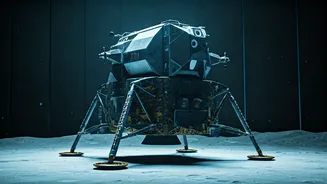
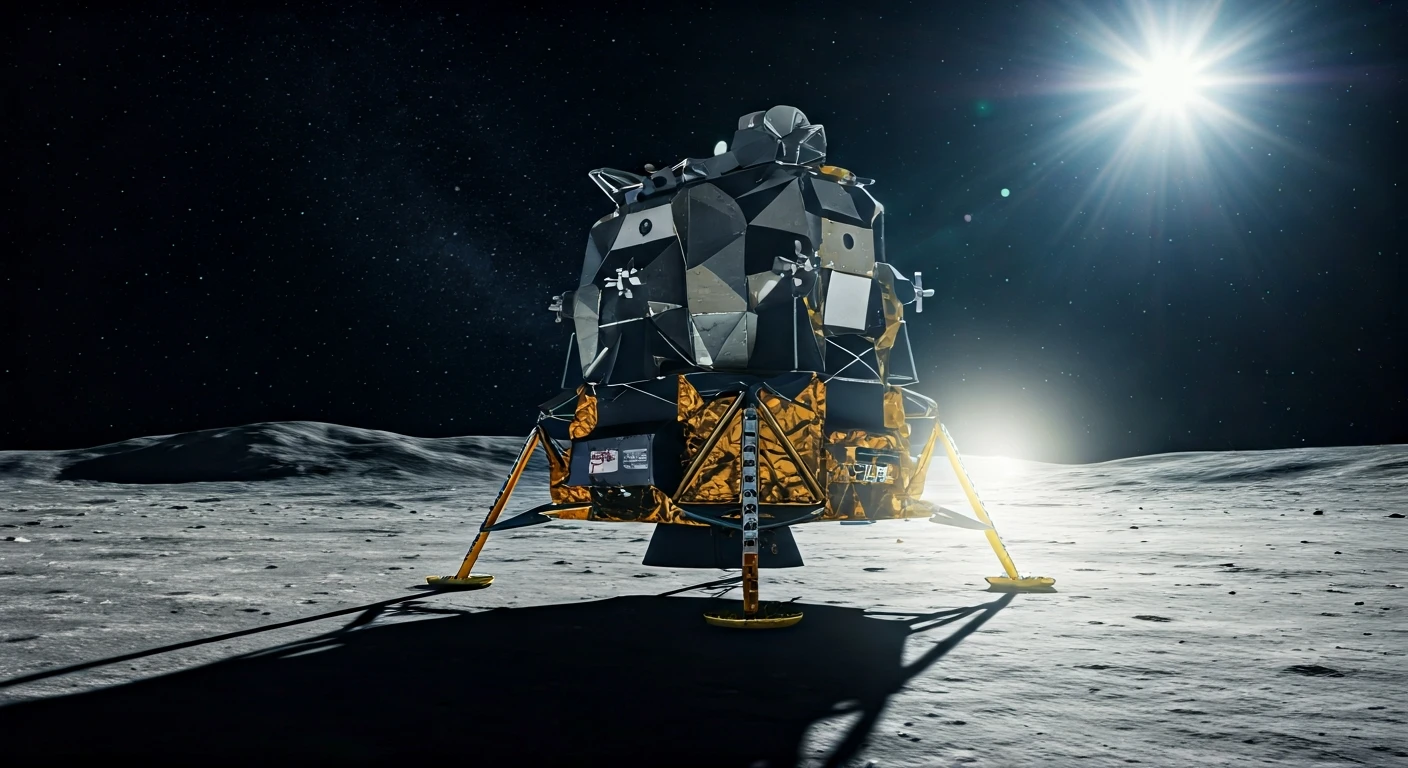
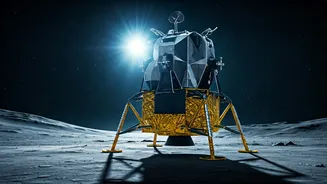
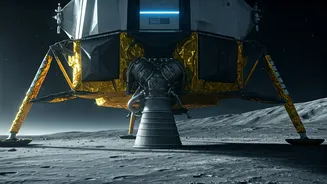
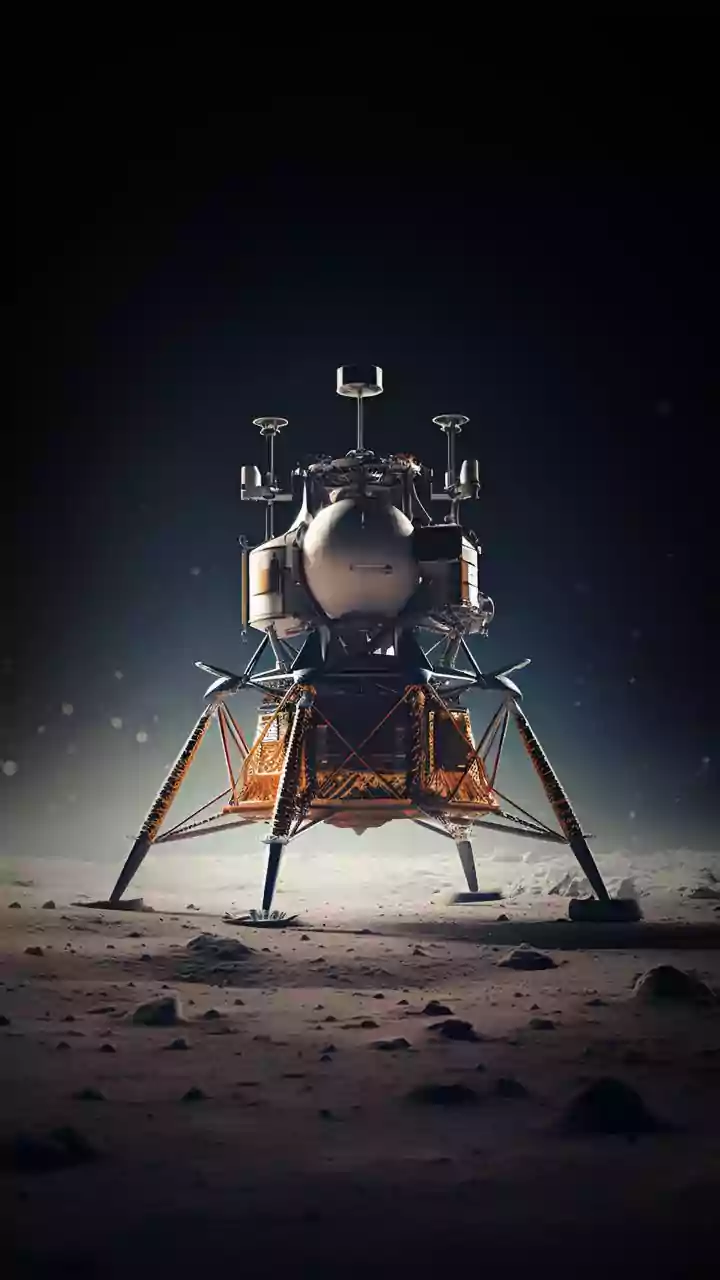
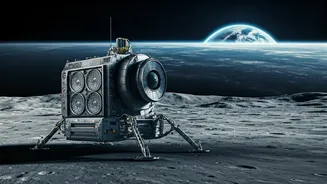
The Blue Moon MK1, or 'Endurance,' is specifically designed as an uncrewed vehicle, focusing on the critical task of transporting essential cargo and supplies to the Moon. Its development is intrinsically linked to the ambitious goals set forth by NASA's Artemis program, which aims for a sustained human presence on the lunar surface. The MK1's primary function is to demonstrate and perfect key capabilities vital for a successful lunar landing. These crucial abilities include precisely navigating to a target location, efficiently utilizing advanced cryogenic propellant systems—a complex technology for space propulsion—and autonomously managing its guidance, navigation, and control systems during descent and landing. The planned landing site for MK1 is the Moon's south pole, an area of immense scientific interest due to its potential for housing water ice, a resource that could be invaluable for future lunar bases and extended exploration missions. Beyond its operational functions, the lander is equipped to conduct its own scientific experiments, notably the Stereo Cameras for Lunar Plume-Surface Studies, which will capture real-time data on how its engine exhaust interacts with the lunar surface during landing, and the Laser Retroreflective Array for precise measurement.
Foundation for Human Missions
While the Blue Moon MK1 is an uncrewed cargo mission, its significance extends far beyond simply delivering payloads. It serves as a foundational stepping stone, directly contributing to the development of more advanced lunar vehicles, including Blue Origin's Mark 2 (MK2). The MK2 is envisioned as a larger, crew-capable lander designed to ferry astronauts between lunar orbit and the Moon's surface. The invaluable insights gained from MK1's entire lifecycle—from its initial design and rigorous testing to its eventual operational deployment—will be instrumental in enhancing the safety, reliability, and overall mission planning for subsequent human landings. The lessons learned will help refine engineering processes, identify potential challenges, and optimize procedures, thereby minimizing risks for future astronaut expeditions. This iterative approach, where unmanned missions build upon and validate technologies for crewed endeavors, is a cornerstone of progressive space exploration strategy, ensuring that human safety and mission success are paramount as we venture further into the cosmos.
Accelerating Lunar Presence
The collaborative approach between NASA and private entities like Blue Origin is a driving force in accelerating the pace of lunar exploration. By leveraging NASA's extensive resources and expertise, companies like Blue Origin can expedite their development cycles without compromising on stringent safety standards. This partnership model allows for the efficient utilization of specialized facilities, such as the thermal vacuum chambers, and shared knowledge, which collectively hastens the progression of crucial technologies. With the successful completion of the MK1's environmental testing, the 'Endurance' lander has moved significantly closer to becoming a tangible reality. This achievement represents a crucial step forward in the broader objective of establishing a sustainable human presence on the Moon. The validation of MK1’s capabilities not only boosts confidence in the technology but also solidifies its role as a vital component in the ongoing effort to explore and eventually inhabit our nearest celestial neighbor, paving the way for future scientific discoveries and human achievements beyond Earth.