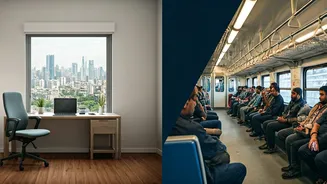







The WFH Illusion
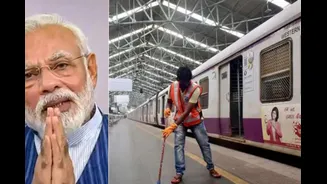
Prime Minister Modi's suggestion for increased Work From Home (WFH), particularly amidst regional tensions, has ignited a city-wide fantasy: what if half
of Mumbai simply opted to stay home? This concept, while appealing, faces immense practical hurdles for a city of 22 million. The reality of Mumbai's daily life, characterized by high office rental costs—averaging ₹168 per square foot—and an evolving Metro network, means that for a significant portion of the population, WFH is not a viable choice. The sheer scale of daily commuters utilizing Mumbai's suburban railway, which serves over 7.5 million people daily across 450 kilometers of track, highlights this challenge. During the COVID-19 pandemic, mandatory WFH measures saw a notable decrease in suburban train ridership, a reduction of nearly 19% from 76.34 lakh to 61.95 lakh commuters. However, as soon as restrictions were lifted, these numbers quickly rebounded, demonstrating the city's reliance on physical presence for its essential services and workforce. Even with continued passenger growth on services like Central Railway, which carried 143.58 crore passengers in FY2025-26, a voluntary WFH appeal is unlikely to replicate the drastic impact of enforced lockdowns.
Road Congestion & Metro's Role
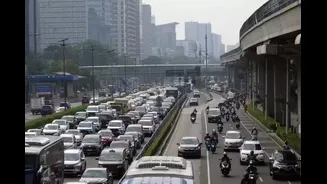
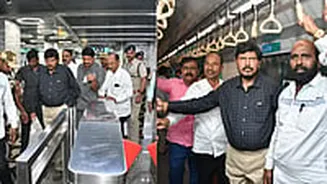
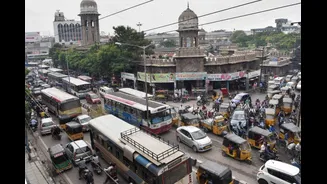
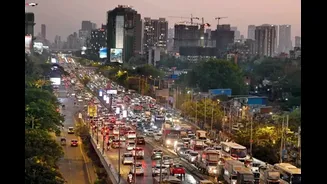
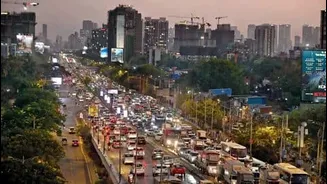
The call for remote work could potentially alleviate traffic woes, especially on notoriously congested routes like Ghodbunder Road, a critical artery connecting Thane's western regions to Mumbai. This stretch has consistently been a pain point for commuters, frequently making headlines due to hours-long traffic jams, rivaling other notorious Mumbai hotspots like BKC and the Western Express Highway. Even minor road repair works have been known to extend short commutes into lengthy ordeals. Traffic simulations from the COVID-19 era suggest that a 20-25% reduction in peak-hour vehicles on heavily trafficked corridors can yield disproportionately positive results, with travel times potentially decreasing by as much as 40%. However, the issue on Ghodbunder Road is not solely about volume; its structural design, a four-lane bottleneck between Gaimukh and Fountain Hotel Junction, further exacerbates congestion, particularly with the presence of heavy vehicles. While WFH can decrease the number of private cars, it does not address the inherent infrastructure limitations of the road itself. Concurrently, the expansion of the Mumbai Metro network, now spanning over 101 operational kilometers as of April 2026 with further lines set to open, aims to absorb a significant portion of commuter traffic. Lines like 3 (Aqua Line), 4, 4A, and 6 are poised to collectively handle over 50 lakh daily passengers by the end of 2026. Encouraging people to stay home just as this massive public transport investment is coming online presents a paradoxical situation, especially as some new metro corridors have seen ridership below expectations, partly due to last-mile connectivity issues and fare structures. WFH policies might not necessarily boost the utilization of this new infrastructure.
Economic Repercussions of WFH
A significant shift towards widespread Work From Home (WFH) could have considerable financial implications across Mumbai. The city's commercial real estate market, already India's most expensive, has seen substantial growth, with office rents in the Mumbai Metropolitan Region jumping 28% from ₹131 per square foot in 2022 to ₹168 per square foot in 2025. This surge is attributed to a strong return-to-office trend, limited Grade A office space availability, and high demand from global capability centers (GCCs) and banking, financial services, and insurance (BFSI) firms. Premium office spaces in prime business districts like South Mumbai and Bandra Kurla Complex (BKC) can cost between ₹24,500 and ₹30,000 per desk per month, while secondary locations such as Lower Parel and Andheri Kurla Road range from ₹15,000 to ₹18,000 per desk monthly. Any substantial drop in office occupancy due to WFH would directly impact landlords with long-term leases, co-working space providers, and building owners in areas like Powai, Goregaon, and Malad, leading to potential financial strain. On the residential front, individuals who purchased homes in areas like Thane, Navi Mumbai, or Mira Road specifically for their proximity to business hubs face a new concern: the potential erosion of their location's premium value if hybrid work models become the norm. However, real estate experts suggest that the immediate impact might be limited, as current WFH appeals are primarily driven by short-term factors like fuel savings and foreign exchange concerns, rather than a fundamental long-term shift in office space demand.
The Hybrid Model Advantage
The most pragmatic approach to integrating remote work into Mumbai's professional landscape appears to be the widespread adoption of hybrid models. The experience from the COVID-19 pandemic highlighted that a rigid adherence to either a full-time office or a full-time remote setup is not universally effective for most organizations. Many companies, particularly within the IT, fintech, and media sectors in Mumbai, have already implemented a blended approach, typically involving three days in the office and two days working from home. A more formalized, albeit still limited, implementation of WFH for two days a week among the city's white-collar workforce could significantly reduce the strain on peak-hour public transport and road networks. Crucially, this would also help maintain the financial viability of commercial office spaces. Beyond the immediate benefits to infrastructure and businesses, the increasing prevalence of hybrid work is likely to shape future residential choices. As people seek environments that can accommodate both living and working effectively, there will be a growing demand for larger living spaces and residential developments designed with integrated home office capabilities.
Those Left Behind
The narrative around Work From Home (WFH) often overlooks a vast segment of Mumbai's population for whom physical presence is non-negotiable. This includes essential workers who must report to their jobs daily, such as construction laborers, BEST bus and auto-rickshaw drivers, domestic helpers, hospital staff, retail and restaurant employees, factory workers in industrial zones like Thane and Bhiwandi, delivery personnel, bank tellers, police officers, and sanitation workers. The entire informal economy, which is vital for the city's functioning, also falls into this category. Many of these individuals are also heavy users of the local train network, yet they remain largely invisible in the WFH discourse. For them, the choice between working from home or an office simply does not exist. Consequently, any policy designed to promote remote work needs to consider their commuting challenges. Without measures to ensure less crowded trains during peak hours, more affordable fares, or improved last-mile connectivity options, a WFH initiative could inadvertently benefit those with laptop-based jobs while offering no improvement, or even worsening conditions, for the majority who keep Mumbai running.