




A City Aglow
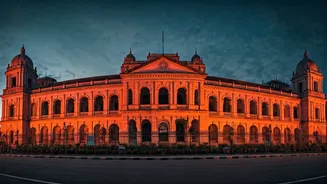
As dusk settled over Kolkata, a breathtaking transformation occurred. The venerable Writers' Buildings, a cornerstone of the city's history, along with
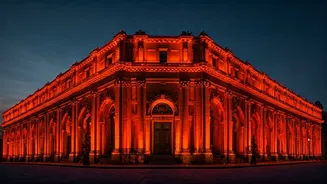
numerous other government edifices, were bathed in a radiant saffron light. This spectacular illumination, achieved with thousands of precisely placed orange-coloured lights, served as a grand visual welcome to the newly formed Suvendu Adhikari-led BJP government. The vibrant display wasn't merely decorative; it was a symbolic and festive announcement of a new political chapter for West Bengal, turning the city's administrative heart into a beacon of celebration.
Historic Architecture Lit
The West Bengal Legislative Assembly premises also joined in this celebratory glow, illuminated in saffron. This tradition of lighting up important structures often signifies significant moments, and in this case, it underscored the momentous occasion of the state's first BJP government taking the helm. The choice of saffron, a colour often associated with auspiciousness and change, resonated deeply within the context of the political shift. The visual spectacle at the Assembly building served as a potent symbol of this new era, visible to all citizens and marking the eve of a pivotal swearing-in ceremony.
Writers' Buildings' Legacy
Dating back to 1780, the Writers' Buildings stands as an enduring icon of Kolkata's colonial past and architectural prowess. This impressive three-storey structure is a prime example of neoclassical design, characterized by its elegant Corinthian columns and its striking red facade. Its origins are intertwined with the East India Company, having been designed by builder Thomas Lyon. Initially, it provided a living and working space for the junior clerks of the company, who were commonly referred to as 'writers'. This unique nomenclature eventually lent its name to the entire magnificent complex, cementing its place in history and urban lore.