




A Heavenly Pathway
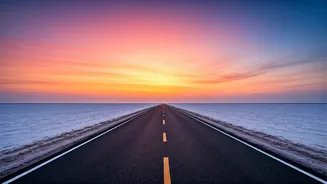
An industrialist recently highlighted a remarkable 32-kilometer road in Gujarat's Rann of Kutch, calling it the 'Road to Heaven' and a profoundly meditative
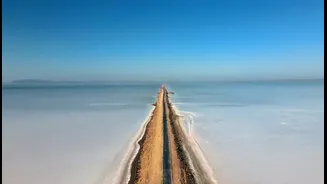
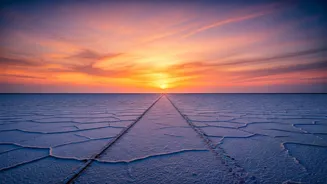
spot. This stretch is more than just an asphalt path; it's an immersive sensory experience that has captivated many. The landscape, characterized by the vast, shimmering white salt flats of the Rann contrasted with the striking blue of the water adjacent to the road, creates a surreal and awe-inspiring panorama. This unique environment, where distant cowherds traverse their daily paths against an endless horizon, has transformed a functional infrastructure project into an unexpected pilgrimage site, celebrated for its profound silence and ability to inspire introspection. The industrialist's reflection on X (formerly Twitter) emphasized the perceived tranquility, suggesting that the horizon itself evokes a sense of peace and inner journey, even before one has physically experienced it.
Connecting Past and Present
Originally, reaching Dholavira, a significant UNESCO World Heritage Site and the largest Harappan civilization relic in India, involved a considerably longer journey of approximately 240 kilometers from Bhuj, the Kutch district's administrative center. To streamline this, a new road was commissioned in 2019, bisecting the Rann of Kutch. The specific 30-kilometer segment, which has gained prominence, was completed in 2024, coinciding with the G20 Summit preparations. This newly established route directly connects Khavda to Dholavira, offering travelers a more accessible gateway to explore the fascinating remnants of this ancient, once-thriving city. The road forms part of a larger 278-kilometer national highway linking Ghaduli to Santalpur, and its passage through the White Desert provides an unparalleled spectacle, where the sky seems to mirror itself on the water's surface, making it an ideal location for aerial photography with drones.
A Landscape Transformed
The Rann of Kutch itself is a geological marvel. Historically, it was a shallow inlet of the Arabian Sea, but a significant geological shift eventually severed its connection to the ocean. Today, the region undergoes a dramatic seasonal transformation: during the monsoon, the Rann becomes inundated, creating a vast expanse of white, salty terrain. For the remainder of the year, it reverts to an endless, captivating salt desert. The 'Road to Heaven' expertly cuts through this striking natural environment, with water bodies flanking the single-lane highway on both sides. This unique setting allows visitors to step off the road, onto the gravel, and even dip their feet into the water, further enhancing the immersive experience. While the construction's ecological impact on this pristine ecosystem is a point of consideration, its undeniable effect is the increased accessibility and appeal it brings to Dholavira for a growing number of travelers.
Voices of Experience
The profound impact of the 'Road to Heaven' has resonated widely, sparking numerous conversations and personal anecdotes online. Many users echo the sentiment that the most significant journeys are internal ones, with the road serving as a catalyst. One commenter beautifully articulated this, suggesting that the feeling of 'heaven on Earth' is a summation of the moment, the surroundings, one's mood, and loved ones, rather than an isolated experience. This sentiment is shared by those who have traveled the route, with some recounting memorable trips with family, experiencing the unique atmosphere. Others recall driving the path even before its widespread recognition, when access was restricted, describing it as a mesmerizing, goosebump-inducing journey that wasn't even marked on navigation apps. The playful suggestion that the ultimate 'heavenly' journey must involve a specific vehicle highlights the road's cultural impact and the shared enthusiasm it generates among travelers.