



Strategic Deep Dive
Amit Shah's significant commitment of 15-16 days to campaigning on the ground in West Bengal signifies a highly detailed and purposeful approach by the Bharatiya
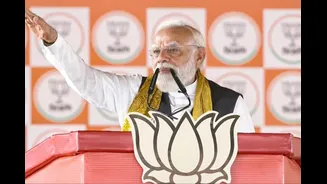
Janata Party (BJP). This intensive deployment is meticulously designed to achieve two primary objectives: strengthening the party's hold in constituencies where it already possesses a robust voter base and making aggressive inroads into areas that were narrowly lost in the 2021 elections. Simultaneously, the strategy aims to ensure that the existing electoral gains are not only maintained but also fortified. This on-ground presence allows for direct engagement with party cadres at all levels, from senior leadership to booth-level workers, fostering motivation and fine-tuning the grassroots campaign machinery. Such a concentrated effort from a senior leader is a hallmark of the BJP's election playbook, underscoring the importance placed on consolidating support and expanding influence in this crucial state.
Bhabanipur's Prestige Battle
The constituency of Bhabanipur has become a focal point of intense political activity, primarily due to the high-stakes contest between Chief Minister Mamata Banerjee and her primary rival, Suvendu Adhikari. This seat is more than just a single electoral battleground; it represents a significant prestige contest for both the ruling Trinamool Congress (TMC) and the BJP. Amit Shah himself has highlighted the importance of this constituency, participating in a roadshow and referencing the 2021 election outcome in Nandigram, where Adhikari previously unseated Banerjee. The strategic focus on Bhabanipur underscores its symbolic weight in the broader political narrative of West Bengal and indicates the party's intent to make a strong statement in a region closely associated with the incumbent Chief Minister.
Analyzing Past Performance
Examining the electoral history provides crucial context for the BJP's current strategy. In the 2021 West Bengal Assembly elections, the TMC demonstrated considerable strength by securing 213 seats, a slight improvement over their 2016 performance. The BJP, in stark contrast, achieved a remarkable leap, surging from just 3 seats in 2016 to 77 seats in 2021. This significant expansion marked a substantial shift in the state's political landscape. Meanwhile, the Congress party experienced a steep decline, failing to win any seats in 2021 after having secured 44 seats in 2016. The BJP's vote share also saw a dramatic increase, rising from approximately 10 per cent in 2016 to nearly 38 per cent in 2021, indicating a growing electoral appeal and a stronger challenge to the established parties.
Campaign Themes and Issues
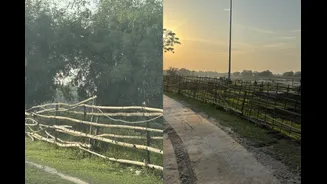
A central pillar of Amit Shah's campaign rhetoric in West Bengal revolves around the issue of infiltration. He has consistently linked this concern to broader matters of governance, state security, and demographic shifts within West Bengal. During his public addresses, Shah has frequently articulated the BJP's stance on this issue, framing it as a critical challenge requiring urgent attention. Furthermore, he has made specific assurances regarding the BJP's commitment to border management. He pledged that if the party forms the government in West Bengal, the land necessary for border fencing projects would be acquired and made available within a swift 45-day timeframe following the assumption of administrative duties by the new government, highlighting a proactive approach to national security concerns.
Candidate Choices & Manifesto
In the lead-up to the elections, strategic decisions regarding candidate selection and manifesto development are underway. Reports indicate that the BJP has not nominated any Muslim candidates for the upcoming polls. The party has been systematically releasing its candidate lists, with recent announcements including Rakesh Singh as the nominee for the Kolkata Port constituency. Concurrently, the BJP is finalizing its election manifesto, which is anticipated to be released in Kolkata around April 10. This document is expected to place significant emphasis on key demographic groups, specifically women, farmers, and the youth, outlining the party's policy commitments and vision for these segments of the electorate.
Election Countdown
The electoral process for the 294-member West Bengal Assembly is structured into two distinct phases, with voting scheduled for April 23 and April 29. The culmination of the electoral exercise will be the counting of votes, slated for May 4. As the election dates draw nearer, the BJP's intensified campaign, spearheaded by Amit Shah's prolonged presence in the state, underscores the party's determined effort to expand its political footprint. The ultimate success of this strategic ground deployment in translating into electoral seats, and whether it can effectively challenge Mamata Banerjee's established dominance, will be revealed only when the results are declared.