







Policy Aims & Benefits
The Uttar Pradesh government has formally sanctioned a groundbreaking homestay policy designed to significantly elevate tourism across its prominent destinations,
including Lucknow, Ayodhya, and Varanasi. This forward-thinking policy is meticulously crafted to cultivate an atmosphere of safety and warmth for all visitors, with a deliberate emphasis on ensuring the comfort and security of women and elderly travelers. By encouraging local residents to open their homes, the initiative seeks to offer tourists genuine cultural immersion, foster diverse employment prospects, and champion sustainable tourism practices. The policy streamlines the registration process for homestay owners, establishes clear quality benchmarks for hygiene and safety, and may introduce incentives like subsidies or tax breaks to spur participation. Crucially, it incorporates provisions for the specific needs of women and seniors, including specialized training for hosts. The overarching goal is to enrich the visitor experience by encouraging the showcase of local arts, cuisine, and traditions, thereby driving both tourist numbers and regional economic development.
Homestay Surge & Demographics
Since its introduction last September, the 'Bed and Breakfast and Home Stay Policy, 2025' in Uttar Pradesh has witnessed an impressive surge in interest, with approximately 2,000 applications submitted for homestays, predominantly from temple towns and eco-tourism regions. Varanasi and Ayodhya have emerged as frontrunners in this adoption, receiving 813 and 144 applications, respectively. The state's recent annual Budget underscores this momentum by setting an ambitious target of establishing 50,000 homestays statewide. Notably, the demographic profile of homestay operators is broadening beyond retirees; women are increasingly embracing this model. For example, in Selha village near the Pilibhit Tiger Reserve, 32-year-old Anita Pandey, along with three other women from a Self-Help Group, now hosts visitors in their homes and manages a canteen, a significant shift from her previous work as a farm labourer. This trend is supported by official data indicating that over one-third of the 2,000 applications originate from women, with elderly homeowners also forming a key segment of adopters. This signifies a growing preference for supplementary, home-based income generation and social engagement within the expanding tourism economy.
Owner Experiences & Motivations
The appeal of the homestay initiative extends to individuals like Colonel Sandeep Srivastava, a retired Army officer in Lucknow. His daughter’s suggestion to utilize vacant rooms in their home led to the establishment of Chandrakanta Farm Stay. Initially seeing it as a way to earn extra income, Colonel Srivastava discovered an unexpected benefit: combating the emptiness felt after his children moved abroad. His homestay, located in Kathwara village en route to the Chandrika Devi temple, attracts guests from across India, often combining visits with trips to Ayodhya. He describes the experience as fostering a familial atmosphere, where his wife cooks for guests and he shares stories from his military days. The property charges Rs 1,500 per room and has revitalized the sense of liveliness in their home. This sentiment is echoed by many homeowners who see homestays not just as a financial venture, but as a means of staying engaged and connected with people. The policy, which has led to a sharp rise in certified homestays from around 150 in early January to 750 currently, is proving to be a successful avenue for monetizing spare residential space in a regulated manner.
Policy Framework & Support
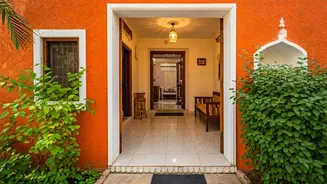
The Uttar Pradesh homestay policy outlines clear criteria for aspiring hosts. Individuals residing near religious or tourist sites can register homestays with one to six rooms, accommodating up to 12 beds. These units are categorized into Urban, Rural, and Heritage types, with Silver and Gold standards reflecting service levels. Essential provisions, including CCTV cameras, fire extinguishers, clean sanitation, and owner presence or caretaker arrangements, are mandatory. A significant advantage for homeowners is that electricity, water, and property taxes are levied at residential, rather than commercial, rates, thereby reducing operational expenses. To further support registered homestays, the Tourism Department actively promotes them via its official portal and marketing campaigns, facilitating verified bookings. Additionally, the Kanshiram Tourism Management Institute offers free hospitality and service training to up to eight individuals associated with each homestay. This comprehensive support system aims to ensure quality, accessibility, and professional development for homestay operators.
Temple Town Demand
The highest demand for homestays is concentrated in Uttar Pradesh's prominent temple towns and eco-tourism destinations where hotel infrastructure is often limited. Cities like Varanasi, Ayodhya, Prayagraj, Chitrakoot, and Mathura, along with eco-tourism spots such as Pilibhit, are experiencing a notable influx of applications. In Varanasi, tourists are particularly keen on experiencing the ambiance of the 'Old City' or finding affordable accommodation close to the Kashi Vishwanath temple and the ghats. Many converted homestays are located within walking distance of these significant landmarks, some even offering rooftop views of the Ganges. Similarly, in Ayodhya, families residing along temple routes have begun transforming spare rooms into homestays to cater to the growing number of visitors. This trend intensified around events like the Maha Kumbh, where attendees visiting Prayagraj also extended their trips to Kashi. Manju Chaturvedi, who runs a homestay near the Kashi Vishwanath Corridor, highlights the affordability, with rooms ranging from Rs 400 to Rs 700 depending on the season. She has converted six of her nine rooms into a homestay, often catering to guests seeking proximity to the temple, and has arrangements with nearby eateries for food services.