






Protest Concludes Amidst Legal Pressure
Buddhist monk Rajesh Balkhande, who had been staging a sit-in protest at Mumbai University's Kalina campus since August 2025, has finally dismantled his protest setup.
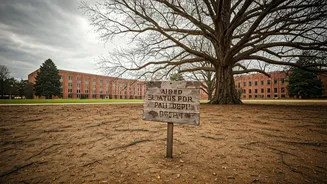
His demonstration, held under a tree near the main gate, was a persistent effort to advocate for the Pali department to be granted aided status. The prolonged occupation of university grounds eventually drew the attention of the Bombay High Court. During a hearing on April 29, the court expressed its disapproval of the extended presence, likening the campus to an 'akhada' and urging for its resolution. Balkhande announced his intention to vacate the premises as a show of respect for the court's directives, leaving just before the next scheduled court appearance on May 4. He also vacated his university hostel room, which had been sealed by the administration in February, and is currently staying at a well-wisher's home, with his future plans remaining undisclosed.
University-Protester Disagreements
Rajesh Balkhande contended that his protest was prolonged due to the university's alleged failure to engage in meaningful discussions or address his concerns. He felt his issues were not being taken seriously, leading to an extended demonstration. Conversely, Mumbai University authorities maintained that they had engaged in multiple rounds of discussions with Balkhande and that his protest contravened campus regulations. They also cited significant security concerns arising from the consistent flow of external visitors seeking to meet him on campus. The university's stance was that these disruptions negatively impacted the academic environment and raised safety issues, necessitating stricter campus access controls.
Background and Shifting Demands
Balkhande, a former research scholar in Marathi, had his PhD enrollment cancelled in November 2025, along with other students, for exceeding the time limits stipulated by the University Grants Commission (UGC). His initial protest in 2023 stemmed from being denied hostel accommodation due to age restrictions, a situation that was later resolved with the provision of a room. His subsequent and more prolonged protest focused on the demand for aided status for the Pali department. Balkhande expressed his awareness of campus issues, having been a student himself, and stated his intention to voice these concerns. He also questioned the rationale behind receiving a PhD extension if his admission was ultimately going to be cancelled for exceeding the permitted duration.
University's Official Response
University officials consistently asserted that Balkhande's demands were not directly aligned with academic requirements and that negotiation attempts had proven unsuccessful. They highlighted the detrimental impact of the protracted protest on the academic atmosphere and security, which led to the implementation of enhanced security measures at the Kalina campus. These measures included mandatory identity checks, increased CCTV surveillance, and even the rerouting of a local bus service (BEST route 318) away from the campus, citing security reasons. The university also noted that certain prominent individuals who sought to meet Balkhande were initially denied entry without prior arrangement, although the administration did extend invitations for discussions.
Investigations and Faculty Views
A recent inquiry conducted by the minority commission, initiated by a complaint filed on Balkhande's behalf, found no evidence of discrimination in the PhD admission process and validated the cancellation of his enrollment as being in accordance with UGC guidelines. Faculty members acknowledged the complexity of the situation, with one professor noting that the issue evolved from PhD-related concerns, which the administration was addressing, to the more immediate demand for aided status for the Pali department, a resolution that could not be easily achieved. The professor also pointed out that other unaided departments on campus were functioning effectively. Another faculty member indicated that the episode led to a clearer articulation of PhD regulations, with the university introducing new ordinances reflecting UGC guidelines on program duration, admission, and eligibility criteria.
Student Perspectives on Campus Issues
While the majority of students remained disengaged from Balkhande's protest, some voiced their criticism of the university's decision to restrict the entry of the BEST bus, arguing that it created inconvenience and safety issues for students needing to walk further into the campus. Conversely, a student who supported the protest highlighted the ongoing concern of limited hostel facilities at Mumbai University. This scarcity, the student explained, forces many students from more remote parts of Maharashtra to abandon their aspirations of studying at MU due to the prohibitive cost of off-campus accommodation. These student comments underscore broader issues of campus infrastructure and affordability impacting the student experience.