



Ghee: A Nutritional Snapshot
Ghee, a cherished ingredient in Indian culinary traditions, offers a rich flavour and aroma that enhances many dishes. Nutritionally, a teaspoon of ghee
contains approximately 45 calories. It's primarily composed of saturated fats but also provides beneficial fatty acids alongside fat-soluble vitamins like A, D, E, and K. These vitamins are crucial for various bodily functions and can contribute positively when ghee is consumed in appropriate moderation. The key to harnessing its benefits without drawbacks lies in understanding its composition and consuming it as part of a well-rounded dietary approach.
Busting Ghee Myths
Two prevalent myths surrounding ghee consumption are: that it invariably leads to weight gain and that heart patients must entirely avoid it. Regarding weight gain, experts emphasize that it's a consequence of exceeding total calorie requirements, not solely due to ghee. Consuming about 1-2 teaspoons of ghee daily, when balanced with physical activity and a healthy overall diet, does not automatically cause obesity. For heart patients, complete avoidance is often unnecessary. After consulting with a medical professional and regular lipid profile monitoring, small quantities can be included. This approach, coupled with regular exercise, a fiber-rich diet, and periodic cholesterol checks, can allow individuals with certain heart conditions to incorporate ghee safely. However, those with high LDL cholesterol, uncontrolled diabetes, or existing coronary artery disease should seek expert medical advice before making ghee a regular part of their diet.
Identifying Pure Ghee
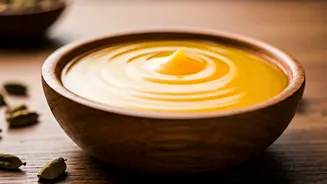
With various ghee types available, discerning pure ghee is essential, especially with the rising popularity of variants like A2 Gir cow ghee. Pure ghee, traditionally made using the Bilona method—where curd is hand-churned and then slowly heated—develops a natural golden hue, a soft, grainy texture, and a gentle, natural aroma. The most reliable indicators of authenticity are transparency and a clear manufacturing process. Pure ghee does not require additives or blended fats. A transparent ingredient list, traceable sourcing, and an openly explained production method are strong signs of a genuine product. Consumers can also perform simple tests: pure ghee melts quickly at body temperature, has a distinct nutty smell, and retains its texture when a few drops of water are added, unlike adulterated versions that may dissolve or form milky solutions.
Optimal Ghee Consumption
Determining the correct amount of ghee to consume daily is a personalized matter, influenced by factors such as age, activity level, and overall dietary patterns. A general recommendation for most individuals is to incorporate about 1 to 2 teaspoons of pure ghee each day. This can be seamlessly integrated into main meals, such as drizzling it over roti, dal, rice, or vegetables. For those who lead active lifestyles or have significantly higher caloric requirements, a slightly increased quantity might be appropriate. It's important to remember that ghee's benefits, including its rich content of fat-soluble vitamins and its potential to boost immunity and aid nutrient absorption, are maximized when consumed mindfully and within recommended limits as part of a balanced eating plan.