



Majestic Macaques & Civets
The Western Ghats are a sanctuary for unique primates, most notably the Lion-tailed Macaque. This striking primate, easily recognizable by its jet-black
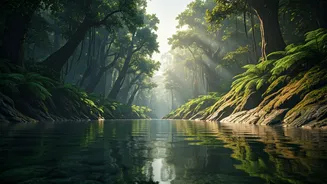
coat contrasted with a silver-grey mane, is unfortunately an endangered species. Its survival is intricately linked to the preservation of the Western Ghats' evergreen forests. Another resident facing critical endangerment is the Malabar Civet. This elusive mammal is distinguished by its lengthy, bushy tail and inhabits the dense evergreen woodlands of the region. Sightings of both these creatures are increasingly rare, underscoring the urgent need for conservation efforts in their native habitat. Their existence serves as a poignant reminder of the delicate balance within this rich ecosystem.
Highland Goats & Snakes
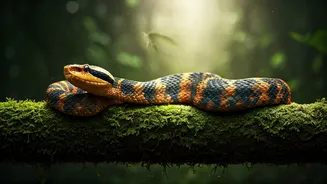
Ascending to the higher altitudes of the Western Ghats reveals the Nilgiri Tahr, a wild goat celebrated for its unique saddle-shaped white marking on its hindquarters. This iconic animal holds the esteemed position of being the state animal of Tamil Nadu, signifying its cultural importance and ecological value. Journeying into the denser forests, one encounters the King Cobra, the planet's longest venomous snake. This formidable reptile thrives within the lush, verdant expanses of the Western Ghats, a testament to the region's diverse habitats. Its presence highlights the apex predator role it plays in this complex food web, contributing to the overall health of the forest ecosystem.
Arboreal Wonders
The Western Ghats are home to a remarkable arboreal inhabitant: the Indian Giant Squirrel. This sizable and vibrantly colored rodent navigates the canopy of both deciduous and evergreen forests with agility. Its impressive size and striking coloration make it a memorable sight for fortunate observers. Sharing the arboreal domain are magnificent birds like the Rhino Hornbill. This large avian species is characterized by a prominent, horn-like casque adorning its beak, a distinctive feature that aids in vocalization and display. Both the squirrel and the hornbill are integral to the forest's ecological processes, playing roles in seed dispersal and nutrient cycling within their treetop habitats.
Reptilian and Amphibian Life
The aquatic systems of the Western Ghats host the Gharial, a critically endangered crocodilian species renowned for its unusually long and slender snout. This specialized adaptation aids it in catching fish, its primary food source, within the riverine environments it inhabits. Venturing into the moist soil, the Purple Frog, also known as the pig-nosed frog, spends the majority of its life burrowed underground. This unique amphibian emerges mainly for its brief mating season, a fascinating life cycle tied to the monsoon rains. Its subterranean existence highlights the hidden biodiversity that exists beneath the surface, a crucial component of the Western Ghats' ecological tapestry.
Avian and Terrestrial Treasures
The avian diversity of the Western Ghats is exemplified by the Wayanad Laughing Thrush, a beautiful bird whose distinctive vocalizations echo through the forests. This species is a true endemic treasure, found nowhere else but in the Wayanad region. On the ground, the Travancore Tortoise, a rare and endangered reptile, navigates the evergreen forests of the southern part of the Ghats. This slow-moving creature plays a role in seed dispersal as it forages for vegetation. The presence of these specific birds and tortoises underscores the specialized niches that exist within the Western Ghats' varied landscapes, each species contributing to the overall health and intricate web of life.