





Underlying Anxiety Levels
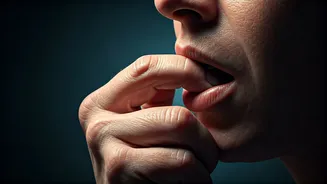
For many individuals who find themselves frequently biting their nails, this behaviour often stems from elevated levels of anxiety or a general sense of nervousness.
The repetitive action provides a temporary distraction and a sense of physical release, acting as an unconscious coping strategy to manage internal unease. While it offers momentary solace, this habit can also serve as an indicator of underlying stress that may require more proactive management for sustained mental equilibrium and overall well-being.
The Perfectionist's Urge
Nail-biting is frequently observed in individuals who identify as perfectionists. These individuals can become disproportionately frustrated by minor imperfections or perceived flaws in their surroundings or tasks. The act of biting their nails can serve as a subtle, subconscious method to alleviate the tension and pressure that arises from their innate desire for everything to be meticulously arranged and "just right." This habit is a physical manifestation of an internal struggle with achieving ideal standards.
Impulsive Tendencies Displayed
A pattern of frequent nail-biting is often associated with a tendency towards impulsiveness. This behaviour can reflect an inclination to act swiftly in response to immediate urges or emotional stimuli, without necessarily pausing for considered thought or reflection. It suggests an underlying personality trait where individuals may be more prone to spontaneous actions, driven by the immediate feelings of the moment rather than deliberate planning.
Low Tolerance For Frustration
People who habitually bite their nails might find themselves struggling to navigate minor setbacks or irritating situations with ease. Nail-biting can become an unconscious way to discharge feelings of irritation, impatience, or being overwhelmed when faced with circumstances that feel particularly challenging or stressful, even if they are objectively minor.
Heightened Stress Sensitivity
The practice of nail-biting frequently signals a heightened sensitivity to situations that induce stress. These individuals tend to perceive and experience tension more acutely than others. The habit then serves as a self-soothing mechanism, a physical ritual employed to manage the pressure, anxiety, or discomfort that arises from stressful encounters, offering a brief respite.
Manifesting Self-Consciousness
A significant number of individuals who bite their nails often experience feelings of self-consciousness regarding their appearance or social behaviour. In some instances, nail-biting can be an externalization of underlying insecurities or a way to cope with feelings of social awkwardness, embarrassment, or a desire to draw less attention to oneself.
Restlessness Manifested Physically
Individuals prone to frequent nail-biting may also exhibit a difficulty in remaining still for extended periods. This characteristic often points to a restless mind and body, where small, repetitive physical actions like nail-biting serve as an outlet to dissipate pent-up energy or to occupy a mind that is constantly in motion.
Obsessive Thought Patterns
There can be a discernible link between nail-biting and tendencies towards obsessive or compulsive behaviours. The repetitive nature of the habit can provide a temporary sense of control or order, which may help in momentarily quieting persistent, intrusive thoughts or anxieties that plague the individual.
A Creative Imagination
Interestingly, psychological observations have noted that a portion of nail-biters possess a highly developed sense of creativity and imagination. The restless energy and the constant whirring of thoughts often associated with this habit can fuel imaginative processes, with nail-biting being a physical manifestation of this vibrant internal mental landscape.
Difficulty Expressing Feelings
Frequent nail-biters sometimes encounter challenges in openly articulating their emotions to others. The act of nail-biting functions as a private, internal coping strategy, allowing them to manage feelings such as anxiety, boredom, or tension without the necessity of verbalizing these internal states, keeping their emotional world more contained.