





A Heritage Revival
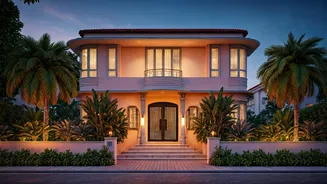
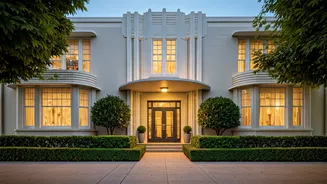
Nestled in a tranquil Worli lane, the Kathiwada City House, originally christened 'West More' in the 1940s, stands as a remarkable example of Art Deco
architecture. This four-storey bungalow, built by the esteemed art collector and former city sheriff Jehangir Nicholson, has been a quiet nexus of heritage, art, and ideas for generations. It's a rare surviving privately owned Art Deco residence in Mumbai, having evolved significantly over time. Today, under the guidance of Digvijay Singh Kathiwada, the house embarks on a new phase, opening its doors to the public for artistic and cultural events, complemented by a carefully selected dining experience. The vision, as Digvijay explains, is to foster an environment where 'people dine with the arts,' blending aesthetic appreciation with culinary enjoyment.
Nicholson's Artistic Vision
The house's deep-rooted connection to art originates from its creator, Jehangir Nicholson, a pivotal figure in Bombay's private art collection scene. Digvijay fondly remembers him as a 'true patron of the arts.' Nicholson's conviction in public art accessibility led him to bequeath his extensive collection of over 800 artworks, forming the foundation of the Jehangir Nicholson Art Foundation housed at the Chhatrapati Shivaji Maharaj Vastu Sangrahalaya. While his collection was generously donated, Nicholson was more reserved about his personal abode. He constructed the bungalow during a period when Mumbai witnessed the rise of elegant, low-rise Art Deco residences catering to affluent art enthusiasts and business magnates. The house itself boasts quintessential Art Deco features: rounded balconies, geometric metalwork, and clean horizontal lines, reflecting the architectural style that shaped much of Mumbai's seaside landscape in the 1930s and 40s. In his later years, Nicholson resided alone in this four-storey structure, famously holding onto his possessions until his final moments.
A Cultural Convergence
Jehangir Nicholson's association with the Kathiwada family began through Digvijay's mother, Sangita Devi Kathiwada, whom he met at the Willingdon Club. Recognizing her passion for the arts, Nicholson eventually permitted her to utilize a portion of the bungalow for cultural initiatives. This led to an amicable arrangement: Nicholson would continue to reside on the upper levels, while Sangita Devi would have access to the ground floor for her artistic and cultural endeavors. Digvijay recalls his mother's enthusiasm for this unique opportunity, citing the bungalow's prime Worli location and Nicholson's esteemed artistic legacy as irresistible draws. The formal agreement was soon finalized, and Digvijay, then 18, vividly remembers meeting Nicholson on the day the papers were signed—which coincidentally fell on his birthday. Tragically, this proved to be their last encounter, as Nicholson passed away shortly after embarking on an overseas trip. True to their commitment, Nicholson's estate executors proceeded with the sale of the ground floor to Sangita Devi, and by 2002, they extended the offer for her to acquire the entire property.
Preserving Art Deco Grandeur
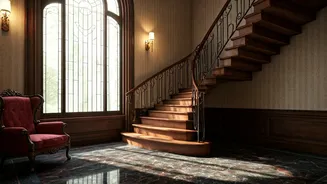
Under Sangita Devi's careful management, the bungalow underwent a meticulous restoration and redesign, aimed at transforming it into a contemporary living space while safeguarding its historical essence. Digvijay emphasized the family's commitment to preserving the original architectural integrity as faithfully as possible. Key elements such as the exterior facade, original doors and windows, and the iconic Art Deco staircase were retained exactly as Jehangir Nicholson had originally intended. Although the bungalow became widely known as Kathiwada City House over time, its original name, 'West More,' still graces a plaque within the residence. Currently, the Kathiwada family occupies the upper floors, while the ground floor has been thoughtfully dedicated to art, culture, and culinary experiences. The house has progressively evolved into a vibrant meeting point for 'culturally curious' individuals, drawing together artists, architects, writers, and photographers who are part of the family's extensive cultural network.
From Home to Hub
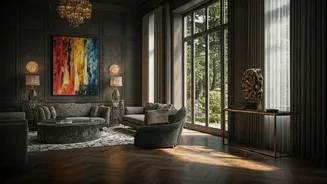
Around 2020, the house began to more formally host talks, exhibitions, and creative collaborations, signaling a shift towards becoming a public cultural venue. Digvijay further developed this concept by establishing 'Circle 1434,' a private members' community. The bungalow thus functioned as a multifaceted space—part gallery, part salon, and part social club—all while preserving its character as a discreet residence within Worli's residential fabric. A significant addition to this evolution was Bistro Circle 69, a dining establishment developed in collaboration with Aditi Dugar, renowned for curating exceptional culinary experiences in Mumbai. Digvijay drew inspiration from the successful integration of food and culture in spaces like bookstores, aiming to replicate that synergistic effect within an art gallery setting. This integration aims to enhance the visitor experience, making the house a holistic destination for art and gastronomy.
Public Access Unveiled
The latest chapter in the Kathiwada City House's story involves its broader opening to the public. In a statement, Digvijay articulated that this move aligns with the house's foundational principles, believing that culture, whether through art, food, or design, thrives when allowed to develop organically. This public accessibility is seen not as a deviation but a return to its core ethos. The house is slated for further evolution through its ongoing programming. Future plans include the development of new spaces like a sculpture court, a contemporary art room, and a sports memorabilia room. The program will also encompass collaborative pop-ups, group art exhibitions, gallery partnerships, culinary residencies, wellness retreats, design showcases, and sport-themed cultural events. Among the upcoming events, Digvijay expressed particular excitement for a contemporary art exhibition and a philanthropy event.
Savoring Art & Food
The bistro is also set to enhance its offerings, with plans to expand its menu beyond the current popular dishes. Guests can anticipate seasonal specials and a newly introduced cocktail program. While the cuisine embraces contemporary fusion, the dining experience is meticulously designed to engage with the art displayed throughout the house. Even as he looks forward to new developments, Digvijay remains deeply connected to the house's eight-decade history. He emphasizes that the 'legacy and history of the ownership of this house is what makes it stand out,' frequently referencing Jehangir Nicholson's profound contribution to Mumbai's cultural fabric. Digvijay conveys a sense of privilege in continuing Nicholson's legacy, aiming to create a space in Mumbai where art, culture, and cuisine converge harmoniously.