






Understanding V2V
Vehicle-to-vehicle (V2V) technology allows vehicles to 'talk' to each other, sharing information about their speed, direction, and position. This communication
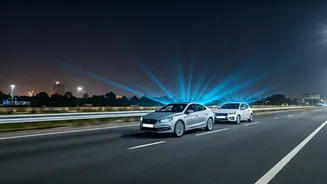
happens wirelessly, creating a network of informed vehicles. This network enables a system to provide real-time alerts about potential hazards. For example, if a vehicle ahead brakes suddenly or encounters a dangerous situation, it can instantly send a warning to nearby vehicles. This technology is designed to reduce collisions by providing drivers with early warnings, giving them more time to react. V2V systems leverage technologies like Dedicated Short-Range Communications (DSRC) to ensure fast and reliable data exchange between vehicles. The goal is to create a safer driving environment by anticipating potential dangers and proactively alerting drivers before accidents occur.
How It Works
The core of V2V technology is the continuous exchange of data between vehicles. Each equipped vehicle transmits basic safety information such as its speed, location, and direction, several times per second. This data is received by other vehicles within range. The vehicles' onboard systems then process this information and assess the potential for conflicts or hazards. When a risk is detected, the system alerts the driver through visual or audio warnings. For instance, if a vehicle is approaching an intersection at a high speed, the system could alert the driver to the potential danger of a collision. Moreover, V2V systems can also integrate with infrastructure, such as traffic lights and road signs, to provide even more comprehensive safety information. This integration creates a holistic approach to road safety, combining vehicle-to-vehicle communication with the wider transportation network. The system’s effectiveness hinges on a widespread adoption of the technology to maximize the size and density of the network.
Benefits for India
The implementation of V2V technology in India offers significant advantages. Primarily, it promises to reduce the number of road accidents by providing drivers with early warnings and increasing reaction time. Road accidents are a serious concern in India, and any technology that can mitigate this is a welcome step. Furthermore, V2V technology can help to optimize traffic flow. By coordinating vehicle movements, it can reduce congestion and improve efficiency on the roads. Moreover, this system can also assist in providing real-time information about traffic conditions, such as accident locations or road closures, assisting drivers in navigating the routes safely. The enhanced flow of traffic also contributes to fuel efficiency and reduced emissions. Ultimately, the adoption of V2V technology aligns with the government’s broader vision of improving road safety and making the roads in India more secure for everyone.
Challenges Ahead
While V2V technology holds considerable promise, its successful implementation in India faces several challenges. One of the primary obstacles is the need for widespread adoption. For the system to be effective, a significant number of vehicles must be equipped with the technology. This means addressing the issue of cost and ensuring compatibility across different vehicle models. Another challenge is the need for reliable infrastructure to support the technology. The DSRC infrastructure must be deployed and maintained to ensure that vehicles can communicate effectively. Furthermore, data security and privacy are crucial concerns. Measures must be taken to protect the data transmitted between vehicles from hacking or misuse. Another hurdle is public awareness and acceptance. Educating drivers about the benefits of V2V technology and addressing any concerns they may have are important for its widespread acceptance.
The Road Ahead
The Indian government’s move to embrace V2V technology marks a significant step towards improving road safety. As the technology develops, the Indian government will need to collaborate with various stakeholders, including automakers, technology providers, and traffic management agencies, to address the challenges and ensure its successful implementation. This will involve establishing standards, providing funding, and promoting public awareness. In time, as more vehicles adopt V2V technology and infrastructure expands, the potential of a safer and more efficient road network will come to fruition. The introduction of V2V technology represents a crucial step in the evolution of intelligent transportation systems in India, demonstrating the commitment to modernizing the road infrastructure and minimizing the risk of accidents.