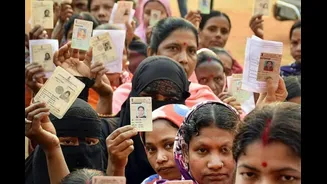









Phase 1: A Broad Political Canvas
The initial phase of the 2026 West Bengal elections presents a multifaceted political landscape, encompassing a broad spectrum of voters and regions. This
segment of the election covers significant portions of North Bengal, the western districts, and extends into southern areas, making it a pivotal stage that could significantly influence the final results. The voting scheduled for April 23rd is set to engage approximately 152 constituencies. These electoral segments span from the northern reaches of Cooch Behar and Alipurduar, through Jalpaiguri and Darjeeling, extending to Uttar and Dakshin Dinajpur, and further encompassing the districts of Malda and Murshidabad. The western belt includes Purulia and Bankura, alongside Jhargram, Paschim Medinipur, and Paschim Bardhaman, with touches of Birbhum and Nadia. This expansive geographical and demographic spread, including border territories, tribal communities, the distinct tea garden worker population, and established industrial zones, sets the stage for a complex and closely watched electoral contest.
Key Constituencies to Watch
Within the extensive Phase 1, several constituencies stand out as particularly significant battlegrounds that warrant close attention. The urban hub of Siliguri, the scenic Darjeeling and Kalimpong hills, and the strategically important Cooch Behar constituencies (Uttar and Dakshin) are expected to witness intense political contests. Further south, Raiganj and Islampur in Uttar Dinajpur, along with Balurghat in Dakshin Dinajpur, represent key areas where political fortunes could swing. The Malda and Murshidabad districts, known for their significant minority populations, present another crucial belt, as do the industrial and mining regions around Asansol and the traditionally politically charged districts of Bankura and Purulia. Baharampur in Murshidabad is also a focal point. These seats are not only representative of their respective districts but also embody broader electoral trends and challenges, including issues related to border security, the voting patterns of tribal communities, and the impact of anti-incumbency sentiments, all of which will be critical in shaping the election's narrative.
Party Strategies and Focus
The major political forces in West Bengal are aligning their strategies to maximize gains in Phase 1, which is largely seen as a defensive and momentum-building phase. The Trinamool Congress (TMC) is primarily focused on consolidating its existing vote base. Their approach hinges on highlighting Chief Minister Mamata Banerjee's welfare schemes, securing minority votes in districts like Malda and Murshidabad, and leveraging their robust grassroots network. However, they must contend with potential anti-incumbency feelings and internal party dynamics. Conversely, the Bharatiya Janata Party (BJP) aims to build significant momentum by targeting North Bengal, the border districts, and the Junglemahal region, areas where they perceive strong growth potential. Key constituencies such as Siliguri, Dinhata, Raiganj, and Balurghat are central to their ambitions. The Left-Congress alliance, while facing a predominantly bipolar contest, is attempting to remain relevant by influencing results in specific pockets, notably Murshidabad, Malda, and some urban centers, primarily through vote-splitting strategies that could impact the main contenders.
Candidate Profiles and Concerns
An in-depth analysis of the candidates contesting in Phase 1 reveals significant characteristics, particularly concerning their backgrounds. Data from organizations like the Association for Democratic Reforms (ADR) indicates that a notable percentage of candidates, specifically 23%, have declared criminal cases against them, with 20% facing serious charges that include offenses like murder, attempted murder, and crimes against women. Out of the 1,475 candidates scrutinized, 345 reported having criminal records. Financially, approximately 21% are crorepatis, possessing average assets of Rs 1.34 crore, though asset declarations vary dramatically, ranging from below Rs 1,000 to over Rs 100 crore. A substantial 66 constituencies have been flagged as 'red alert' areas, meaning three or more candidates in these seats have criminal backgrounds. Furthermore, about 37% of candidates have declared financial liabilities, some exceeding Rs 25 crore. Educationally, nearly half have completed up to Class 12, while 47% hold graduate degrees or higher. Age-wise, the majority fall within the 41-60 bracket. Women constitute 11% of the total candidates, with 167 women participating in this phase of the election.