





Generations: A Helpful Shortcut
The concept of categorizing fighter jets into distinct 'generations' serves as a convenient shorthand to track their development, though it's not always
a rigid scientific classification. Originating in 1990 with air historian Richard P. Hallion's proposal, this system helps delineate advancements from early subsonic designs to sophisticated modern aircraft. While Hallion's original framework evolved, the generational labels—4th, 5th, and 6th—became widely adopted, particularly gaining traction with the introduction of the F-22 Raptor. This groundbreaking aircraft was so advanced that it effectively defined the 5th generation, its high cost and capabilities illustrating the leap in technology. This terminology soon spread globally, including to Russia, where it also provided marketing advantages for their own advanced aircraft programs.
Foundations of Flight
The earliest fighter jets, emerging in the late 1940s and early 1950s, represented a significant departure from propeller-driven aircraft. These first-generation machines, like the Me 262 and F-86 Sabre, featured basic designs powered by early jet engines. Their armament was primarily limited to cannons, and radar systems were either rudimentary or entirely absent. The second generation, prevalent from the mid-1950s to the early 1960s, introduced crucial aerodynamic improvements such as swept wings, enabling higher speeds. This era also saw the integration of early radar and the advent of air-to-air missiles, exemplified by aircraft like the MiG-21 and F-104 Starfighter, which were designed mainly for intercepting bombers at high velocities. By the third generation, spanning the mid-1960s through the 1970s, advancements focused on enhancing radar capabilities, missile technology, and overall maneuverability. Iconic aircraft like the F-4 Phantom II dominated this period, alongside others such as the MiG-23. While these jets began to exhibit multirole potential, their design was still largely dictated by specific operational missions rather than true versatility.
The Versatile Fourth Generation
Fourth-generation fighters, which began appearing in the late 1970s, represent a pivotal shift and still form the core of many modern air forces. These aircraft brought about substantial improvements in design and performance, becoming the standard for advanced aerial combat. Key innovations included the widespread adoption of fly-by-wire flight control systems, sophisticated radar suites, greatly enhanced agility, and genuine multirole capabilities, allowing them to perform a variety of missions effectively. Celebrated examples from this generation include the F-16 Fighting Falcon, F-15 Eagle, MiG-29 Fulcrum, Su-27 Flanker, Mirage 2000, and F/A-18 Hornet. Over time, these established designs were continuously upgraded with superior electronics, advanced sensors, and integrated networking systems, leading to the informal designation of '4.5 generation' for aircraft like the Rafale, Eurofighter Typhoon, Gripen E, F-15EX, and updated Su-30 variants. While this term is commonly used in industry and media, it's important to note it's not an official military classification, but rather acknowledges the significant enhancements made to these already capable platforms.
Stealth and Sensor Fusion: Fifth Generation
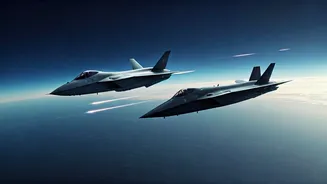
Fifth-generation fighter jets are fundamentally defined by their inherent stealth capabilities, a design philosophy pioneered by the F-22 Raptor. These advanced aircraft are engineered from the ground up to minimize their radar cross-section and infrared signature, making them exceptionally difficult to detect. A hallmark of this generation is the use of internal weapon bays to maintain their stealth profile, alongside sophisticated sensor fusion technology that integrates data from multiple sources into a single, coherent picture for the pilot. This allows for unparalleled situational awareness and enhanced network-centric warfare capabilities, enabling seamless data sharing across different platforms. Widely recognized fifth-generation fighters include the American F-22 and F-35 Lightning II, as well as China's J-20 and the emerging J-35. Some military analysts view Russia's Su-57 differently, often placing it closer to an advanced fourth-generation or transitional design due to perceived differences in its stealth characteristics and sensor integration compared to Western counterparts. At this level of development, aerial combat shifts from traditional dogfights towards an emphasis on electronic warfare, advanced detection, and network interoperability.
The Future: Sixth Generation Concepts
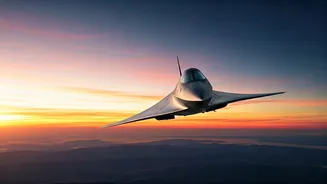
Sixth-generation fighter jets are currently in the conceptual and developmental stages, meaning there's no definitive definition yet. However, current design trends point towards several key advancements that will likely characterize this future era of aerial combat. A primary focus is on manned-unmanned teaming, where human pilots will work in conjunction with autonomous drones and other robotic systems, greatly expanding combat effectiveness and reducing risk to personnel. Artificial intelligence (AI) is expected to play a crucial role, assisting pilots with decision-making, sensor management, and system operations. These aircraft will also feature significantly enhanced, longer-range sensors for superior detection and tracking capabilities. Adaptive engine technology, allowing for greater efficiency and performance across a wider range of conditions, is another anticipated feature. Furthermore, a deeper and more robust level of networking and data sharing will be paramount, ensuring seamless integration within complex battle networks. Projects like the US's F-47 and F/A-XX, Europe's Tempest and FCAS initiatives, and various Chinese next-generation programs all fall under this evolving category. Intriguingly, Northrop Grumman has even suggested the B-21 Raider bomber could be considered a sixth-generation platform, hinting at a blurring of traditional roles between fighter and bomber aircraft.
Beyond the Labels: System Matters
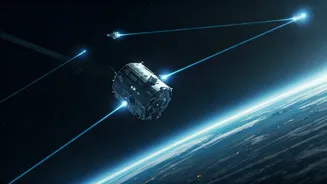
While generational labels provide a framework for understanding fighter jet evolution, it's crucial to recognize that a higher generation doesn't automatically guarantee victory in combat. An aircraft's actual performance is deeply intertwined with how it's employed and the supporting systems it operates within. For instance, Western fighter jets often function as integral parts of a broader network that includes airborne early warning and control (AWACS) aircraft, satellite reconnaissance, and distributed targeting systems. This interconnectedness allows platforms like the F-15EX to engage targets using data relayed from external sensors without needing to activate its own radar, thus preserving its tactical stealth. In contrast, analysts suggest that aircraft like the Su-57 might perform differently depending on whether they are operating in isolation or as part of such a comprehensive support network. This highlights that in contemporary air warfare, the individual aircraft, however advanced, is only one component; its integration into a larger, interconnected system is equally, if not more, critical to mission success.